


From a growth-mindset to ROI by design: How Indian startups are resetting for 2026
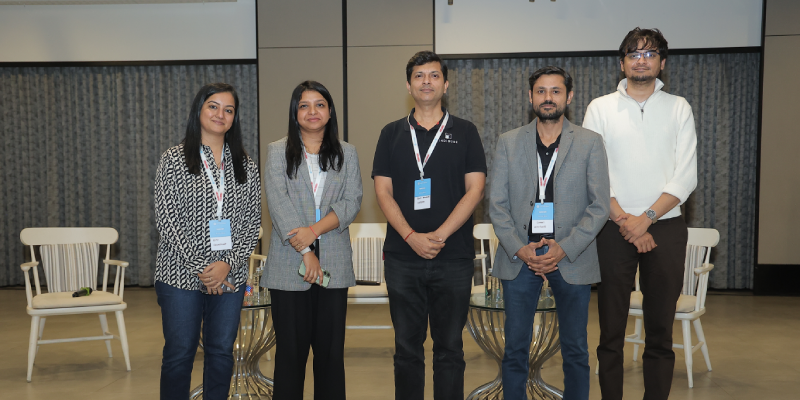
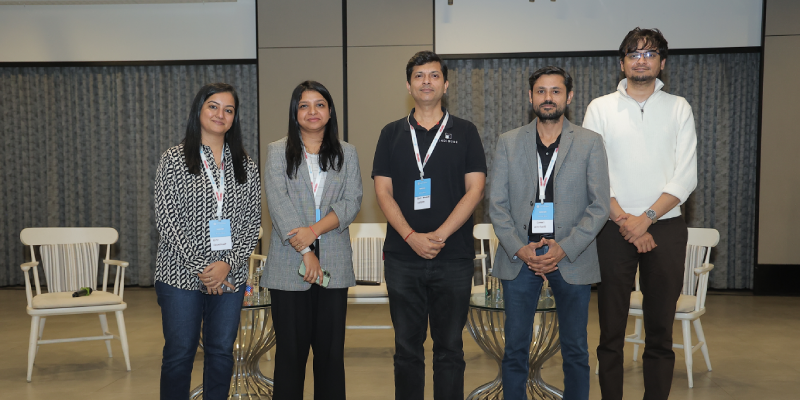

These themes took centre stage at a Snowflake panel discussion titled ‘Future-ready Startups: Data, Product Innovation & Capital Strategy for 2026’, where industry leaders explored what it will take for startups to stay competitive in the years ahead.
The consensus was clear: the next generation of winners will be those that can turn raw data into insight, insight into decisive action, and action into long-term profitability.
The panel featured Ayushi Garg, Principal, 3one4 Capital; Ritu Maheshwari, SVP – Finance, Deconstruct; Ramit Rajinder Bhard, CTO, IndiQube Spaces Ltd; and Sumeet Tandure, Senior SE Manager, Snowflake. The roundtable was moderated by Rishabh Mansur, Head – Content Categories, YourStory.
The startup shifts for the new year
Maheshwari opened the discussion by highlighting the strategic shift in India’s startup ecosystem for 2026. She said strategic shifts in India’s startup ecosystem emphasize capital efficiency, sustainable growth, and data-driven repeatability over unchecked expansion. Maheshwari, who operates at the nexus of data, profitability, and capital, predicted that startups will be rewarded for consistent excellence: converting data to insights and actions, driving product improvements, ensuring unit economics, and making deliberate trade-offs. Capital efficiency and measured growth will dominate.
Garg welcomed the pivot in 2026 from a pure growth mindset. Previously, this mindset was rewarded and fueled ecosystem scaling. However, she noted that an outcome-driven, liquidity-first mindset will prevail. “Growth for the sake of growing is not something that will be scalable from here on out. This shift is already happening and it will affect the way newer companies are building and growing in the next few years,” she said.
Bhard highlighted the evolving role of AI in 2026. He shared that Indian startups are gradually shifting towards measuring tangible return on investments (ROIs) for artificial intelligence (AI), rather than chasing hype. The focus is now on demanding accountability amid rising investments. Previously, AI captivated startups with its potential, however deeper adoption revealed what Bhard termed an “abyss”, a bottomless pit that sunk costs without careful consideration. IndiQube now prioritizes ROI scrutiny for every use case, justifying expenditures to investors. This accountability—explaining “what and why”—will define 2026.
In 2026, Snowflake’s strategic evolution spotlights a pivotal shift. The company is moving from data democratization to simplifying AI, creating robust foundations for success. “What we are seeing in 2026 from our customers is that all the experimentation and pilots that people were running for all these years – now is the time for productionization. At Snowflake, we’re thinking about how we can put more of these into production and ensure there is an ROI at the end of it,” Tandure said. He also highlighted how the post-experimentation era will depend on interoperable multi-agent ecosystems to preserve optionality.
Metrics that matter in 2026
Maheshwari outlined the key metrics for evaluating data, AI, and product innovation investments. She prioritized the importance of intent over affordability, saying, “Instead of asking whether we can afford the spend, it should be about whether the spend will really fast-track the path to profitability, revenue or retention.”
For AI, she spotlighted business key performance indicators (KPIs), including such as return on ad spend (ROAS), customer acquisition cost (CAC) reduction, higher profit margins that signal efficiency. Operational gains such as reduced data latency, faster/cheaper decisions, cleaner processes and team access to insights for swift interventions were equally critical. Ultimately, for Maheshwari, profit and loss (P&L) and the robustness of balance sheets assist in validating ROI. However, she also suggested that no single metric can sum up the situation, each one must be aligned with its purpose.
Garg, who spoke about capital efficiency metrics from the seed stage onward (including pre-revenue startups), emphasized a Day Zero disciplined approach over later KPIs such as CAC payback or margins. For early-stage startups with two to three founders, Garg advised that founders should establish clear ROI on adding features to products, and define a “kill criteria” for experiments. AI shrinks timelines significantly, enabling startups to quickly pivot by either doubling down or abandoning certain projects. She also warned founders against bloated top management, opting instead to justify hires. 314 Capital favours lean teams. In the post revenue stage, she highlighted the importance of prioritizing sustainable margins or bottom lines.
Building a clear ROI with data and AI: Case studies
Bhard shared a compelling case study on leveraging generative AI (GenAI) for a tangible ROI, focusing on product development that scales business, boosts bottom line, or enhances retention. The challenge involved managing hundreds of cafeterias at IndiQube offices, serving tens of thousands daily, where feedback comments overwhelmed implementation and help desk teams. Manual analysis became impossible due to massive volumes. IndiQube decided to leverage GenAI to ingest the data, generate summaries, detect patterns and identify successes and failures at each cafeteria (for each operator), ultimately delivering actionable insights and next steps to drive improvements.
This transformed operations, providing swift visibility into issues like food quality or service gaps, surging the adoption of digital cafeteria tools. The initiative improved profitability, customer retention, and scalability, providing dual ROI for IndiQube and clients. “This is how you actually try to figure out what you should build. Ask yourself: Is it going to help me grow and offer real value for my customer? It should not be about driving investment returns for the company, but for the client as well. That’s the thought process at IndiQube,” he said.
Tandure shared a range of case studies from Snowflake from an energy firm that analyzes household consumption data to optimize distribution loads and household savings, to a marketing platform that refines top-of-funnel leads via product usage to prioritize qualified users and expand subscribers. In healthcare, startups are now connecting the data of payers, providers and pharma data. “They become a bridge between the entire healthcare systems. So, data is bringing entire ecosystems together. And AI helps elevate these startups to the next level,” Tandure said.
He also concurred with Bhard, stating that success demands ROI instead of using AI for AI’s stake. Startups must measure tangible outcomes like automation, efficiency, and input scaling.
The discussion also drilled into the twin imperatives of scale and sustainability, no longer sequential milestones, but principles that must be embedded from Day 1. Panelists underscored the mindset shift required as startups mature, with Garg emphasizing the importance of building for an IPO from the start. Equally critical was the need for financial discipline, with speakers cautioning startups to be aware of their corporate expenses and ensure they were not increasing linearly with growth.
Discover more from News Link360
Subscribe to get the latest posts sent to your email.