



2care.ai aims to transform chronic care management in India through WhatsApp
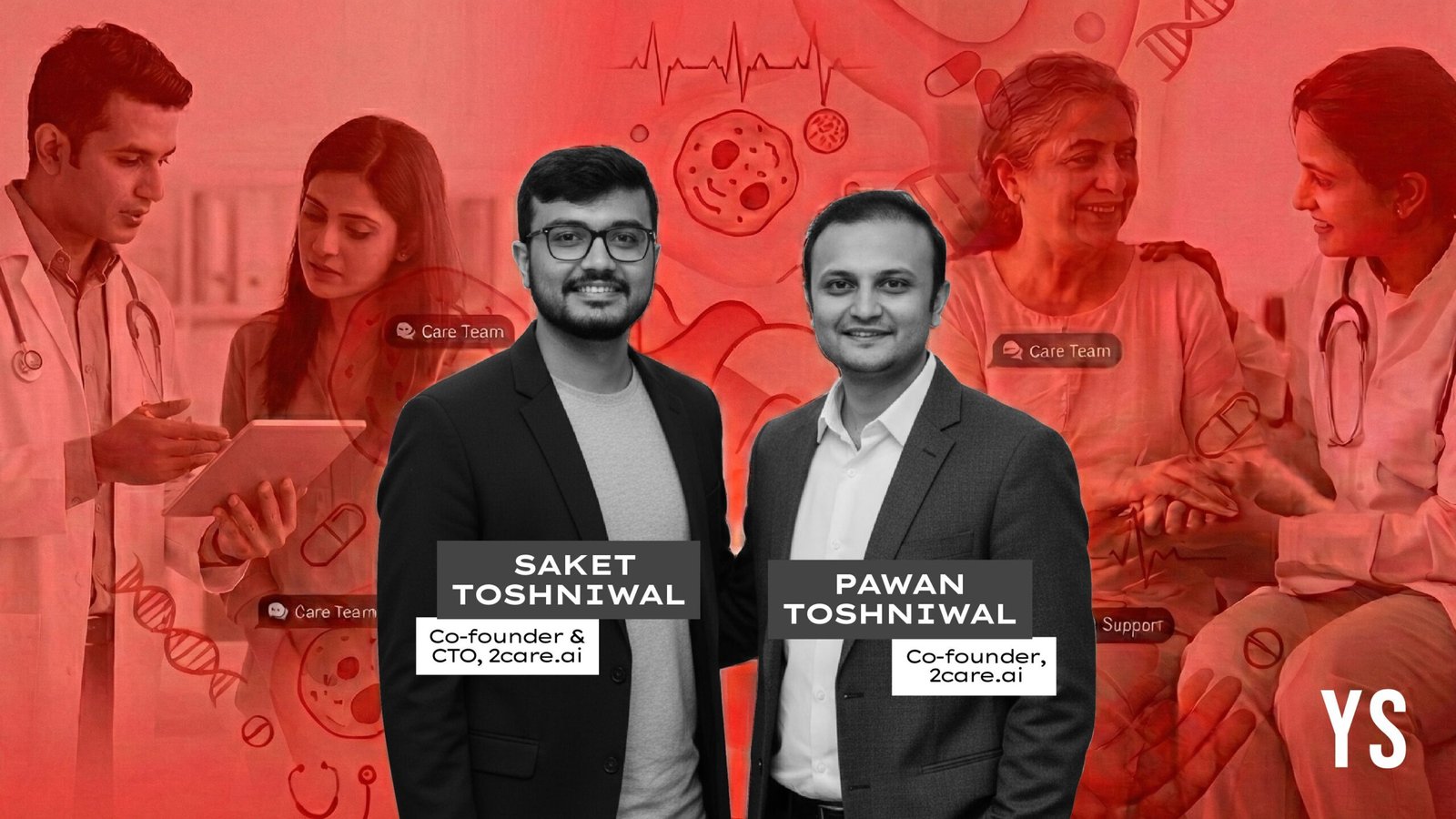
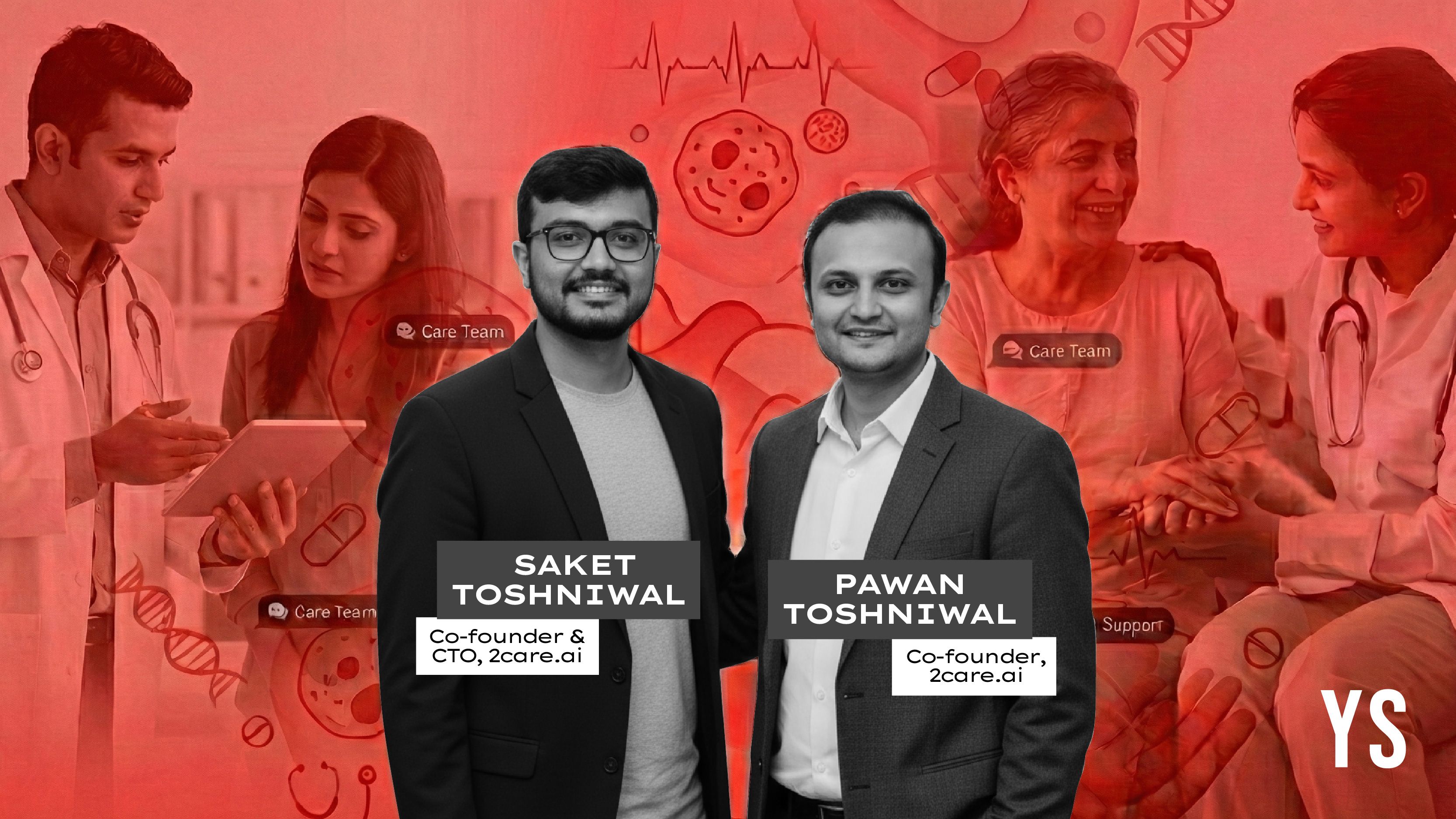

Between appointments, patients and caregivers are left to manage dozens of medical reports, changing medication schedules, dietary instructions, insurance paperwork, and advice from multiple specialists. For families stretched emotionally, chronic care quickly becomes a logistical nightmare. Launched in August 2025, Bengaluru-based 2care.ai aims to solve this challenge.
Siblings Saket and Pavan Toshniwal learned this the hard way during their father’s cancer treatment. Despite being tech-savvy and well-resourced, they struggled to organise more than 300 medical reports in a way doctors could actually use. “We had every possible advantage,” Saket recalls. “And yet, managing chronic care felt impossibly complex.”
The experience exposed a larger gap in India’s healthcare system: once patients leave the hospital, there is little support to help them track their condition, coordinate care, or make sense of evolving medical data. Doctors, meanwhile, make better decisions when they can see how symptoms, medications, and vitals change over time. However, that information is rarely structured or accessible.
To bridge this gap, the brothers founded 2care.ai, a WhatsApp-based chronic care platform designed for cancer patients.
Cancer claimed 9.7 million lives globally in 2022. In India, the National Cancer Registry Programme reported over 1.46 million new cases that same year. With one in nine Indians likely to develop cancer in their lifetime, chronic care management remains a critical gap in the country’s healthcare system.
How 2care.ai works
2care.ai combines Saket’s AI product experience from MoEngage and his doctoral research in AI and healthcare with Pavan’s operational background at Amazon Web Services and across Amazon’s European markets. Their goal: to make post-discharge cancer care simpler, more connected, and easier to manage.
The WhatsApp-native chronic care platform, built through Meta’s Business API, lets patients forward lab reports via WhatsApp to Maya AI, the startup’s proprietary health engine. The AI assistant organises medical records into timelines, tracks medications and vitals, and coordinates care with dietitians, fitness coaches, and psychologists between hospital visits.
It organises medical data, labs, prescriptions, discharge notes, and vitals into a chronological timeline, explaining reports in Hindi, English, or Kannada while flagging risk patterns and alerting families and doctors for critical values.
Maya provides contextual responses based on each patient’s history and allows patients to record daily vitals, which are accessible to doctors and family. When issues arise that the AI cannot resolve, patients can connect with the platform’s doctors.
Beyond organising information, the platform is designed to help coordinate care between hospital visits. This means connecting patients with dietitians for meal plans based on their lab results, fitness coaches for regular exercise sessions, and psychologists for mental health support. To track progress, the healthtech startup arranges lab tests at Week 1 and Week 12 to measure changes across biomarkers.
The post-discharge programme is particularly useful for patients managing multiple conditions, coordinating between oncologists and speciality doctors when patients deal with chronic kidney disease or heart disease alongside cancer. The service sends medication reminders, diet tips, recipes, and updates for easy family coordination.
2care.ai offers three tiers when it comes to pricing. A free version allows users to upload medical reports for AI analysis and creates a health record dashboard. 2care.ai says this can be used for general health tracking, even by those without chronic conditions.
The paid plans require a minimum three-month commitment. At Rs 15,000 for three months, the platform provides a personalised diet plan based on lab results and one consultation with its doctors. At Rs 30,000 for three months, the plan includes unlimited consultations with its doctors, fitness coaching, and psychologist access.
Technology and reliability
Maya AI uses multiple language models, including Gemini, Claude, and GPT-4, to analyse medical documents and answer patient queries. The system stores both permanent medical history and recent daily updates, automatically categorising uploaded reports by type and urgency.
However, the startup emphasises clear boundaries for what Maya does and doesn’t do. “2care.ai serves as a medical assistant to help patients understand their existing medical reports,” Saket says. Maya doesn’t diagnose or prescribe medication; instead, it translates what doctors have already prescribed into simpler terms and reminds patients to take their medications.
“Our system includes guardrails to avoid alarming patients, unlike web searches that might suggest serious conditions for minor symptoms,” Pavan says. The platform explains what symptoms mean and suggests questions for their doctors. It reports a 42% user retention rate.
On the security side, the platform claims compliance with India’s DPDP Act and alignment with international HIPAA standards. “Sensitive details like names and addresses are encrypted before the AI looks at them, and users stay in full control of their data, with the option to export their complete health records anytime,” Saket says.
To ensure medical accuracy, 2care.ai has assembled a medical advisory board including doctors from the US and India, which reviews every AI pipeline, validates responses, and vets medical protocols before implementation. The board includes specialists such as Dr Kudesia, a Senior Pathologist, and Dr Shipra Gulati, a Medical Specialist, alongside oncologists from Phoenix Cancer Centre and Aurora Health Care’s Internal Medicine department.
The platform’s clinical nutrition team includes certified professionals like Diksha Sharma (Clinical Nutrition & Lifestyle) and Shanti Das (B.Sc F&N, M.Sc DCNM), who work directly with patients to create personalised meal plans based on their lab results. The system shows existing medications before new ones are prescribed, helping prevent drug interactions and double-dosing.
Impact and future plans
According to Grand View Research, the global digital health market size was estimated at $288.55 billion in 2024 and is projected to reach $946.04 billion by 2030, growing at a CAGR of 22.2% from 2025 to 2030. The startup competes with Verily, Memora Health and Closed Loop Medicine internationally in this industry.
Since launching in August 2025, the bootstrapped startup has reported $52,000 in annual recurring revenue, growing 85% month-on-month, with over 9,700 patients on the platform, including free and paid users. “We are on track to exceed Rs 1 crore in revenue by the financial year’s end,” says Saket, targeting 4x growth over the next 12 months.
The startup has built a 27-person clinical team and secured 18 partnerships with hospitals, labs, and healthcare providers, including Portea, Everhope, and Tata Medical. It aims to hit 50 partnerships within a year to create a one-stop platform where patients can access tests, medications, and home care.
Beyond adding supplements and medical devices to the platform, the team is developing voice AI agents for patient check-ins and integrating remote monitoring devices that automatically update health records. With US advisors and HIPAA compliance already in place, the founders are building for international standards.
“In the next few years, we aim to become the go-to medical companion for all chronic patients,” says Saket, hinting at expansion beyond India.
Discover more from News Link360
Subscribe to get the latest posts sent to your email.