


Dunzo co-founder’s vibe-coding startup Emergent raises $70M from Khosla Ventures, SoftBank Vision Fund 2

The Bengaluru-headquartered company is building an AI-native platform that lets anyone create production-ready web and mobile applications through natural language—without writing code.
The startup allows non-coders and developers to build full-stack applications by describing them in plain language. It uses specialised AI agents for design, coding, testing, and deployment, aiming to make software creation as simple as a conversation.
The fresh capital will be used to expand the startup’s team across India and the United States, deepen its product, and accelerate global expansion as demand for AI-powered software creation rises among entrepreneurs and small businesses.
“The hardest part is not building the technology anymore,” Mukund Jha, Co-founder and CEO of Emergent, tells YourStory. “It’s keeping up with how fast people want to build.”
“Software creation is undergoing a structural shift. Earlier, only people with technical training or capital could turn ideas into real products. Emergent flips that model. We’re seeing millions of people build and ship real businesses, workflows and products in days. Many of them are generating new sources of income.
“By helping everyday people build and monetise their ideas, we’re stepping in to power the most crucial segment of the economy—small businesses and entrepreneurs,” he added.
Prior to Emergent, Mukund Jha had been the co-founder of the now defunct delivery app Dunzo.
How it began
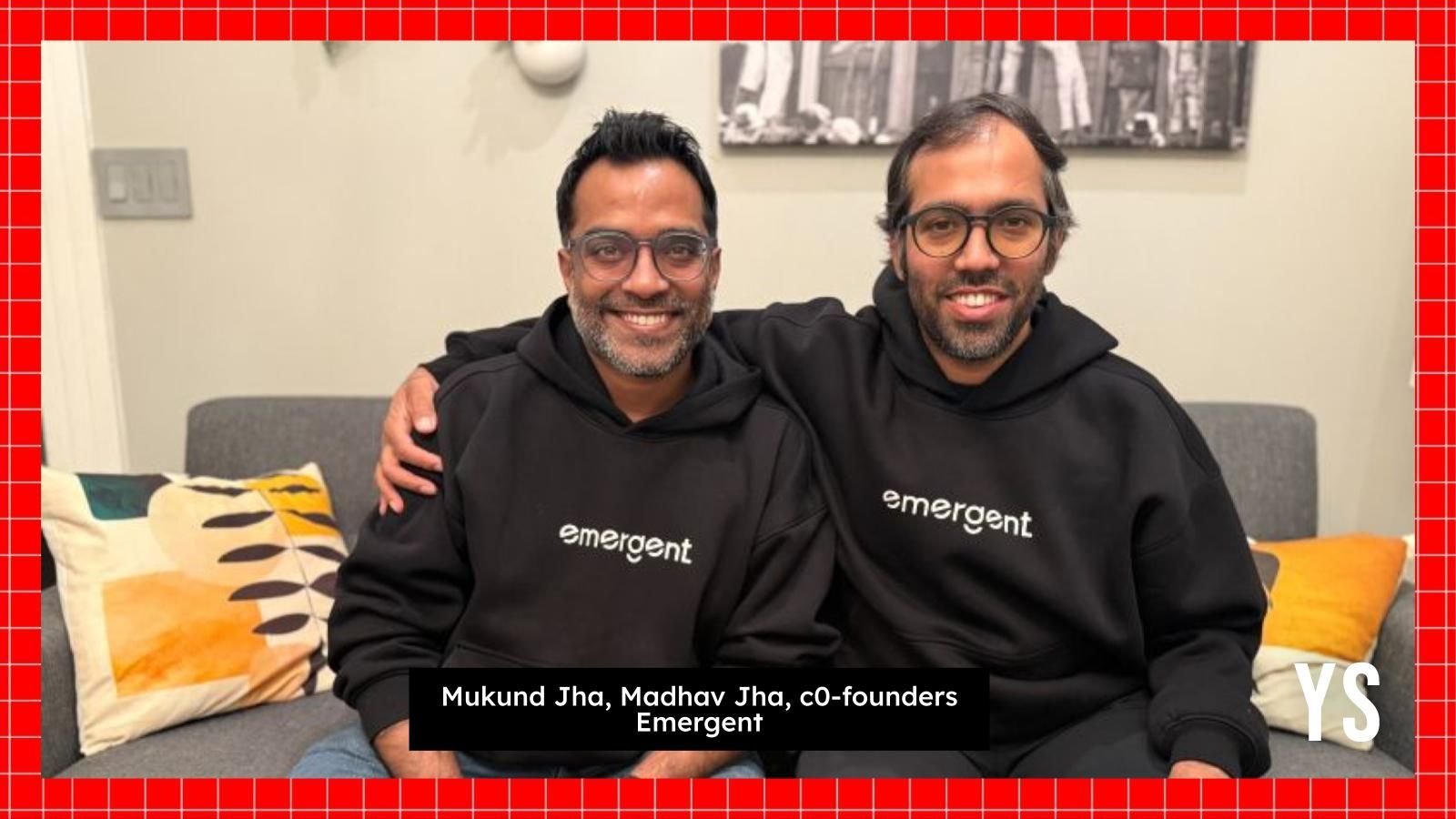
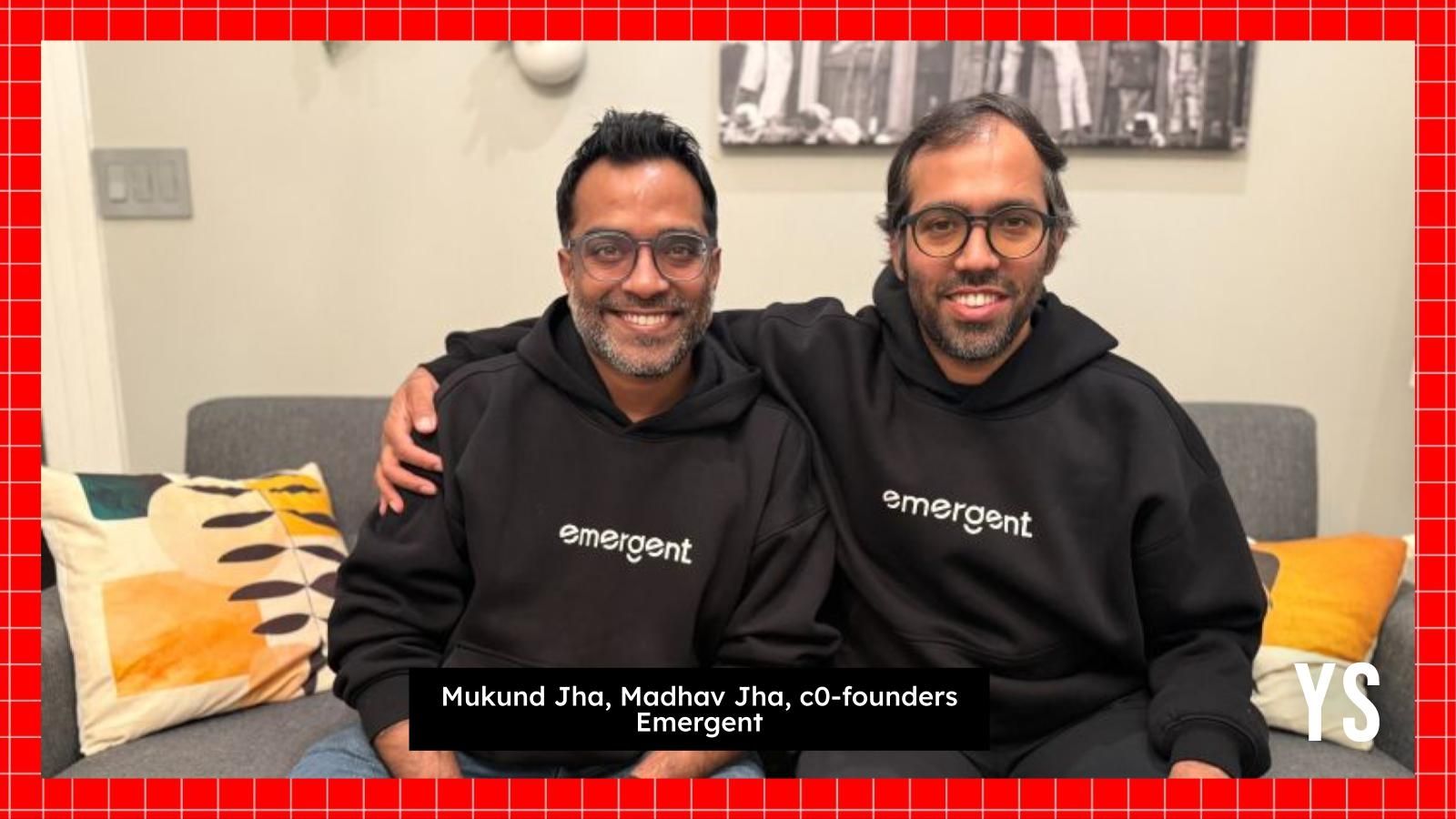
Emergent was started in July last year by Mukund and his twin brother Madhav Jha after years of working on deep learning and autonomous systems. Long before ‘AI agents’ became a buzzword, the brothers were experimenting on how software engineering could be automated.
As a software engineer, Mukund kept running into the same problem: people had ideas, ambition, and even customers, but building software remained slow, expensive, and constrained by the need for technical skills.
Instead of building another copilot or low-code tool, the brothers went after a harder problem— autonomous coding agents that could take abstract goals and deliver production-grade software.
Their early research paid off when their system, in November of 2024, topped SWE-bench, a global benchmark for coding agents, giving them the confidence to launch Emergent.
How Emergent works
Emergent’s platform behaves like a full development team. Its AI agents design systems, build backends, create APIs and interfaces, test, debug, and iterate—so users can go from an idea to a working, monetisable product through a simple conversation.
Emergent runs on a hybrid AI stack, combining its own fine-tuned models for specialised engineering tasks with large language models from OpenAI, Anthropic and Google Gemini, allowing it to balance reliability, speed and scale.
The focus on production-ready software, Mukund says, is what sets Emergent apart from most vibe-coding platforms that stop at demos and prototypes.
“To build real businesses, you need reliability, testing, debugging and infrastructure—not just pretty frontends,” he explains.
Emergent has a wide user base: factory owners building custom ERPs, construction firms digitising procurement, entrepreneurs launching new products, and agencies delivering client projects faster.
Mukund cites the example of a user-built platform that trades gift cards having crossed half a million views in a month—a signal that people are not just experimenting but also building revenue-generating businesses.
On the growth track
Emergent has crossed $50 million in ARR within seven months of launch and is on track to cross $100 million by April 2026, says Mukund.
The Series B funding comes less than three months after the Series A round, and follows a strategic investment from Google, making Emergent’s growth one of the fastest A-to-B progressions in the AI category.
The latest funding also marks SoftBank Vision Fund 2’s return to large AI investments in India.
Vinod Khosla, Founder of Khosla Ventures, says Emergent is “tapping into a segment that has never been served,” adding that when barriers to software creation fall this quickly, “behaviour changes across industries, not just within technology.”
According to Sarthak Misra, Partner at SoftBank Investment Advisers, Emergent is unlocking “a massive wave of entrepreneurship” by removing the technical and capital barriers that have historically limited who can build software.
For Mukund, the goal is not just to grow faster but also to push the limits of what AI can build.
The company is expanding its team across its offices in Bengaluru and San Francisco and strengthening its mobile app builder and category-specific workflows such as CRMs. It is also working to improve the quality and scale of its AI agents so that increasingly complex, mission-critical software can be handled.
“It’s still early,” he says. “But if we get this right, building software will stop being a bottleneck, and start being a superpower for anyone with an idea.”
Edited by Swetha Kannan
Discover more from News Link360
Subscribe to get the latest posts sent to your email.