

5 key takeaways from Eternal’s Q3 results: Hyperpure’s profit, District’s gamble, and Bistro play


Beyond the segment highlights, the wider group reported a massive 64% surge in revenue to Rs 16,315 crore, while profits climbed to Rs 102 crore. On a consolidated level, its business-to-consumer (B2C) business saw its net order value (NOV) surge to Rs 25,732 crore, a 55% jump from last year
The quarterly earnings have led Eternal’s shares to climb as much as 5% on NSE, closing at Rs 282.8 apiece.
Beyond the quick headline numbers, YourStory brings you key comments, overall strategy, and deeper insight from the company’s Q3 performance.
Blinkit turns EBITDA profitable. However, the road ahead looks unpredictable
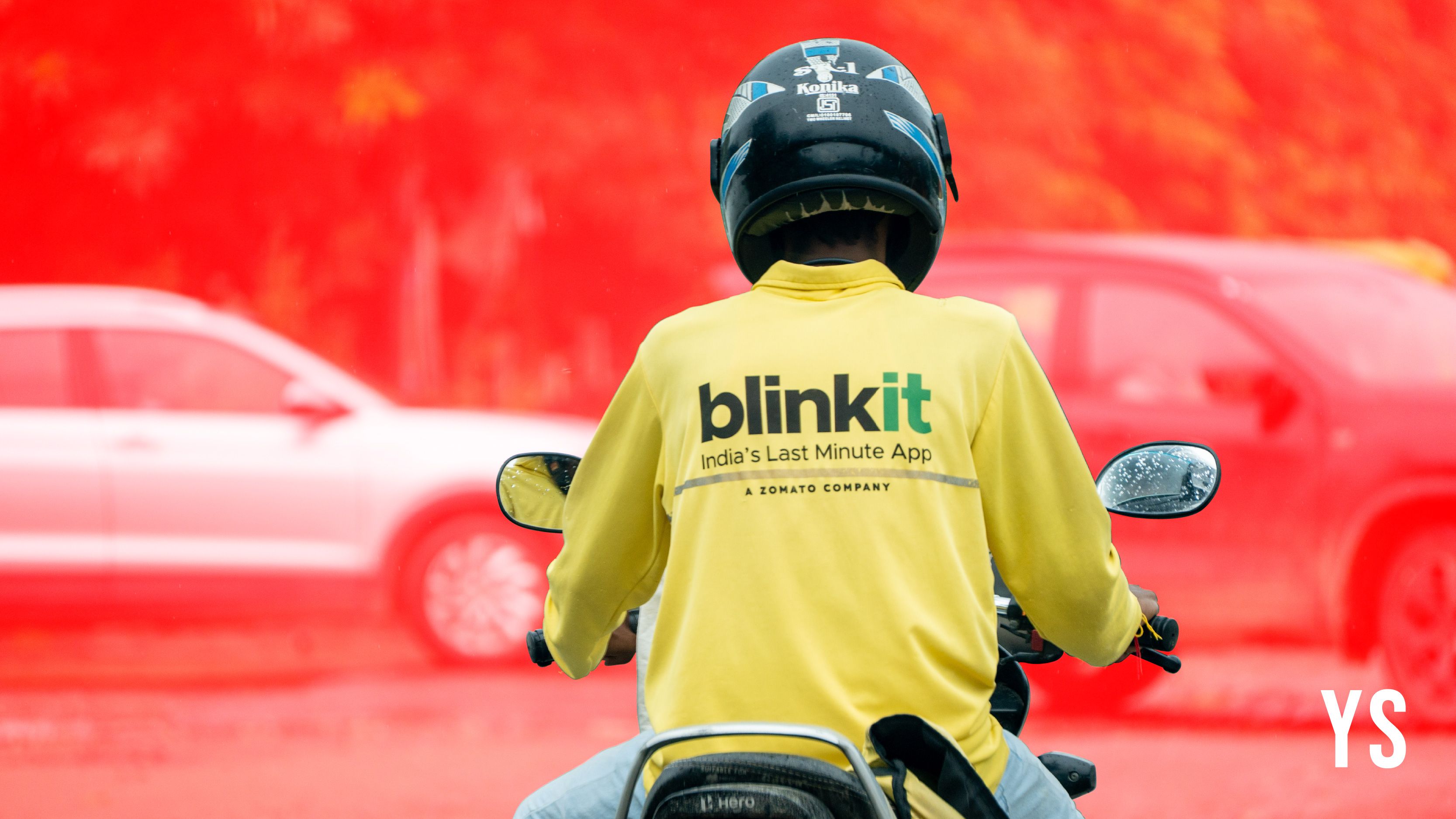
Blinkit managed to turn profitable with an EBITDA of Rs 4 crore, primarily driven by margin expansion—on the back of growing consumer preferences for long-tail or niche, premium categories, higher productivity in warehouses, and a strong festive season.
In the latest shareholder letter, Blinkit CEO Albinder Dhindsa noted the quick commerce giant remains confident on margins expanding to 5-6% of net order value, which currently stands around Rs 13,300 crore with a 120% YoY growth.
However, company executives believe it will be difficult to predict where earnings will go from here, as competition in the market remains dynamic with existing and new players.
“While we believe margins should expand, we cannot confidently say that the pace of margin expansion will be the same as last quarter,” shared Group CFO Akshant Goyal in a post-earnings call with analysts.
“Competitive intensity affects us depending on how it shows up. Last quarter, competitive intensity increased because competitors went to very low minimum order values and zero delivery fees, along with discounting. This makes it more complex to predict how we respond,” explained Dhindsa.
On track for 3,000 dark stores by March 2027
The quick commerce market leader said it is on track to open 3,000 stores by the end of March 2027. It added 211 net new stores during the December quarter, taking its total dark store count to 2,027 stores—just 70 stores shy of its target of 2,100 stores.
Blinkit’s rapid dark store expansion was hindered by slowed construction in Delhi-NCR, its top market, following pollution-related restrictions and operational constraints in managing heavy demand during the festive season.
It further expects to raise its dark store target by 500 to 1,000 stores, if competition moderates in the near term. With increasing saturation in metros and Tier I cities, the quick commerce debate has shifted to the viability in smaller towns. According to a company executive, at the contribution level, the economics are similar to top cities, even if headline numbers vary based on cities.
The company also expects the impact from the labour codes to come in from the next quarter. However, it doesn’t expect them to be meaningful.
Going-out business sees heavy losses
Eternal’s going-out business, housed under the District app, saw strong topline growth of Rs 300 crore, a 60% increase from last year.
December marked the highest-ever NOV month for the movie ticketing business. However, the growth came at a cost, with losses widening to Rs 121 crore compared with Rs 17 crore last year. On a sequential basis, losses nearly doubled from Rs 63 crore, as investments in marketing and category expansion took a toll on the segment’s bottomline.
The losses primarily widened following the launch of District Pass, which was not initially planned for this quarter. While it may not impact the topline numbers in this quarter, the effect will be compounding over the next few months, explained Goyal.
The District Pass is a three-month membership programme that offers benefits like free movie tickets, early access to events, and dining vouchers. With this feature, the company targets a $3 billion NOV business for the segment, with 5% Adjusted EBITDA margin by FY30.
“A large part of our growth going forward is expected to come from market share growth. There are sub-segments within the district business, such as events and movies, where we have a significantly smaller market share even now compared to competitors,” shared Goyal.
Hyperpure turns profitable, targets $1 billion revenue in three years
Eternal’s B2B supplier arm, Hyperpure, achieved a key financial milestone this quarter by turning operationally profitable. The segment reported a positive Adjusted EBITDA of Rs 1 crore, recovering from a loss of Rs 19 crore in the year ago period. Revenue for the quarter stood at Rs 1,070 crore.
Despite the segment being a smaller contributor to the overall pie, Group CFO Goyal described Hyperpure as a “strategic moat” that quietly powers the endurance of the company’s B2C engines.
For Blinkit, Hyperpure acts as a strategic sourcing engine for fresh products, driving structurally better gross margins through backward integration and low waste. On the dining and delivery side, it removes backend supply chain constraints for restaurants, deepening trust and enabling partners to scale faster. It has also enabled faster innovation for Bistro, a quick food delivery business.
The management outlined an aggressive roadmap for the vertical, projecting that Hyperpure could scale to a $1 billion topline within three years. At steady state, the company targets a 4-5% Adjusted EBITDA margin for the business, which would translate to about $50 million (Rs 450 crore) in annual profit.
Bistro nears product-market fit, doesn’t cannibalise Zomato business
Eternal has scaled Bistro, its cloud kitchen-based quick food delivery offering, to 45 kitchens across Delhi-NCR and Bengaluru, translating into a Rs 50 crore loss due to expansion and fresh investments. The business is seeing early signs of product-market fit, reflected in healthy throughput per outlet.
According to company executives, the segment is showing signs of profitability, especially given that the AOVs are much lower here than what we see in the food delivery business.
“I think there’s a cuisine gap in the market, which I think Bistro fills. And that is also why we don’t see this business cannibalising the Zomato business wherever we have these stores,” added Goyal, outlining the company’s plans of continued investments in the business, although at a cautious pace.
Deepinder Goyal stepping down
In a surprising turn of events, Goyal—the co-founder and Group CEO of Eternal—announced his resignation, adding that the mandate will now be handed over to Dhindsa, who heads Blinkit, Eternal’s largest revenue contributing segment.
“Of late, I have found myself drawn to a set of new ideas that involve significantly higher-risk exploration and experimentation. These are the kinds of ideas that are better pursued outside a public company like Eternal. If these ideas belonged inside Eternal’s strategic scope, I would have pursued them within the company. They do not,” Goyal noted in a letter shared with shareholders.
These developments come amid Goyal’s exploration of new ventures outside of Eternal, including setting up aviation startup LAT Aerospace, and running a longevity-focused research initiative at Continue.
Edited by Suman Singh
Discover more from News Link360
Subscribe to get the latest posts sent to your email.