


90% of Success Comes Down to One Skill: Staying Undistracted
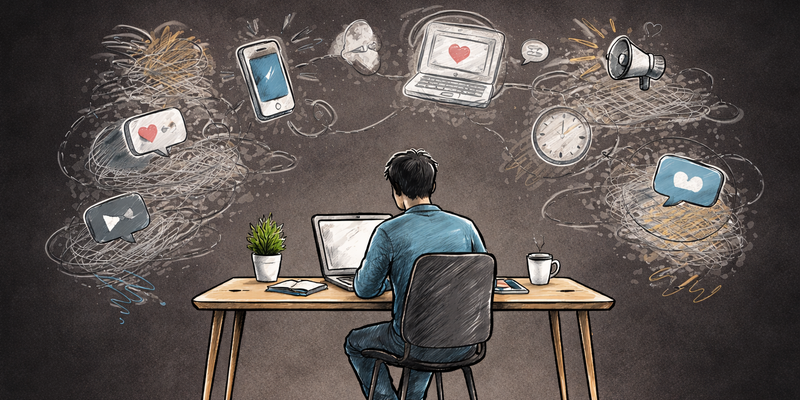
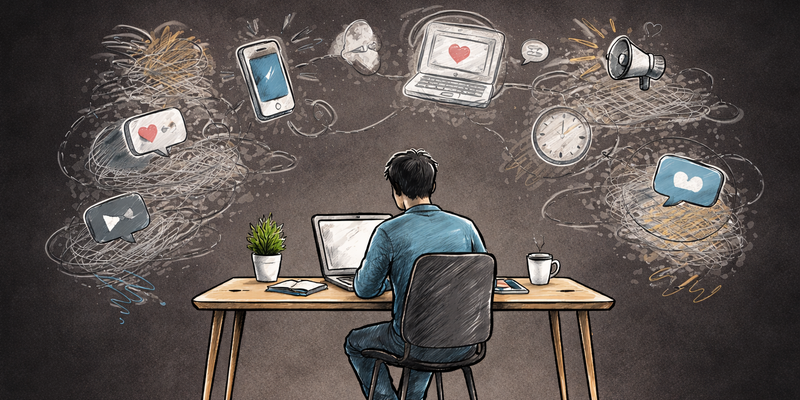

Distraction does not usually arrive as chaos. It arrives politely. A notification. A quick scroll. One harmless check. None of these feels like failure in isolation, yet together they dissolve momentum. Focus is not broken in dramatic moments. It erodes in small ones.
The real cost of distraction
Every time attention shifts, the brain pays a switching cost. It takes time and energy to return to the original task. Studies on cognitive performance show that frequent interruptions reduce not just speed but quality of thinking. Complex work needs continuity. Insight needs stillness.
Most people underestimate this cost because distraction feels productive. Messages are answered, tabs are opened, information is consumed. Activity increases, but progress does not. You remain busy, yet nothing meaningful moves forward.
The people who succeed early understand something simple: protecting attention is protecting results.
Focus beats motivation
Motivation is unreliable. It fluctuates with mood, energy, and circumstance. Focus, on the other hand, can be designed.
Highly effective people do not wait to feel inspired. They structure their environment so distraction has fewer entry points. Phones are kept away. Notifications are silenced. Work is scheduled when the mind is sharpest. This is not discipline as punishment. It is discipline as design.
When focus becomes routine, output compounds. One uninterrupted hour often produces more value than an entire distracted day.
Why most goals fail
Many goals fail not because they are unrealistic, but because they never receive sustained attention.
Learning a skill, building a business, improving health, writing consistently, all require long stretches of boring, repetitive focus. Distraction interrupts this process before results become visible. People quit not because it is impossible, but because they never stayed long enough to see momentum build.
Progress is quiet in the beginning. Distraction steals patience at exactly that stage.
Attention is the new currency
We live in an economy that profits from divided attention. Platforms compete not to inform you, but to keep you scrolling. This makes focus a competitive advantage.
If two people have equal intelligence and opportunity, the one who can concentrate deeply for longer will outperform the other over time. Not dramatically. Inevitably.
This is why focus feels powerful. It is rare.
How high performers protect focus
They do not rely on willpower alone. They rely on rules.
- Single-tasking instead of multitasking
- Time blocks instead of open schedules
- Clear priorities instead of endless to-do lists
- Boundaries instead of constant availability
These choices look small, but their effect is cumulative. Over months and years, they decide outcomes.
Success is subtraction
We often think success requires adding more effort, more tools, more strategies. In reality, it often requires removing noise.
Remove unnecessary inputs. Remove constant checking. Remove the habit of reacting to everything. What remains is space, and in that space, real work happens.
The statement “90% of success is not getting distracted” is not motivational. It is practical. It suggests that you already have much of what you need. What is missing is not ability, but uninterrupted time with your ability.
In a distracted world, focus is not just a habit. It is a decision. And for most people, it is the decision that changes everything.
Discover more from News Link360
Subscribe to get the latest posts sent to your email.