

From inherited skills to steady income, a welding shop in Shamli

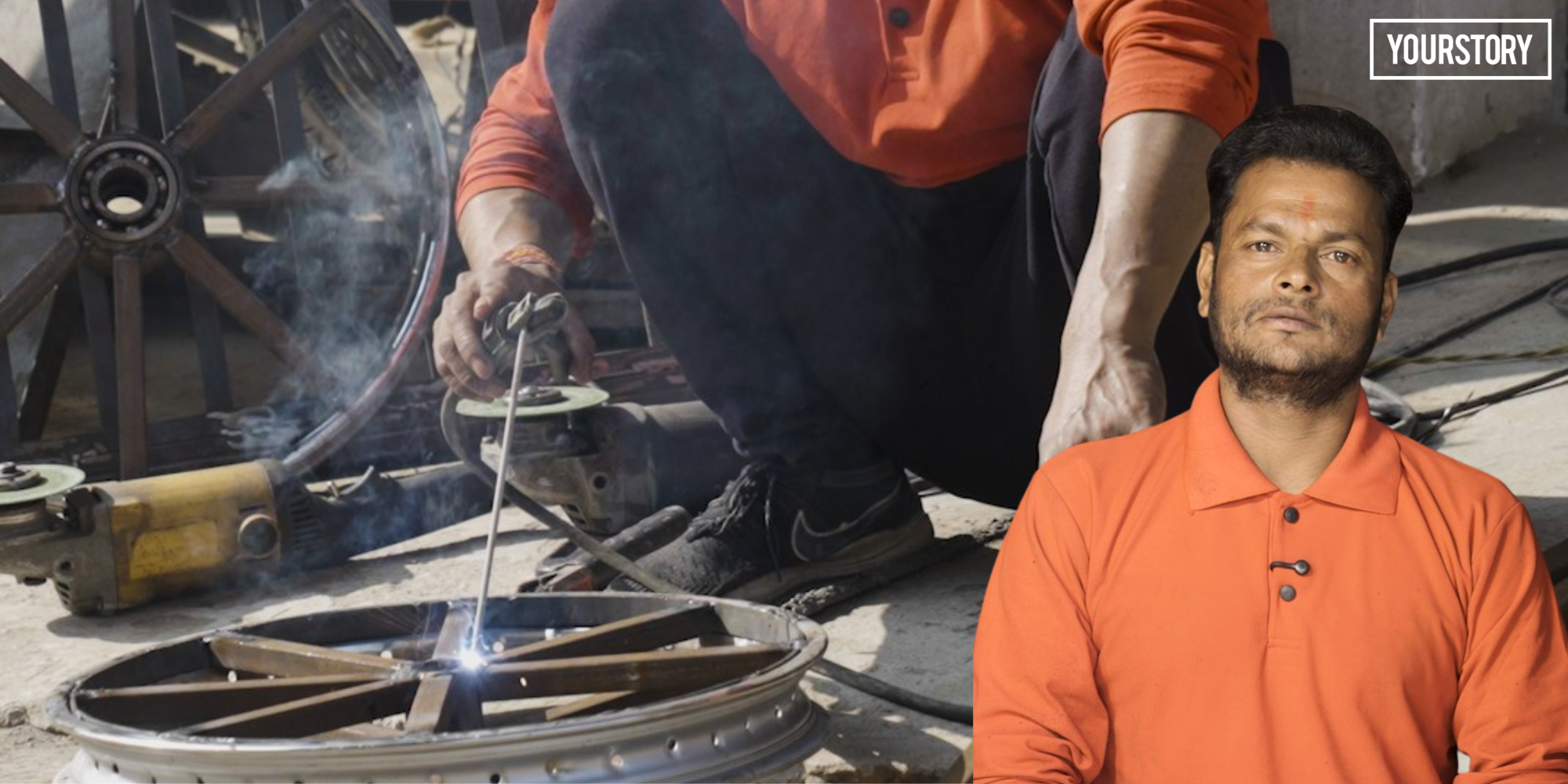

The unit undertakes routine fabrication and repair work needed in nearby villages. It makes buggies, trolleys, gates, handcarts, and basic agricultural implements that farmers use to move produce and equipment. The work is practical and seasonal, tied closely to local demand rather than distant markets. Kumar has been doing the work himself for nearly a decade, while the shop has existed far longer under his father’s care.
Stepping in after loss
Kumar’s involvement deepened when his father’s health began to fail. As illness limited his father’s ability to work, the responsibility of keeping the shop running shifted gradually to him. After his father passed away, the work became his full-time livelihood. He handled everything himself, from dealing with customers to managing daily production, without external help or formal training.
Like many small operators, access to money was restricted. He recalled taking a small loan earlier from a private company, which proved costly, despite being repaid on time. The experience made him cautious about borrowing again. When he visited a bank for regular work-related needs, he learned about the Mukhyamantri Yuva Udyami Vikas Abhiyan (CM YUVA) Yojana. With guidance from bank staff, he completed the paperwork and secured support to stabilise the shop.
“The earlier loan took much more than it gave,” he said, recalling that period. “This time, the money actually helped the work move forward.”
Changing the pace of work
The assistance enabled Kumar to invest in equipment that transformed the shop’s functioned day- to- day functions. Until then, much of the cutting and shaping was done manually with basic tools, which slowed production and limited the size of orders he could take on. With new welding machines, grinders, and updated electronic equipment, the pace of work improved noticeably.
Jobs that earlier took two days could now be completed in one. Faster turnaround meant customers did not have to wait as long, and word spread to nearby villages. Demand increased steadily, and work began coming in from farther away. Over time, the shop moved from survival to relative stability. As income became more regular, Kumar was able to repair and rebuild parts of his home, which had earlier remained unfinished.
Although the scheme is not central to his identity as a worker, Kumar credits CM Yuva Yojana with giving him room to modernise without the pressure of high repayment costs. The social impact followed the economic one. Respect within the community grew as the shop became dependable, and his role as a skilled tradesman became more visible.
Today, the welding shop continues much as it always has, grounded in everyday needs and steady labour. For Kumar, the journey from assisting his ailing father to running a functional unit reflects how continuity, timely support, and incremental improvement can turn an inherited skill into a stable livelihood.
Discover more from News Link360
Subscribe to get the latest posts sent to your email.