


Auto sector eyes EV incentives, infra spending in Budget; Ashok Leyland top pick: BNP Paribas

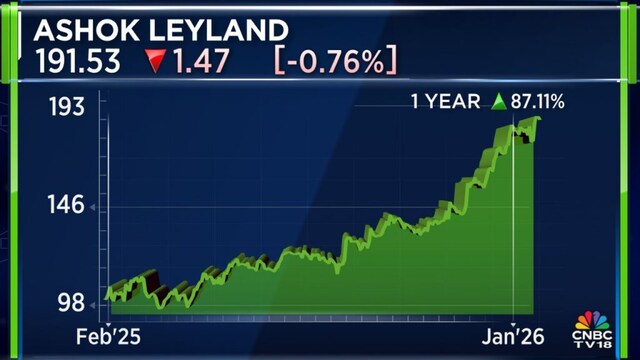
On stock-specific views, Rakesh flagged a divergence emerging within the auto space. While the broader sector could face near-term margin pressure from rising commodity prices—posing an estimated 100 basis point headwind—he identified Ashok Leyland as his preferred pick. “From a cycle perspective, it seems like the CV industry is entering into an up cycle,” he said, adding that CV manufacturers are better placed to pass on higher input costs during an upcycle than passenger vehicle makers. He also sees scope for valuation re-rating and margin expansion at the company as the cycle turns supportive.
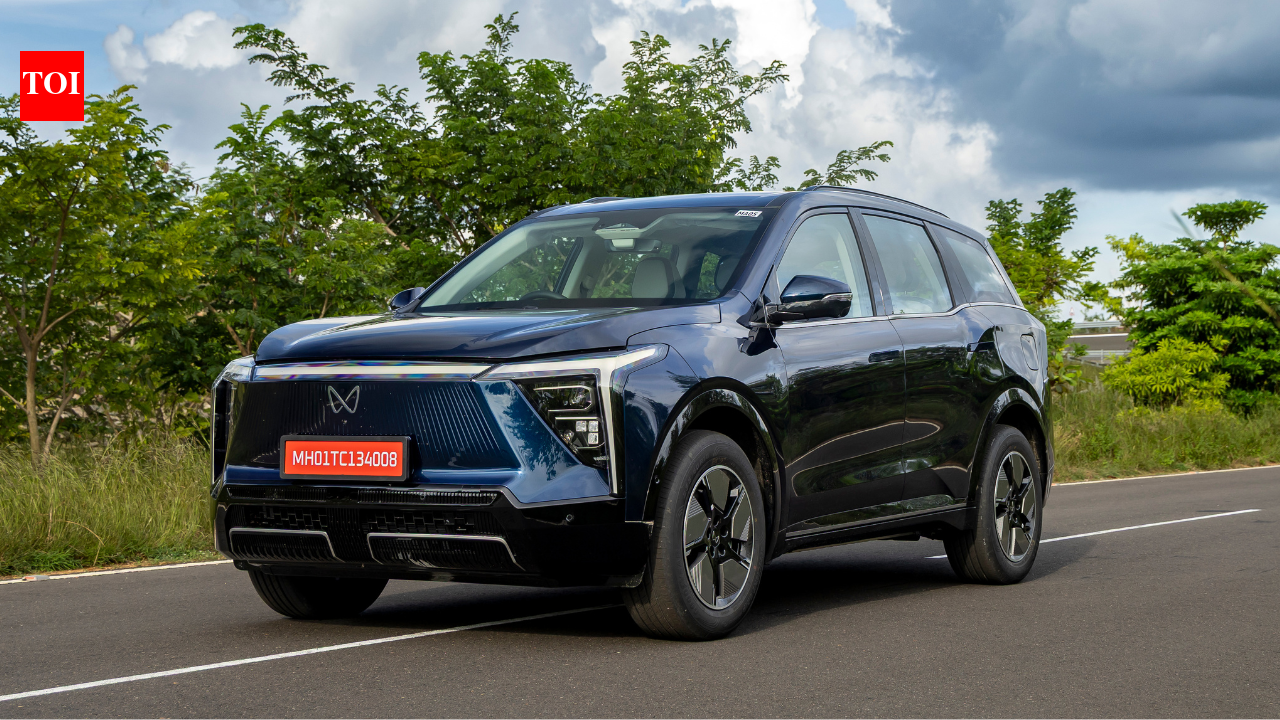
 Addressing the recent sell-off in auto stocks such as Mahindra and Mahindra (M&M) following the announcement of the India–European Union free trade agreement (FTA), Rakesh said market fears around the deal’s impact on domestic original equipment manufacturers appear overstated. He argued that the agreement is unlikely to materially disrupt Indian OEMs, despite proposals to sharply reduce tariffs on EU car imports.
Also Read: India-EU FTA to boost autos, MSMEs as zero tariffs unlock Europe market
Under the FTA, tariffs on completely built units (CBUs) are set to fall from the current 70%–110% range to 10% over a five-to-ten-year period. Rakesh said an initial reduction to around 35%–40% could make such vehicles roughly 20% cheaper. However, he stressed that CBUs are not the most relevant segment for India. “Most of the vehicles sold in India are currently through CKD,” he stated, referring to completely knock-down units assembled locally.
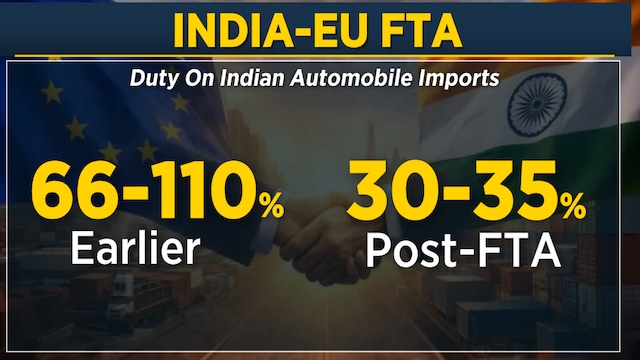
For CKD vehicles, Rakesh estimates a potential price reduction of about 7%, but he does not expect the full benefit to be passed on to consumers. “We think the real outcome of this would be that the profitability of these European automakers in India business improves,” he explained, pointing to recent profitability challenges and currency pressures faced by European players. Rather than aggressive price competition, he expects the FTA to support the premiumisation of the Indian auto market, especially in segments priced above ₹25–30 lakh, where most listed Indian auto companies have limited exposure.
Also Read: Budget 2026: Home loan borrowers seek tax relief, simpler rules to ease EMI burden, say experts
Rakesh described the recent volatility in auto stocks as an “overreaction,” drawing parallels with earlier market jitters around Tesla’s potential India entry and the UK–India trade deal discussions. In his view, such agreements tend to expand the market at the premium end rather than disrupt the mass-market segment where domestic OEMs dominate.
On the auto ancillary sector, Rakesh struck a cautious tone, saying the FTA is unlikely to trigger a “dramatic increase” in exports. He stated that Indian suppliers already enjoy a cost advantage and that tariffs on auto parts entering the EU were not particularly high even before the agreement. Many Indian component makers also operate plants in Europe to serve local clients, reducing the incentive to shift production back to India. He added that higher exposure to Europe may not necessarily excite investors, as “the valuation multiple for Europe exposure is usually the lowest.”
For the entire interview, watch the accompanying video
Catch all the latest updates from the stock market here
Also, catch the latest Budget 2026 expectations updates here
Discover more from News Link360
Subscribe to get the latest posts sent to your email.