

Why Being a Fool at the Right Time Can Change Everything
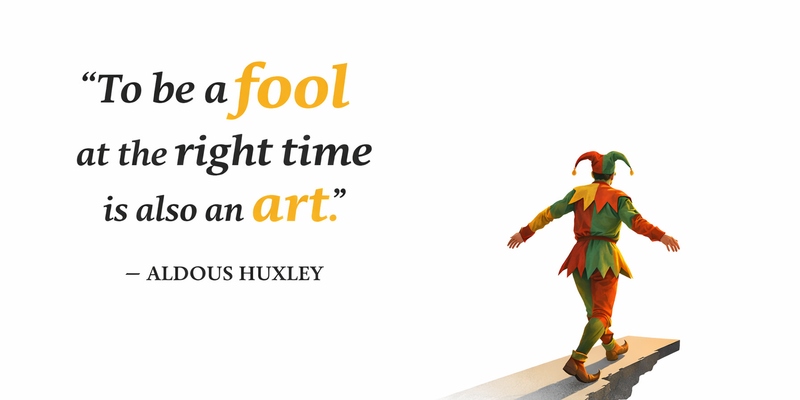

This kind of foolishness is not ignorance. It is timing.
The difference between stupidity and strategic foolishness
Being foolish is often confused with being careless or uninformed. Huxley’s idea points elsewhere. Strategic foolishness is a conscious act, taken with awareness of the risks involved. It is the moment when logic alone is insufficient, and progress requires stepping into uncertainty.
Many breakthroughs begin this way. An entrepreneur quitting a stable job to pursue an untested idea appears foolish in the short term. An artist abandoning a proven style to explore something new risks ridicule. A whistleblower speaking up against a powerful institution is often labelled reckless before being recognised as courageous. In each case, the individual understands the danger but acts anyway, guided by instinct, conviction, or necessity rather than approval.
The art lies in sensing when restraint has become a barrier rather than a virtue.
Foolishness as freedom from ego
One of the hardest things for intelligent people to do is look foolish. Reputation, expertise, and past success can become traps. They push individuals to defend what they know instead of exploring what they do not. Huxley’s insight suggests that progress often requires a temporary surrender of dignity.
Asking a naïve question in a room full of experts can feel embarrassing, yet it is often the question others are afraid to ask. Admitting uncertainty may undermine authority, but it can also open the door to learning.
Trying and failing publicly can damage image, but it can also reveal truths that cautious success never would.
In this sense, being foolish at the right time is an act of humility. It recognises that clinging to being right can be more dangerous than risking being wrong.
Timing is everything
The quote emphasises when, not whether, one should be foolish. Foolishness at the wrong time can indeed be destructive. Acting impulsively without understanding consequences, or ignoring hard-earned knowledge, is not art, it is negligence.
But there are moments when overthinking paralyses action. When evidence is incomplete, when innovation demands experimentation, or when moral clarity outweighs personal safety, waiting for perfect certainty becomes its own kind of failure. At these moments, a calculated leap that looks foolish from the outside may be the most rational choice available.
Those who master this timing often reshape industries, challenge norms, and shift culture. Those who never allow themselves to look foolish rarely leave a lasting mark.
The quiet courage of looking foolish
Huxley’s line ultimately speaks to courage. Not the loud, dramatic kind, but the quieter courage of acting without guarantees. To be foolish at the right time is to accept vulnerability, criticism, and possible loss in service of something larger than comfort or reputation.
In an age obsessed with optimisation and risk management, this idea feels increasingly relevant. Progress does not belong only to the careful and the clever. It also belongs to those who know when to loosen their grip on certainty and step forward anyway, fully aware that they might stumble.
That judgment, that instinct for timing, is what turns foolishness into art.
Discover more from News Link360
Subscribe to get the latest posts sent to your email.