

Edge computing explained: What it means for everyday users



Instead of sending all data to faraway cloud servers, it processes information closer to where it is created. The result is faster responses, lower data usage, and more reliable experiences, even on patchy networks.
This article explains edge computing in simple terms and why it matters to users, not just engineers.
What does edge computing actually mean?
In traditional cloud computing, data from your phone, app, or smart device is sent to a central data centre for processing. That data may travel thousands of kilometres before a response comes back.
Edge computing changes this flow. Instead of relying entirely on distant cloud servers, data is processed at the “edge” of the network. This could be on your device, a nearby server, or a local gateway. Only essential information is then sent to the cloud. In short, decisions are made closer to you, not somewhere far away.
How edge computing works in simple terms
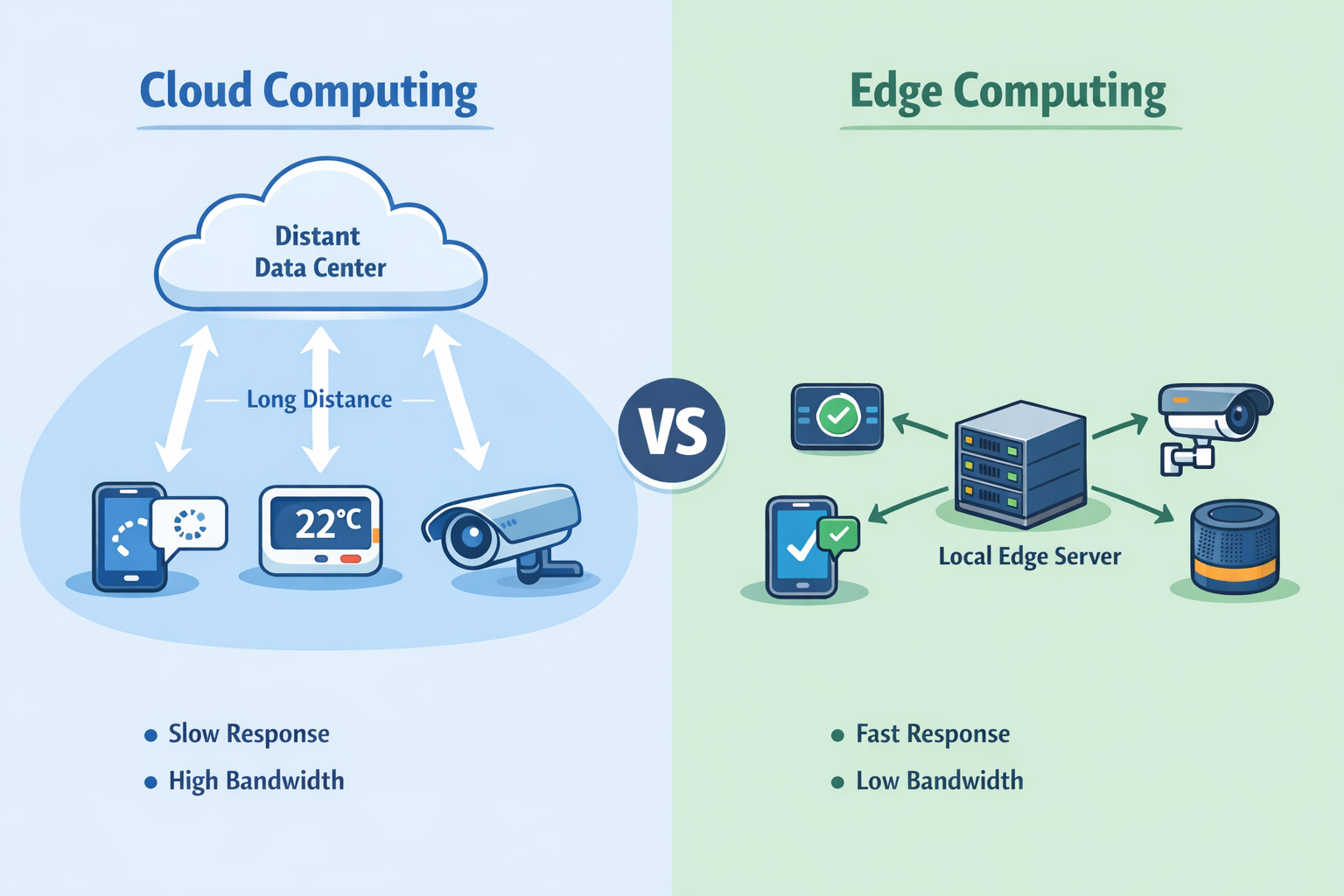
When an edge-enabled device collects data, it does not immediately send everything to the cloud. First, the device or a nearby system analyses the data locally. It decides what is important and what can be ignored or summarised. Only useful insights travel further.
This reduces how much data moves across networks and allows real-time responses. It also means many features continue to work even when internet connectivity is weak or inconsistent.
What everyday users actually notice
Most people never see edge computing directly, but they feel its impact every day.
Faster responses
Smart home devices respond instantly because decisions are made on the device itself. Lights turn on immediately. Thermostats adjust temperature without delay.
Smoother video and calls
Streaming platforms use nearby edge servers so videos load faster and buffer less. Video calls feel more stable because data does not need to travel long distances.
Lower data usage
Since only essential data is sent to the cloud, apps consume less bandwidth. This is especially useful for video-heavy apps and users on limited data plans.
Better privacy
Processing data locally means sensitive information does not always leave your device. This reduces exposure to large-scale data breaches.
Reliability in weak networks
Edge computing works even when connectivity drops. Fitness trackers, navigation apps, and smart devices continue functioning in areas with poor signal.
.thumbnailWrapper{
width:6.62rem !important;
}
.alsoReadTitleImage{
min-width: 81px !important;
min-height: 81px !important;
}
.alsoReadMainTitleText{
font-size: 14px !important;
line-height: 20px !important;
}
.alsoReadHeadText{
font-size: 24px !important;
line-height: 20px !important;
}
}

Everyday examples you already use
Edge computing is already part of daily life such as:
- Smart thermostats adjust room temperature based on occupancy
- Fitness trackers analyse heart rate data locally to provide immediate feedback during workouts.
- Streaming services deliver content from edge servers closer to users, making playback smoother.
- Traffic cameras and navigation systems detect incidents instantly without relying on remote processing.
These experiences feel simple, but they rely on powerful local computation.
Why edge computing matters more now
As devices generate more data, sending everything to the cloud becomes expensive and slow. Edge computing reduces pressure on networks, cuts costs, and enables new real-time applications like gaming, augmented reality, and smart transport systems. For users, this means technology that feels faster, more dependable, and less intrusive.
The bigger picture
Edge computing is not replacing the cloud. It works alongside it. The cloud still handles large-scale storage and complex analysis. The edge handles speed-critical decisions close to users. Together, they create better digital experiences. For everyday users, edge computing simply means technology that works when you expect it to, without delays or disruption.
Discover more from News Link360
Subscribe to get the latest posts sent to your email.