



4 Barriers to Giving Students With Disabilities the Tools They Need to Thrive
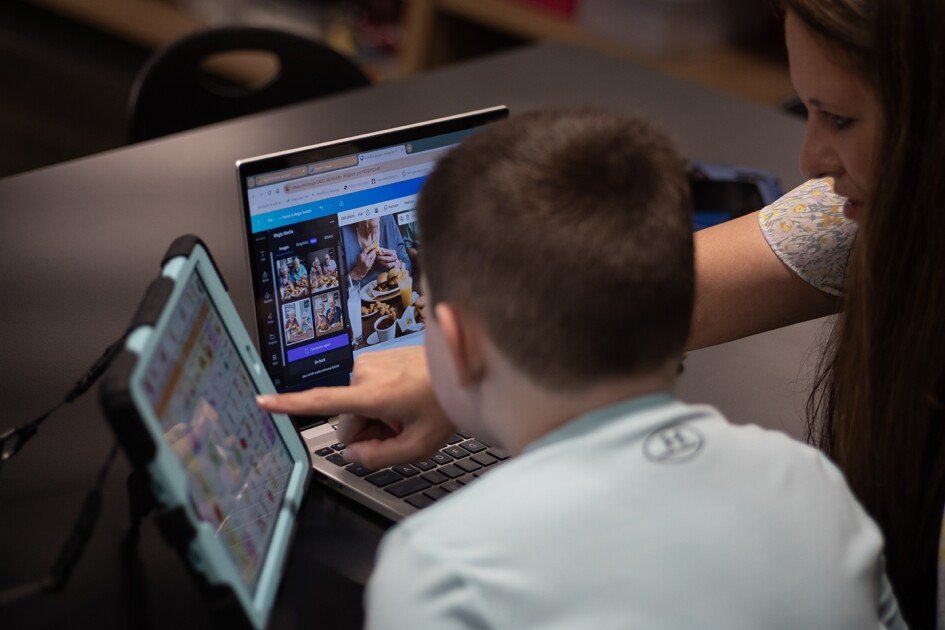
The nonpartisan Government Accountability Office visited school districts in Minnesota, Pennsylvania, Texas, and Wyoming. Investigators also interviewed educators and surveyed federally supported centers for parents of children with disabilities to learn how schools deploy assistive technology—and how those processes could be improved. Their findings were published in a Jan. 29 report.
The category of assistive technology includes a wide range of tools—everything from simple cards printed with images to help nonverbal students communicate, to more advanced computer programs that read text aloud for students with processing disorders.
The Individuals with Disabilities Education Act requires schools to consider the use of the technology when they create an individualized education program, or IEP, for a student with disabilities. But systemic and logistical concerns can stand in the way, the GAO found.
“We frequently face challenges where schools lack consistency in supporting assistive technology …” one parent-support center reported. “There is a lack of designated individuals responsible for providing training, resulting in teachers not knowing how to effectively integrate assistive technology devices or software into their classrooms.”
Here are four challenges the GAO identified.
1. Teachers, students, and families have limited awareness about the range of assistive technology options
Because assistive technology can include so many things, teachers don’t always understand the full menu of options under that umbrella, districts reported. And families may not be aware of options that could support their children, so they don’t know to advocate for them in IEP meetings, the GAO found.
Low-tech options schools use include elevated surfaces to improve writing posture, pencil grips, and swivel stools. Some also use printed materials, including cards with images of school activities, like snacks or a bathroom break, which allow educators to make visual daily schedules to help students know what to expect and regulate their behavior.
Medium-tech options include microphones for teachers that transmit directly to students’ hearing aids. Some schools also use large switches and buttons to make it easier for students with limited motor skills to control devices or even turn off the lights in the classroom.
High-tech options include software that read materials aloud, personalized software programs, and communication devices students control by gazing at various images or letters with their eyes.
“Rapidly changing technology can make it difficult for school district and school staff to keep abreast of current assistive technology options,” the GAO found.
Some districts have sought to remedy these issues by creating assistive technology teams made up of teachers, special education staff, and technology advisers who are charged with staying up-to-date with new options and consulting with teachers about how they may help students. Some districts have even created “toolboxes” of lower-tech options teachers can experiment with in the classroom.
2. Teachers and staff have limited expertise on using assistive technology
Educators, especially general education teachers, reported that they had limited or no professional development on how to identify appropriate technologies and how to use them to their full potential.
Those challenges are exacerbated by persistent, widespread special education staffing shortages and turnover, educators said.
A lack of support staff like occupational therapists can make it difficult to assess students’ needs and identify solutions. And a churn of new special education teachers, some of whom ultimately shift into general education classrooms, makes ongoing training a challenge.
Students who use assistive technology may also lack needed training in how to use it, investigators found.
“Staff from one school district said because teachers do not have enough time to train students on how to use devices, the teachers have asked students to train other students on how to use assistive technology,” the report said. “Without receiving sufficient training, students may not use their devices.”
District-level assistive technology teams can take ownership of training and professional development, providing a consistency through staff turnover, the report said.
Districts should take advantage of technical support provided by their states and by the Center on Inclusive Technology and Education Systems, the report recommended. CITES has created an assistive technology framework for districts that includes strategies like coaching and family outreach.
3. Stigma stops teachers and students from using assistive technology
Investigators identified two forms of stigma that hinder the use of assistive technology. First, some teachers wrongly believe tools like text readers provide an unfair advantage to students who use them, administrators said. And second, some students are resistant to using devices like headphones and specialized computer programs for fear of standing out from their peers.
Some of the student stigma has eased as tools like tablets have become ubiquitous in general education classrooms, educators said. And better coaching for teachers can help them understand how specific tools help students address their needs, the report said.
4. Financial constraints pose challenges
Inadequate funding for special education is a perennial concern, and it can also make it difficult for schools to buy more sophisticated tools for students with disabilities, which can cost tens of thousands of dollars, districts said.
States can address these concerns by providing technical assistance about how districts can use federal IDEA and technology funds, the report recommended. Some states have also set up lending libraries that allow schools to share tools housed in regional resource centers.
Discover more from News Link360
Subscribe to get the latest posts sent to your email.