


Early screening matters; do not miss the bus

Pennalam traces its origins to 2009, when its founder, Radhika Santhanakrishnan, was diagnosed with breast cancer. Her experience during treatment exposed a persistent barrier that extended beyond infrastructure. “I realised that fear and lack of information were preventing women from even considering screening,” she says.
Early efforts centred on a clinic in Mandaveli and a series of awareness programmes. Participation, however, remained limited. The recalibration was decisive. “Instead of waiting for people to come to us, we decided to go to the people,” Radhika explains.
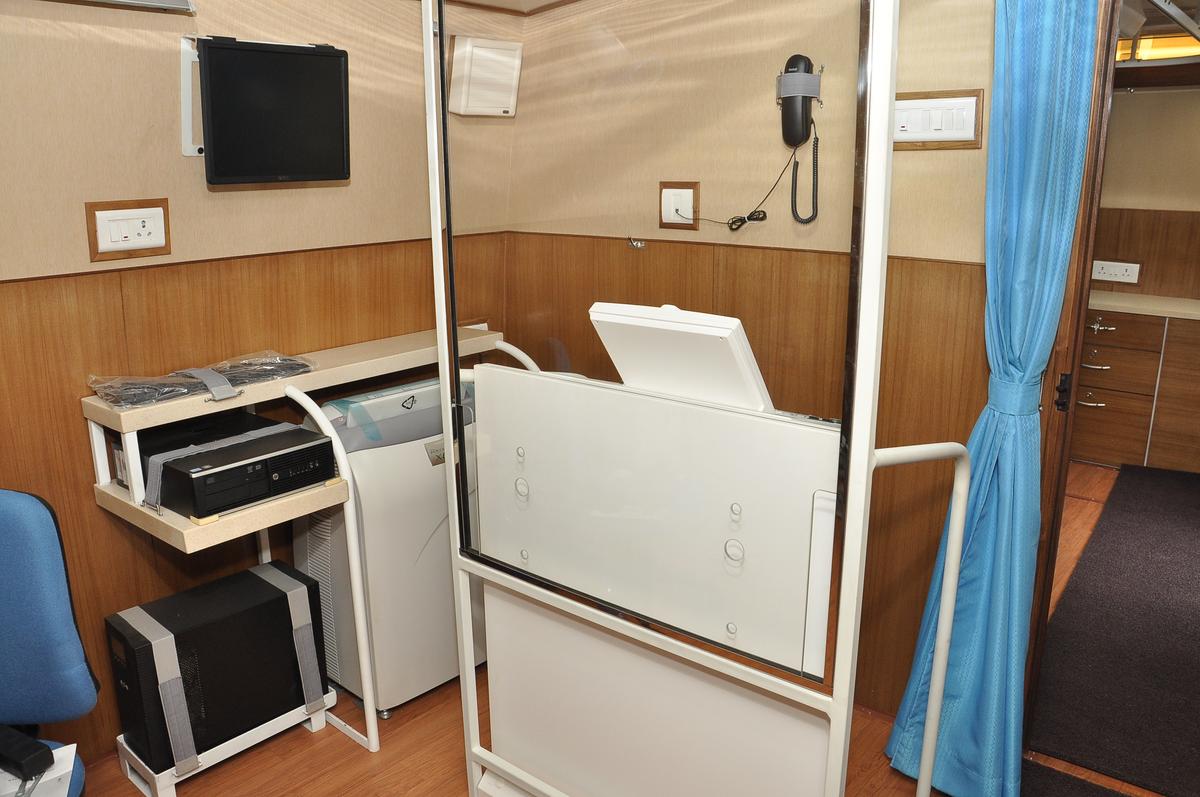
Inside Pennalam’s cancer screening bus.
| Photo Credit:
Special arrangement
That shift materialised in 2013 with the launch of Pennalam’s first mobile screening bus, developed after months of coordination with Ashok Leyland, which provided the chassis, and with funding support from ONGC. Subsequent expansion was enabled through partnerships with Rotary Clubs, while the Australian Consulate also extended support.
The buses are equipped to conduct mammograms and Pap smear tests, enabling screening for two cancers with high incidence among women. Mammograms are offered to women aged 40 and above, while Pap smears are conducted for women above 22 years who are married or have been in a relationship. The programme deliberately reframes screening as wellness. The slogan printed on the bus reads, “Thozhi, test edu… arogyathai kondaadu.”
Camps are organised in colleges, corporate campuses, RWAs, and social organisations. To organise a camp, the Pennalam team first identifies a local point of contact within the community, who coordinates communication, mobilises participants, and facilitates the awareness session preceding screening. A minimum of 50 women is required for a camp to be scheduled. Each camp follows a three-stage protocol: an awareness session, on-site screening, and a return visit to deliver reports and explain next steps.
Participants submit Aadhaar identification and medical histories prior to screening. Reports are evaluated by trained radiologists and gynaecologists, digitised at a base station, and conveyed back to participants. Women requiring further investigation are referred through the National Health Mission, primary health centres or affordable care facilities.
While many camps are conducted with sponsor support, enabling free screening, others operate with a small participation fee to sustain operations.
Pennalam can be contacted at 9843124842
Heading to peri-urban pockets
Working within a similar framework of decentralised outreach, Chennai-based Thenmozhi Memorial Trust has been conducting mobile breast cancer screening camps since 2015, targeting women in rural and peri-urban regions where diagnostic access remains limited. The Trust does not operate a dedicated mobile unit; instead, screening buses are hired from external providers including the Shantha Breast Cancer Foundation based on logistical feasibility.
The operational model is narrowly defined. Screening is limited to mammograms, offered primarily to women above 40 years of age, with marriage listed as an eligibility criterion. “Every scan is funded by the Trust. There is no cost to the participant,” says Arun Kumar M., founder of Thenmozhi Memorial Trust.
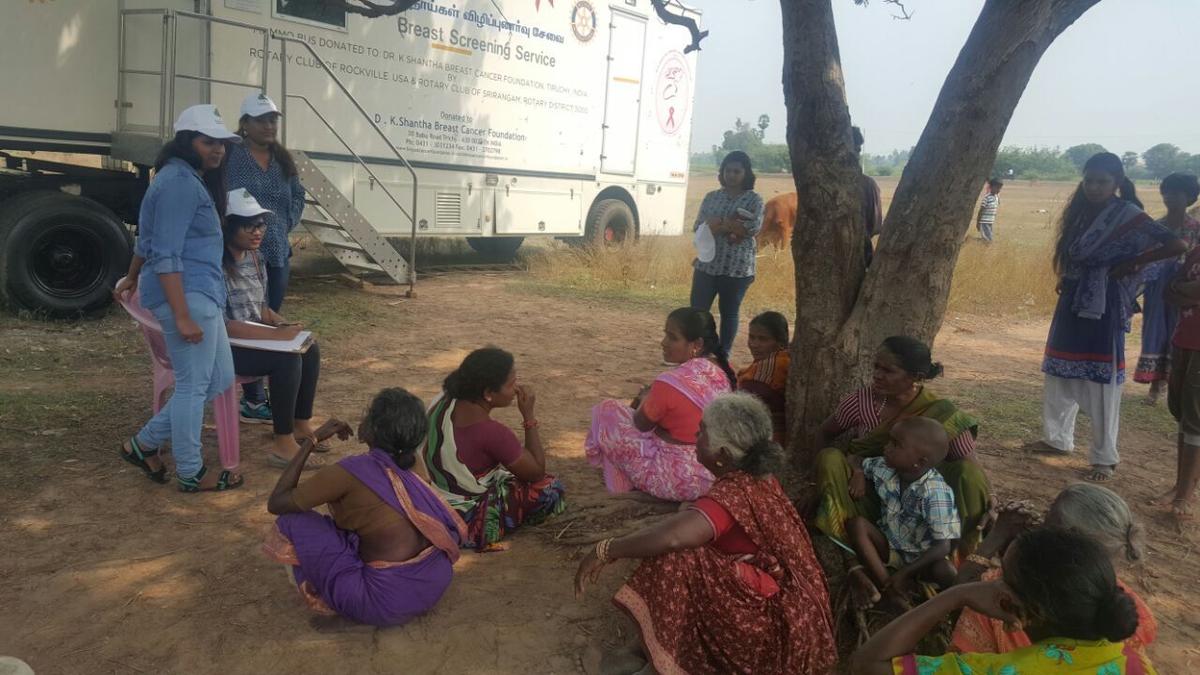
At a cancer screening camp held by Thenmozhi Memorial Trust
| Photo Credit:
Special arrangement
Each camp is overseen by a doctor, and participation is preceded by the completion of a structured questionnaire. The questionnaire records menstrual history, menopause status, and related clinical indicators, which are used to assess whether additional investigation is required. Women between 35 and 40 years are also evaluated when symptoms or medical history warrant further attention. “The questionnaire helps us identify risk and decide the next steps,” Arun Kumar says.
Site selection prioritises rural locations, often facilitated through collaborations with organisations already embedded in local communities. Reaching these sites presents persistent challenges. Mobile mammography equipment requires a 230-volt power supply, which is typically arranged through temporary connections from the village electricity line, coordinated by local leadership. Transport is organised within the village, and public announcements are used to inform residents ahead of the camp.
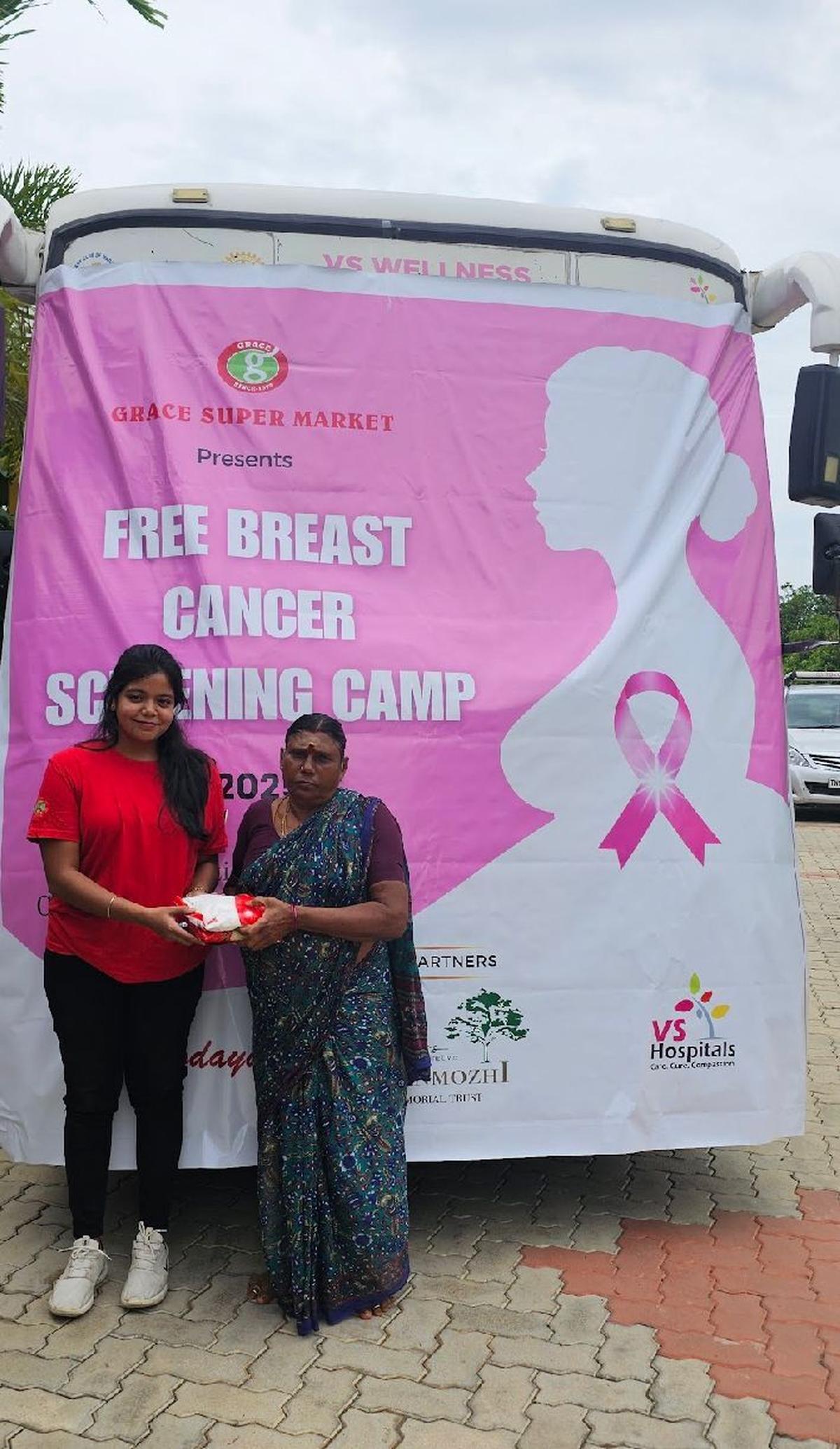
At a mobile cancer screening camp by Thenmozhi Memorial Trust.
| Photo Credit:
Special arrangement
Cultural hesitation continues to affect participation. “Cancer screening carries fear and stigma,” Arun Kumar notes. Women are often reluctant due to the nature of the procedure and the presence of unfamiliar volunteers. To address this, the team engages village heads in advance and relies largely on female volunteers to explain the process in detail, including the requirement to remove clothing and the functioning of the equipment.
Camps have been conducted in locations such as Nemalur, Chinna Bommajikulam, Mathur and Karanai. In Chinna Bommajikulam, approximately 80 kilometres from Chennai, the Trust reached a tribal settlement without proper roads or electricity with support from nuns running a geriatric centre. Questionnaire responses in one village revealed that a significant number of women had undergone hysterectomies, underscoring gaps in reproductive health awareness.
Attendance is a determining factor in whether camps are viable. A minimum of 40 participants is required. To improve attendance, the Trust has occasionally tied up with local sponsors. In one instance, women who came for screening received one kilogram of rice and sugar each. Word-of-mouth played a role in increasing participation.
Approximately 2,000 women have been screened to date. Results are delivered to villages within a week, and cases requiring further evaluation are referred to partner hospitals, with the Trust facilitating follow-up. “Our focus is not frequency,” Arun Kumar says. “It is whether the intervention is meaningful.”
While awareness levels are relatively higher in urban areas, the Trust also conducts camps in cities when requests are received from resident welfare associations, workplaces, or community groups. These requests are assessed based on feasibility and the expected number of participants.
Thenmozhi Memorial Trust can be contacted at 9994561398.
Published – February 04, 2026 08:41 am IST
Discover more from News Link360
Subscribe to get the latest posts sent to your email.