


Is Reality in Your Mind? Plato’s Quote Explained for Modern Life
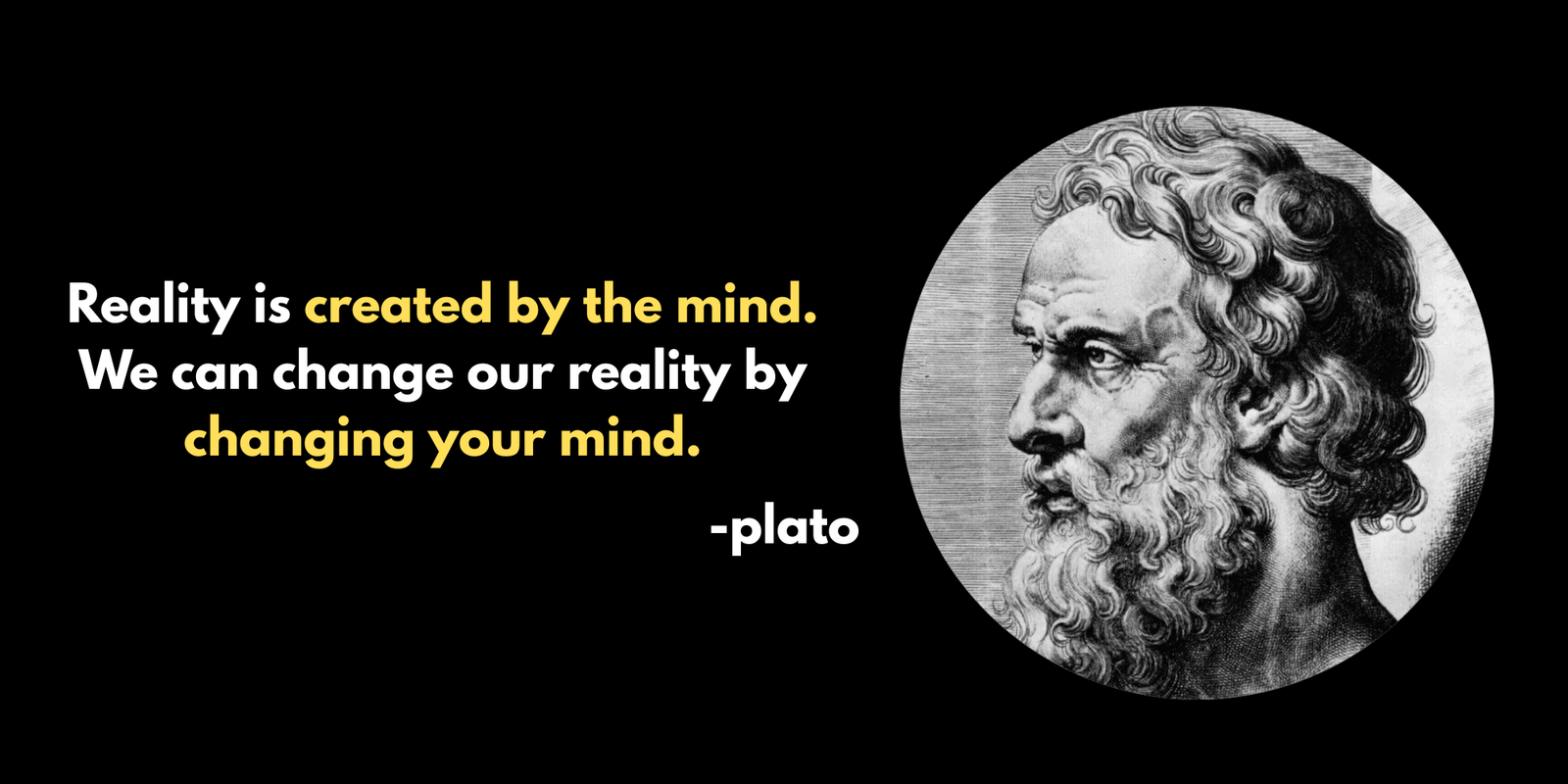

That is not the same as pretending problems don’t exist. It is a sharper claim: our thoughts shape what we notice, what we fear, what we assume, and what we decide to do next. Two people can face the same circumstance, and walk away with entirely different “realities” because their minds organise the experience differently. One sees a setback as proof of failure. Another sees the same setback as feedback and a chance to revise the plan. The event doesn’t change, but the meaning does, and meaning is what drives behaviour.
At a practical level, this quote points to the invisible lens we carry every day. The mind filters reality through beliefs, past experiences, and expectations. If you believe you are “not good with people,” you may avoid conversations, speak less, and then treat the awkwardness that follows as evidence that you were right. If you believe you can improve, you are more likely to practise, stay longer in uncomfortable moments, and slowly build confidence. In both cases, the mind is not merely reacting to reality, it is helping to produce it.
This is why “changing your mind” is not just positive thinking. It is disciplined thinking. It means identifying the story you are repeating, testing it against evidence, and choosing a more accurate frame. The shift can be small but powerful: replacing “I always mess this up” with “I’m still learning this”; changing “they’re judging me” to “I don’t know what they think”; moving from “this is the end” to “this is a turning point.” These changes don’t magically erase difficulty, but they change your response to difficulty, which is often the difference between stagnation and progress.
The quote also highlights a deeper truth about modern life: many of our biggest limitations are internal. Not because the world is easy, but because the mind can make it heavier than it needs to be. Anxiety turns uncertainty into catastrophe. Comparison turns someone else’s highlight reel into your personal failure. Rumination turns one mistake into a permanent identity. When the mind is locked into these patterns, reality shrinks.
So what does it mean to change your reality by changing your mind? It means taking responsibility for the part you control: attention, interpretation, and action. Start by noticing what your mind consistently predicts. Notice the phrases you use when things go wrong. Track what triggers you, and what calms you. Then practise a new mental habit: pause, label the thought, and ask, “Is this true, useful, and complete?” If not, rewrite it into something clearer.
In the end, the quote lands as both a warning and an invitation. If the mind can create a reality of fear, defeat, and limitation, it can also create a reality of curiosity, resilience, and movement. Not by denying facts, but by choosing the lens through which you meet them.
Discover more from News Link360
Subscribe to get the latest posts sent to your email.