
Agra’s Marble Craft: A Legacy Carved in Stone

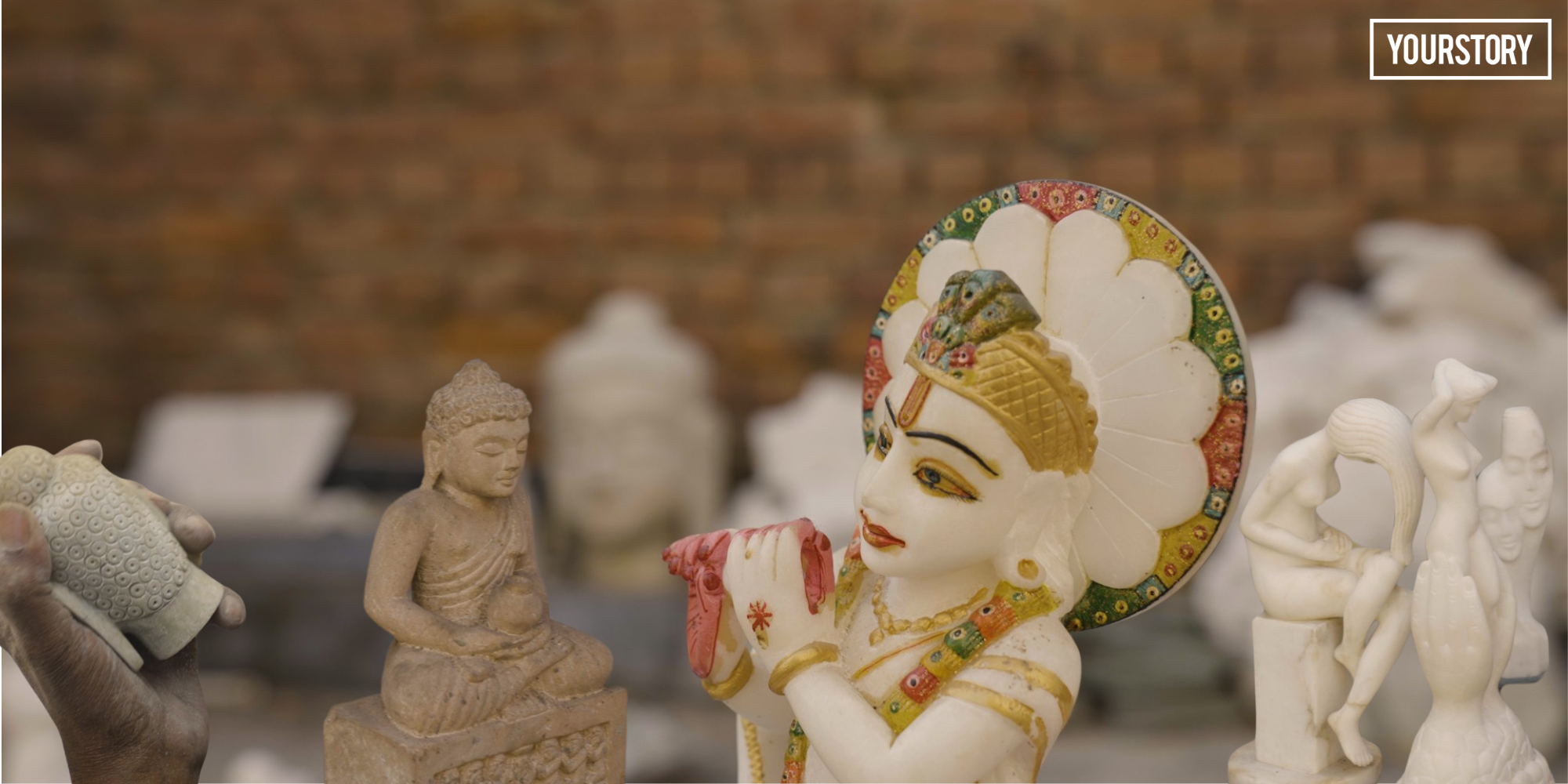

Handicraft products made from marble and stone in Agra are admired for their refined inlay work, balanced forms, and long-lasting finish. Marble idols, decorative artefacts, and artistic replicas—often embellished with coloured stones and, at times, gold wire inlay—are the hallmark of this enduring craft tradition.
The origins of Agra’s marble craftsmanship date back nearly 400–500 years, when stone carving and inlay techniques began to flourish as specialised artisan practices in the region. Over centuries, these skills have been preserved and refined through family lineages and workshop-based learning systems. Even today, artisans continue to carry forward this knowledge, maintaining both technique and aesthetic discipline.
Globally recognised for its marble heritage, Agra is also home to a strong craft-based local economy. Stone sculptures depicting figures such as Buddha, Shiva, and Krishna are among the most sought-after forms. Buyers value sculptures that are instantly recognisable, with artisans paying close attention to facial expressions, proportions, and a finish that endures over time. These products reach temples, home prayer spaces, hotels, and curated showrooms across India and overseas.
Behind each finished piece lies a closely linked ecosystem of stone traders, cutting units, tool makers, polishing workshops, and artisans—working together through a shared supply chain that sustains livelihoods across the district.
Skill Shaped Through Apprenticeship
Rajendra Prasad Uprati, an artisan from Kedarnagar, Agra, represents this living tradition. Trained through the traditional apprenticeship system, he began his journey by assisting his elder brother, initially working on smaller idols before progressing to more complex sculptures. According to him, stone carving demands patience, discipline, and years of consistent practice. His craftsmanship and commitment were recognised with a state-level award during 2014–15.
From Stone to Sculpture
The process begins with the careful selection of marble blocks from local markets, based on specific requirements. Initial cutting is carried out in workshops, followed by detailed shaping using chisels and hammers. Sanding and refining take place across multiple stages, with the facial features requiring the most precision and time. The sculpture is finally completed through polishing, which enhances both form and longevity.
Recognition through ODOP
Through the One District One Product (ODOP) initiative, Agra’s marble artisans have gained access to improved tools, skill development, and wider visibility. These interventions have helped improve finishing quality and market reach. Agra’s marble craft moves forward—driven by skilled hands, inherited knowledge, and a tradition where heritage and market demand grow together.
Discover more from News Link360
Subscribe to get the latest posts sent to your email.