


Why building climate-ready roads now is critical for our future


Over 64 million kilometers of roads worldwide face climate-related threats. Building climate-resilient roads is no longer optional; it is essential for long-term stability.
The World Bank estimates that, by 2050, developing countries alone could see $1.3 billion in annual road damage due to climate change. And it’s not just a problem for low-income nations, wealthier countries are also dealing with sinking pavements, landslides, flash floods, and a growing list of costly repairs.
Let us take Kerala for example. Vulnerability assessments of the state’s 6,040 km core road network revealed hundreds of hazard hotspots, including degraded culverts and failing slopes. What Kerala faces in monsoon-induced landslides, California experiences in wildfires, Mozambique in coastal erosion, and the UK in intense winter floods.
The common thread? Infrastructure designed for yesterday cannot survive tomorrow.
From repairs to resilience: How data Is paving the future of roads
It’s time for a global mindset shift. We can’t keep relying on quick fixes every time a road cracks or floods. Instead of patching things up again and again, we need to start thinking long-term.
Resilience has to be built into every part of a road’s life: right from the planning and design stage to how it’s maintained and operated. And to really make that happen, we need to let data lead the way. Smart, data-driven decisions are what will help us build roads that can actually stand up to the climate challenges ahead.
Globally, road authorities are turning to climate-aware Road Asset Management Systems (RAMS) to:
- Forecast failures before they happen
- Optimise budgets by targeting risk-prone assets
- Simulate deterioration under various climate scenarios
- Transition from reactive patchwork to proactive resilience
This paradigm is gaining traction everywhere. In the Netherlands, predictive modelling is used to identify flood-exposed highways. In Bangladesh, climate-resilient rural road designs incorporate elevated pavements and bioswales—elevated roadbeds help mitigate flooding, while bioswales, which are vegetated channels, manage stormwater runoff and reduce the risk of inundation.
And in the UK, there is a prime example that showcases what next-gen resilience looks like in action. A leading European transportation software provider undertook a comprehensive transformation for managing the highway network in the UK. The delivered system went far beyond routine asset tracking; it integrated GIS technologies, live and historical traffic data, rainfall patterns, pavement temperature thresholds, and more.
This resulted in:
- Significant reduction in asset management costs
- Steady improvement in pavement condition scores
- Support for digital twins and LIDAR-based assessments that provide a precise, real-time replica of the road network, enabling accurate climate risk modeling, predictive maintenance, and smarter, cost-efficient infrastructure decisions
- Built-in modules for climate scenario modeling and flood overlays
This system is now regarded as a global benchmark, not just for its scale but also for its foresight. It enabled the road authority to move from annual repair cycles to decade-long resilience strategies, with climate adaptation embedded at the core of investment decisions.
The insights gained from this deployment are now shaping similar implementations in climate-vulnerable geographies such as Kerala, where regional RAMS (Road Asset Management Systems) rollouts have been enhanced using the same forward-thinking principles.
Engineering foresight: Digital tools that future-proof roads
From AI-driven predictive maintenance to IoT-embedded pavements and crowdsourced commuter feedback, the digital revolution is reframing road resilience. At the core of this shift is data-driven analysis, which transforms vast streams of climate, traffic, and infrastructure data into targeted strategies for building stronger, more adaptable roads. Rather than reacting to damage, governments and engineers can now anticipate vulnerabilities and design resilience into roads from the start.
- Digital road twins: Dynamic models simulate road stress under various climate futures, helping engineers test and refine adaptations before breaking ground.
- AI & ML predictive analytics: Algorithms process years of weather, traffic, and maintenance records to identify patterns, flag weak points, and guide proactive interventions.
- Remote sensing: Satellite data replaces costly field surveys in difficult terrains, providing scalable intelligence to feed resilience planning.
- Modular platforms: Countries with resource constraints can begin by digitising inventories, then layer in advanced analytics as capacity grows, ensuring even incremental steps are data-informed.
A new philosophy for a changing planet
Resilient roads are not just infrastructure, they are also economic accelerators. The World Economic Forum estimates that for every $1 invested in resilient infrastructure, there is a $4 return in avoided losses and economic benefits.
Climate-smart engineering must become standard, not exceptional. To build this future, nations must:
<figure class="image embed" contenteditable="false" data-id="589711" data-url="https://images.yourstory.com/cs/2/c5c652a0fb5a11eca125d7821ea2fbc4/InfographicsOption2-1770442767986.jpg" data-alt="infographic" data-caption="
Infographic: Experion Technologies
” align=”center”> Infographic: Experion Technologies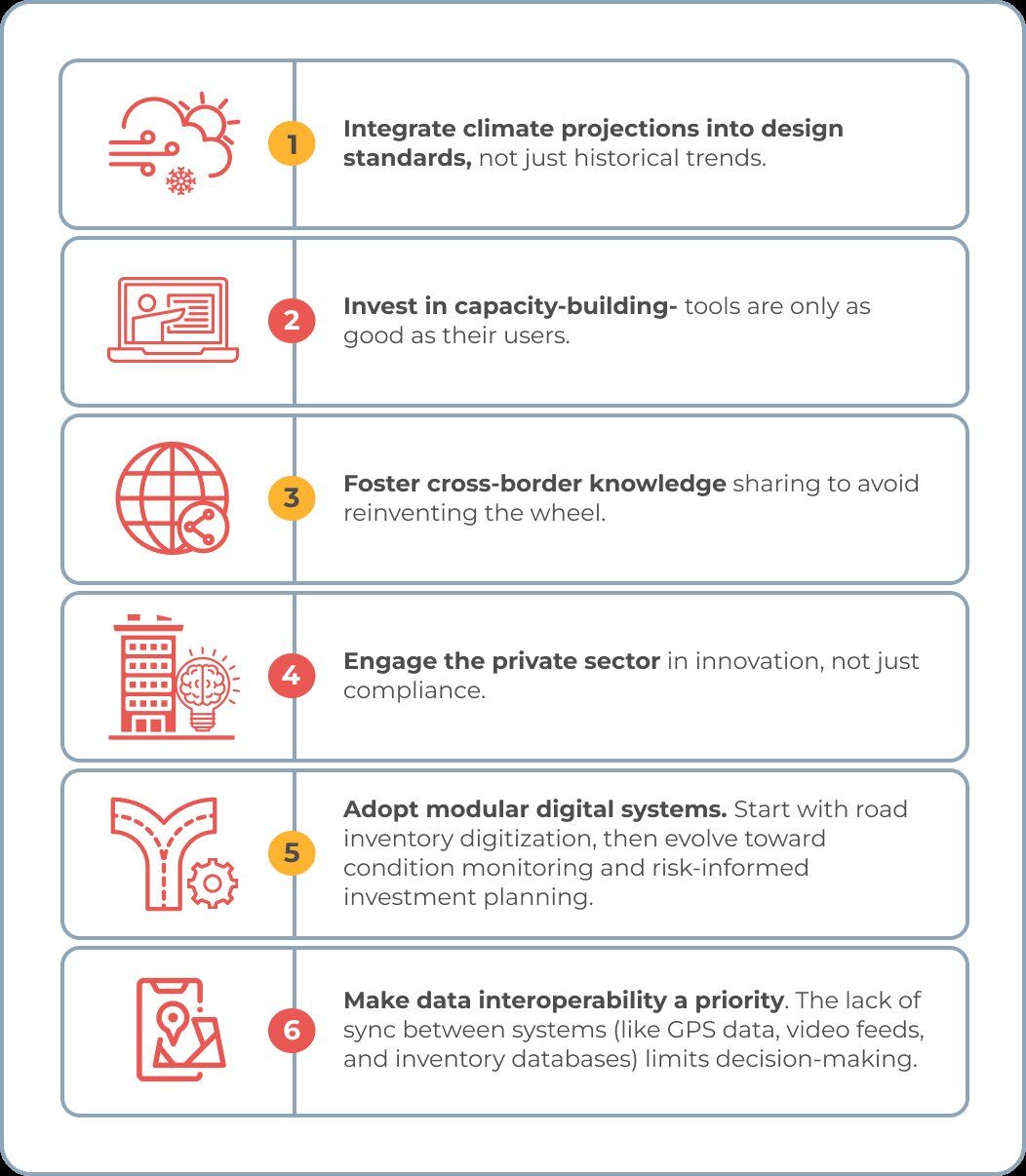
Building smarter, not just stronger
The time for resilience is now. In the face of cascading climate disruptions, reactive repairs are too little, too late. What the world needs is a new class of infrastructure: intelligent, adaptive, and insight-led.
The roads we build today will determine how we move, trade, and thrive tomorrow. By investing in climate-ready infrastructure now, we’re not just protecting our roads, we’re safeguarding our future.
The author is Head of Design (Experience Design Leader) at Experion Technologies.
Edited by Swetha Kannan
Discover more from News Link360
Subscribe to get the latest posts sent to your email.