

U-19 World Cup: Why the toughest test begins after the trophy win
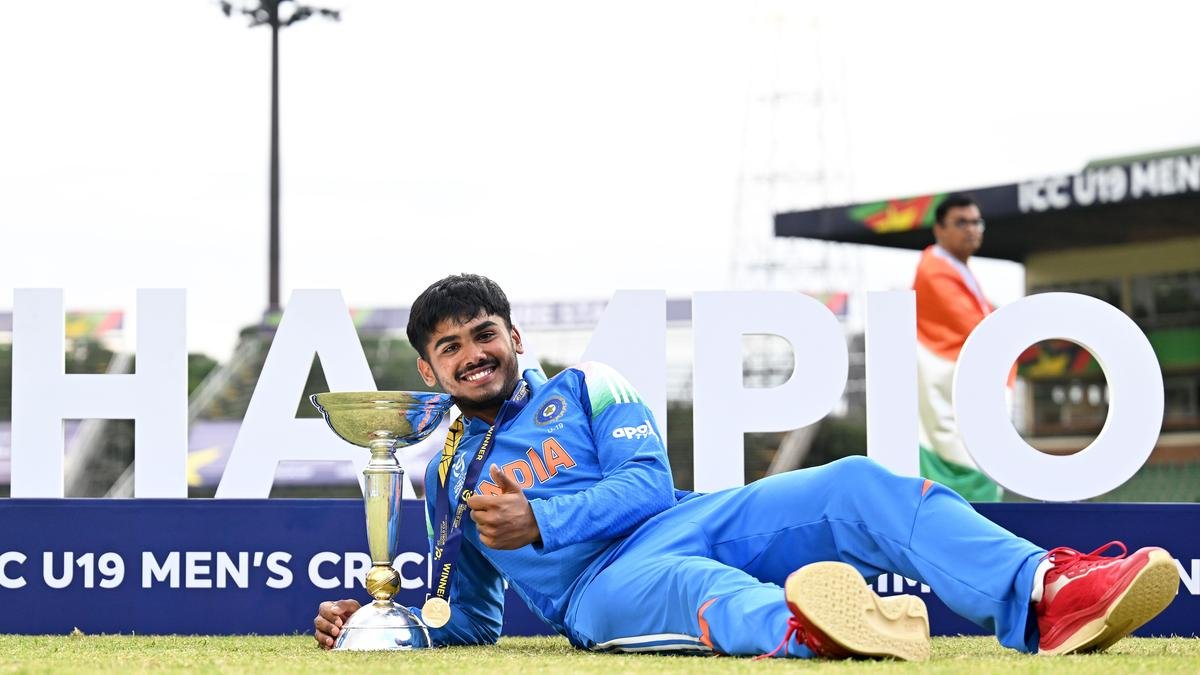
For one, the U-19 World Cup is a test of one’s wares against the world’s best. It is also a youngster’s first brush with playing under the limelight, which often brings pressure and scrutiny along with it. A good tournament can put a player on the map. A poor one can do the opposite.
India has made the best use of this pathway. The Ayush Mhatre-led side, which beat England in the final this month, became the sixth Indian team to win the title. Since 2016, India hasn’t finished below second.
Yuvraj Singh, Rohit Sharma, Virat Kohli, Ravindra Jadeja, K.L. Rahul and Shubman Gill all passed through this level.
Reetinder Sodhi, who played two U-19 World Cups (1998 and 2000), credits the BCCI’s system for consistently producing talent. “The infrastructure makes a lot of difference. Everything is so organised. Each game is videotaped. There are top match officials officiating, and trainers who take care of the players. When you have all the facilities in abundance, you will always be able to perform better,” he tells Sportstar.
The former India all-rounder explained how winning the U-19 World Cup in 2000 changed the trajectory of his career, and expects the same for the current crop. “Immediately after winning, six of our names came in the Challenger Trophy [squad list]. We were in the same teams as Sachin Tendulkar, Sourav Ganguly and Rahul Dravid. That was undoubtedly the best gift a youngster could get. The experience of playing with national team players turns you from a boy to a man. Even now, guys like Mhatre and Vaibhav Suryavanshi will be taken to higher-level cricket, and if they perform well there, in a year they could be given a chance to play for India,” Sodhi said.
Mhatre and Suryavanshi are already on the senior radar. Mhatre has two First-Class hundreds for Mumbai and was drafted by the Chennai Super Kings in the Indian Premier League (IPL), where he excelled. Suryavanshi debuted for Bihar at 12 and later smashed a 35-ball hundred for Rajasthan Royals at 14.
| Photo Credit:
PTI

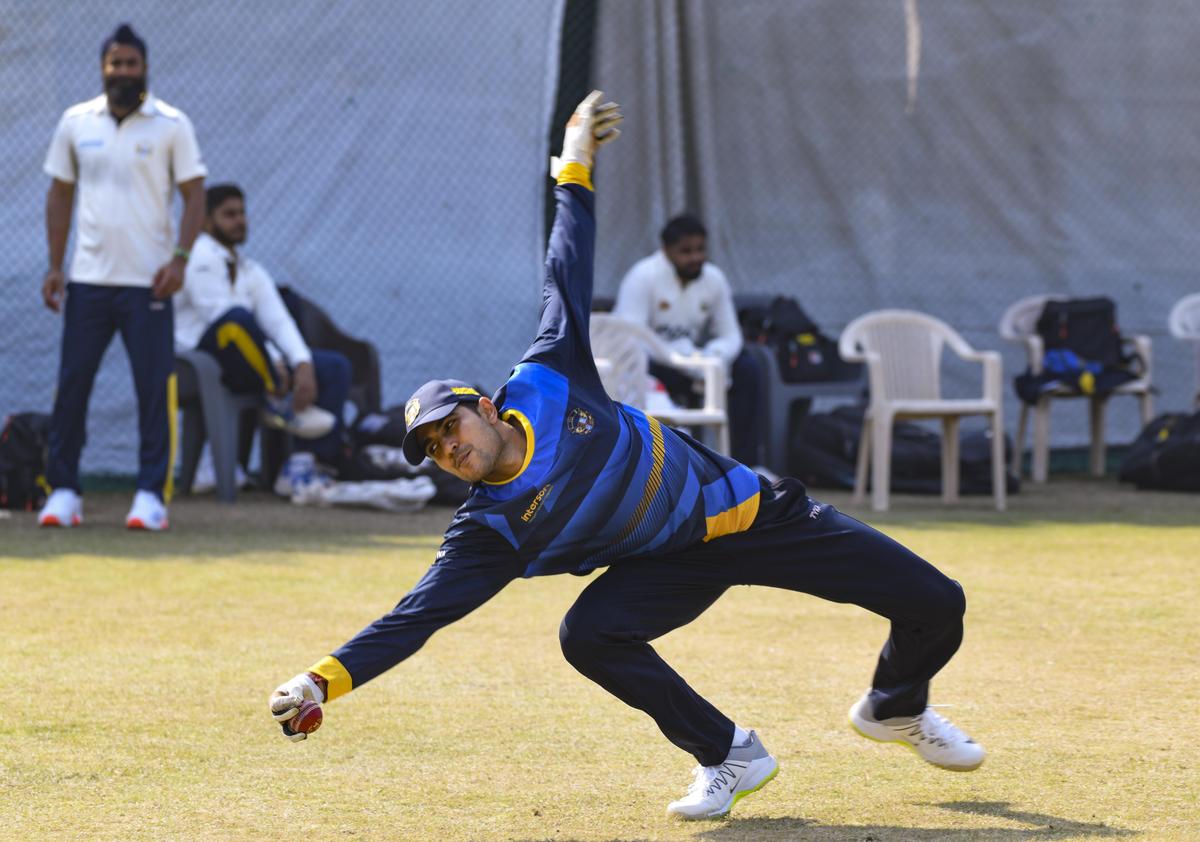
Taking the big leap: Shubman Gill arrived at the U-19 World Cup as vice-captain in 2018, fast-tracked on the back of a dazzling Ranji first impression: a debut fifty, followed by an attacking 129 for Punjab.
| Photo Credit:
PTI
A couple of others have also made their domestic bow before this edition, but are yet to match the feats of these two. For most, though, the leap from U-19 cricket to the domestic grind is far less straightforward. “The World Cup can give you a ray of hope that you can make it big in Indian cricket. But it is not the end of the journey. You can’t sit and wait for things to happen. The onus is on the players to keep performing. The expectations are there. If there is no improvement, people will forget,” Sodhi said.
The pathway has pitfalls, too. Prithvi Shaw and Manjot Kalra, both from the 2018 batch, are recent examples. Shaw struggled to cement his place despite an early breakthrough, with injuries stalling his momentum. Kalra’s rise after his 2018 final hundred was derailed by an age-fraud allegation soon after.
Prashant Shetty, who has coached Mhatre since he was nine, also witnessed Shaw’s rise from close quarters. “In Under-19, you are not competing with that many players. You are only competing within your own age group. But once you reach the senior level, the variety and level change. It becomes like an ocean of talent. There are limited spots also, and so many players vying to grab it,” he said. “You cannot compromise on your work ethic. When you become famous, you get distracted. What affects your performance is your work ethic. When cricket is your priority, you have to work hard for it. He [Mhatre] does it,” Shetty added.
International cricket is the destination, but it is not the only measure of success. Players from the 2022 and 2024 editions of the World Cup have continued to show their capabilities with their State sides, but are yet to get their chance with the Indian national team.
“I always judge the U-19 and India-A programme on how many of these boys are quickly able to assimilate into the Ranji Trophy, which will then give them the platform to play for India. It’s not how many from your batch played for India and how quickly,” former National Cricket Academy director Rahul Dravid had said in an earlier interview. “When I hear of a guy who is not well recognised but is the captain of his State team, I think ‘Wow, we’ve done something’. It is not an easy space to grow up, to discover yourself as a cricketer, with everything being watched and everything being analysed,” he had added.
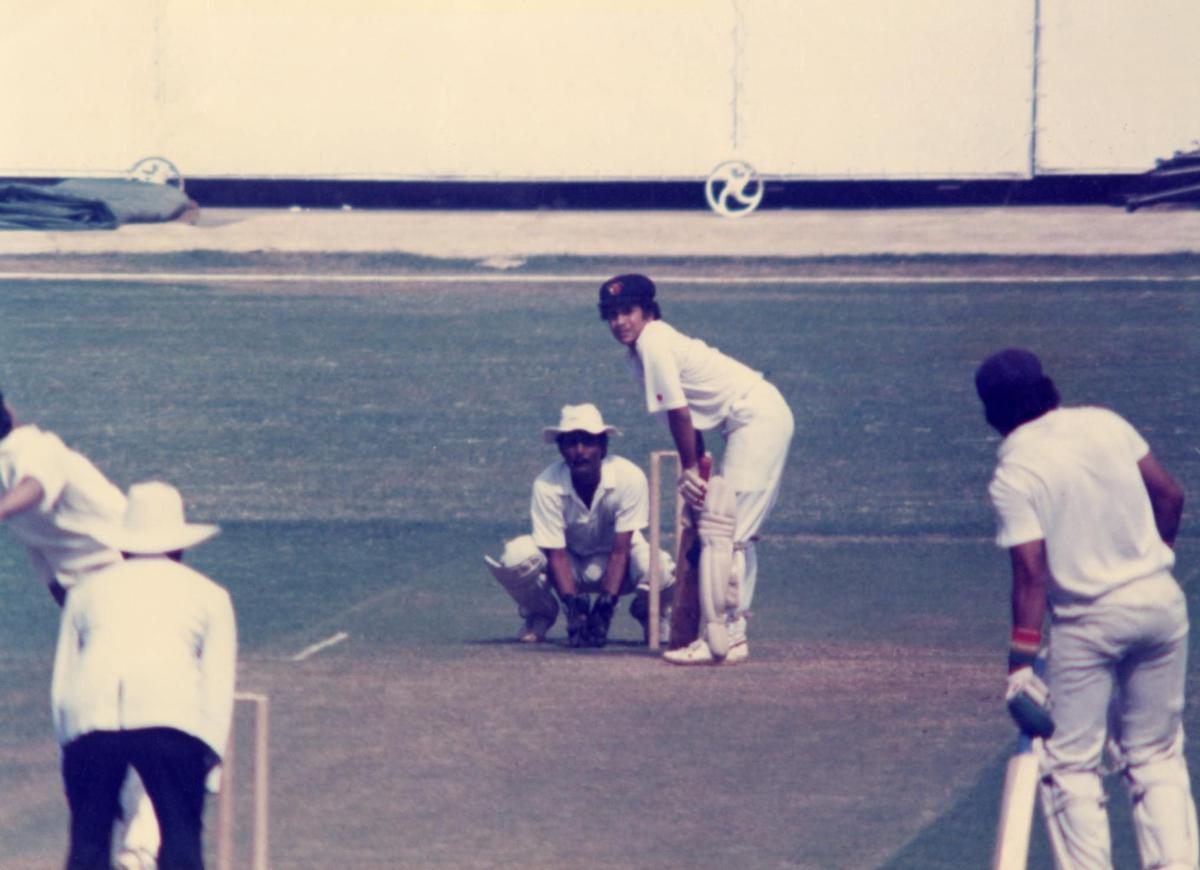
Going through the grind: Sachin Tendulkar announced his talent early on with a string of good scores for Mumbai, then Bombay. He scored his maiden First-Class century on debut in the Ranji Trophy in 1988.
| Photo Credit:
THE HINDU ARCHIVES
Going through the grind: Sachin Tendulkar announced his talent early on with a string of good scores for Mumbai, then Bombay. He scored his maiden First-Class century on debut in the Ranji Trophy in 1988.
| Photo Credit:
THE HINDU ARCHIVES
For decades, the Indian game has sold a simple tradition: that talent is best tempered in the domestic grind, first in Ranji Trophy whites and then, if the runs or wickets keep coming, in India colours. Even the ones fast-tracked were rarely untested. Sachin Tendulkar scored a First-Class century on his Ranji Trophy debut for Bombay in 1988, before he made his India debut a year later. Virat Kohli’s rise too was rapid, but it still ran through Ranji Trophy returns of 15 matches, three fifties and two hundreds.
The U-19 World Cup can compress a player’s reputation into three weeks and inflate it into something larger than the player. For every Kohli who uses it as a springboard, there are others who discover the next step is not a step at all. Across editions, several highly-rated names have struggled to convert early spotlight into long senior careers. Ravikant Singh (2012) played just one First-Class match (46 runs, no wickets). Vijay Zol (2012, 2014) went on to feature in 15 First-Class games, scoring 733 runs at 34.90. Karan Kaila (2014) played nine, taking 22 wickets and scoring 348 runs. Ajitesh Argal (2008), Man of the Match in the final, finished with 10 First-Class matches and 24 wickets. They were once framed as the future, only to learn that senior cricket does not care for promise, only proof.
The next challenge now is managing workload, expectations, and the slow, unglamorous business of making a teenager into a professional. The title will act as a launchpad, not a guarantee. The few who handle that transition will be the ones who last.
Published on Feb 11, 2026
Discover more from News Link360
Subscribe to get the latest posts sent to your email.