


Sabar Bonda director Rohan Kanawade on taking inspiration from his life, “I wanted to reimagine the experience I had during those 10 days of mourning for my father” 10 : Bollywood News

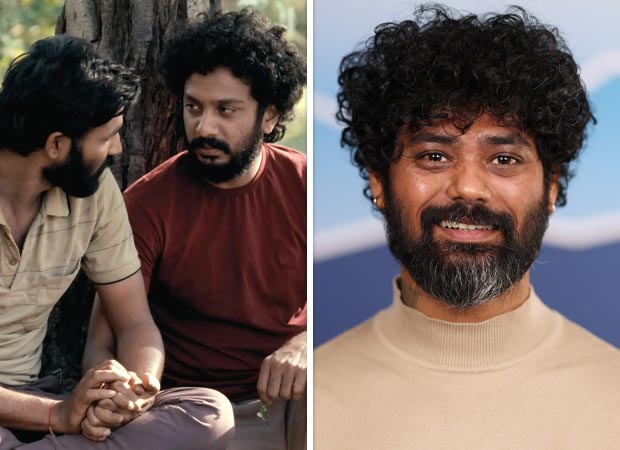
Sabar Bonda director Rohan Kanawade on taking inspiration from his life, “I wanted to reimagine the experience I had during those 10 days of mourning for my father”Besides the curly hair, how much of your life do you share with the protagonist of your film?
Besides the curly hair, only the part of that this character has to go to the village and he has to go through the marriage pressure and that his father was a driver and his mother is illiterate and yet they both accepted him. And only these parts are from my own life. Although the character Anand in the film is working in the call center, I studied interior designing and now I’m making films. So, yeah, only these things, parents background and the experience of grieving my father in the village and going through that suicide, that pressure that everyone was putting on me, that has come from my life.
How tough was it for you to make a film on a theme as sensitive as homosexuality in rural India?
Basically, writing this film as tenderly as I could was something that I was always thinking about because along with sexuality, there is also grief. So, I wanted to portray grief as well as honestly as I could. But of course, the film is not about grief. The film is mainly a love story because I wanted to reimagine that whole phase of my life or the experience that I had during those ten days of mourning for my father. I wanted to reimagine that and a possibility of love story during this time, that was the exciting part for me.
So, writing this love story should feel organic during this grieving period, that was the biggest challenge for me. That anyone who watches it, they can believe, yeah, this can happen, this love story can happen in these ten days where this person has come to grieve for his father and to perform all the rituals. This love story can happen during those ten days was something that I was more concerned because that needs to be believable. So, that was the difficult part for me. But I think as I was writing it, I was finding those things to make it organic. And basically, that is why I grounded this whole thing in our culture, in a rural area, and I got also inspired from my own experiences.
This is why the film feels so grounded and real?
Yes. The whole film feels more lived in, the moments feel lived in. And I took that as inspiration to make everything believable. The real life that I’ve experienced, that allowed me to create this organic feel to it. I think that was the hardest part, make people believe that this can happen in this time.
Your film addresses the theme of homosexuality in a village of Maharashtra. Do you feel it is tougher to be gay in rural India?
I think it’s very individual. I don’t think every queer person experiences the same life, not only in city, but in the villages also. Like even in the city, you will meet queer people who say that they never felt bullied, and you will meet people who say that they experienced bullying. Similarly, when I spoke to some, I have few friends from rural side, and when I spoke to them, some of them said that they never faced bullying in the village, but there were other people who faced bullying in the village. So, I think it’s a very individual experience. The only problem is, our films only depict the bullying. They don’t depict the other more sensitive response to homosexuality. That is why it was important for me to use the positive side that I experienced in my life and show that also on screen.
The problem is to create drama. Filmmakers only rely on that trauma side of any story. And similarly in queer storytelling, people are only focusing on that trauma, the struggle or the tragedies. But there are queer people in the cities and even in rural villages who have experienced positive things, but no one talks about that. And that’s why everyone thinks that being gay is always a struggle, being gay is always your life is doomed. That’s what everyone thinks, but that is not true.
I know some people who come from very remote villages of Maharashtra, from poor families, their parents are farmers. And these kids have come out to their families and their families have accepted them. But how many know about this kind of story? No one knows about this kind of story. That is why it was important for me to show that being gay doesn’t mean your life is going to be tough all the time. And that is why I think that it’s completely an individual experience. There are people whose life was tough, but there are also people whose life was not that tough. And they were happy with their sexuality as well.
As a gay man yourself, how difficult has it been for you to keep your head above the water?
First of all, I think I don’t consider my sexuality as my identity. It’s a very personal part of my life. I was not seeking acceptance from anyone. So, whenever I introduce myself, I introduce as a filmmaker. I don’t really share my sexuality with the whole world. And that’s not me, basically. And what was important to me that I had to, at least, tell my parents. So, they know how I want to live my life.
And thankfully, I had parents who are loving and understanding. Although my father is not there, but when I came out to him, it was like literally like I told him and he immediately said that you know about yourself, that’s most important. And similarly with my mother, when I told her, she also accepted it. Like both of my parents, they didn’t take any like, you know, we need time to understand that person. That didn’t happen with them. And which was, I think I’m lucky in that sense. I know there are like some people who had to go through struggle and so many things. But in my case, it didn’t happen. And I think, and in my life, I didn’t have to go through any discrimination at all.
How easy was it for you to accept your own sexuality?
I didn’t have to even struggle to accept myself. That didn’t happen with me. So, I think and also because I had my loving parents, everything after that was also easy for me. I didn’t have to hide anything. I have a partner and both our families are involved in our relationship. So, you know, things were really different in that sense. I think when you have understanding parents, things are always different, I feel. And personally, I didn’t face any discrimination. So, that, I think, in that sense also, I guess I find I was lucky in some ways.
Have you found love in your life?
Yes, I have found love. I stay with my partner. It’s been eleven years that we have been staying together. And as I said, our families are involved. My partner’s nephew, who’s the youngest in our family, he’s just five years old and he’s very close to me, you know. So, you know, it’s that kind of situation. So, yeah, things are different in my case.
In your film, your protagonist Anand’s love story is given a happy ending. Is that your wishful thinking?
I don’t really consider it a happy, happy end. I consider it as more hopeful or optimistic end. And I always wanted that because I’m really tired that whenever people want to include sexuality in any film, those films mostly end tragically. And, you know, I’m like, why? I mean, why does this end tragically all the time? And apparently when I was editing the film, some of my mentors were also suggesting me that, oh, they were they are not really okay with this ending. We had a preview screening and I got to know that some students were not really okay with the ending. This ending should have been more tragic. And then you suddenly realize, you know, why? I don’t understand why people have fascination with, you know, sadness in the films.
So, you know, happiness can be different for different people, but there are happy people in the world. But why only when we make films, we are, you know, there is romanticising sadness. I don’t understand that. I mean, it’s okay in some films you want that, but why in every film do you want that? And my vision for Sabar Bonda was always this, that forget my vision and think about this, this particular film that starts with death. If this film also ended with tragedy, then what was the point of making this film, you know? And I don’t want to show that at all to the audience because already people think that being gay means your life is doomed. And as I was saying, in my personal life, I experienced positiveness. I wanted that to reflect in my film because, you know, until and unless you show this side, the storytelling will not change.
The protagonist’s equation with his mother is beautiful. How much of that comes from your own life?
Actually, most of those things come from the relationship that my partner had with his mother. We lost her two years back. And basically, me and my mother, we are very quiet ones. But my partner and his mother, they used to talk a lot. My partner and his mother used to also express love to each other. Like, you know, they used to hug. He used to put his head in her lap. You know, he used to kiss her on cheek or she used to kiss him on cheek or on forehead. I never experienced these kinds of moments with my mother. So, you know, I thought this film will actually give me that chance to incorporate something that I didn’t experience myself. So, yeah, that relationship was mostly inspired by my partner and his relationship with his mother.
Such empathetic parents for Anand, is that even possible?
I had my parents like that. As I said, my father, when I told him, he immediately accepted me. And I’ll tell you how it happened. I had had a breakup and I was really, really, really sad. And one day my father told me, what is wrong with you? I can see there is something wrong, you know, you are not like this. What has happened? And because all the films that were always depicting in struggle and sadness, I, in my head, I also thought that, you know, that, oh, my parents will never understand and accept and these things. So I was scared to tell them. But when my father noticed that I’m like something is wrong with me, he started urging me to speak. And I said, you know, no, you will not understand.And he said, but until unless you tell me what is wrong, how will I know if I can even understand or if I can help you in that situation? But first you have to speak, right?
So I just showed him the picture of me and my partner of the person I was in love with. I showed him the picture where we were in each other’s arms and he saw the picture. And my father said, is that your friend? And I said, he’s more than a friend. And he understood. My father immediately said, okay, you know about yourself. That’s most important. And so you don’t have to get married. I mean, we should not spoil any girl’s life. So that’s okay. Completely fine. And it was that simple. This conversation ended within two minutes. Real life is always strange than the fiction. And that is why I keep saying I get inspired from real life.
Where and how did you find these wonderful actors?
It took us a long time to find these actors, mainly these two boys. It took us three years. So first I found Bhushaan the protagonist, one of my actor friends, Abhay Kulkarni he had shared Bhushaan’s Instagram with me. And when I saw Bhushan’s pictures and some videos that he had uploaded, I thought, look-wise, he is just perfect. And then my casting director, Yuvendra Deshpande, reached out to him and we asked him to come for the audition. But before that, we gave him the idea of the film and what we are looking for. And he was completely okay with it because he really thought that the idea was interesting.
And he came for the audition. And his audition was really amazing, really amazing. And the kind of performance I needed, he really delivered that in his audition. And even my casting director, he was like, he’s just perfect.I told Bhushaan, you studied acting and you’ve been doing theatre. I’m sure you have actor friends. And, you know, if you know anyone who might fit this other character. And if you know someone who’s from that same region where we are going to shoot the film, that would be really amazing. And he immediately said that my best friend is from the same region. And I was like, oh, that’s amazing. Can I see him?
And he showed me his pictures. And when I saw Suraaj Suman’s pictures, I was like, I think he’s just perfect for Balya. But then I needed to hear his voice. I needed to hear his dialect because I really wanted that authenticity in the dialect. And so I called him. Bhushaan called Suraaj and I spoke to Suraaj on call and I heard his voice. I heard his dialect and which was spot on. And I thought this is what I needed. And I asked him, would you like to do this film? And he agreed. And actually, I never took Suraaj’s audition. I just finalized him just like that. And I just believe that he will be equally good actor because Bhushaan and Suraaj have been working together for a very long time.
Is your next film also going to be on a similar queer theme?
No, no, no, no. People quickly start boxing people. Okay, now he’s made a queer film. So he’s only going to make that. And then by doing that, people also limit you as a filmmaker. And I get inspired by so many other stories, right? I mean, I am also interested in making films with dinosaurs. I’m also interested in making a horror film.
BOLLYWOOD NEWS – LIVE UPDATES
Catch us for latest Bollywood News, New Bollywood Movies update, Box office collection, New Movies Release , Bollywood News Hindi, Entertainment News, Bollywood Live News Today & Upcoming Movies 2026 and stay updated with latest hindi movies only on Bollywood Hungama.
Discover more from News Link360
Subscribe to get the latest posts sent to your email.