New Zealand’s five-wicket romp against Afghanistan in Chennai was in stark contrast with South Africa’s back-from-the-brink heroics against the same opposition here earlier this week. However, as perennial underperformers in global events, South Africa and New Zealand have had their horizons converge for more than two decades.
Both have claimed the World Test Championship (WTC) mace, but an ICC white-ball title has eluded them since the turn of the millennium. Despite producing some of the greats of the game, they often fly under the radar, overshadowed by the cricketing elite—the Big Three.
This T20 World Cup, like the many other global white-ball competitions in the recent past, will be an opportunity for both South Africa and New Zealand to disrupt the established order and shake off the ‘chokers’ tag often associated with their players’ purported tendency to crumble under pressure.
ALSO READ | T20 World Cup 2026: Zimbabwe upsets Australia with a 23-run win in Colombo
Unbeaten in this tournament so far, they will face off in a contest that will inevitably snap someone’s winning streak. But given the tournament format, where the seedings are pre-determined, the winner of this match-up will gain little more than bragging rights and move a step closer towards confirming a Super Eights berth.
The jeopardy is limited, yet the context is extensive. The Kiwis are winless against the Proteas in four T20 World Cup games, two of which they lost by agonisingly close margins of one and two runs, in 2009 and 2014, respectively. But more than a decade has elapsed since the two teams locked horns at the T20 showpiece, so history is unlikely to weigh on the New Zealanders.
The present could favour the Proteas, who notched both their wins, against Canada and Afghanistan, at this venue. Moreover, their 57-run win over Canada was a night game, so their bowlers will know how to contend with the dew here, which can be decisive at this venue. Another good showing in Ahmedabad against a quality opponent will hold the Saffers in good stead for the Super Eights, where they are scheduled to play two of their three matches here, should they progress to the next round.
But they will want to iron out a few chinks before the stakes are raised, particularly in the bowling department. While Lungi Ngidi’s effective slower balls in the PowerPlay have seen him emerge as an unlikely spearhead of the pace pack, his more celebrated bowling partner, Kagiso Rabada, has been profligate, lacking control and discipline. His twin no-balls in the last over of regulation time against Afghanistan took South Africa in the teeth of the Super Over, and he was the most expensive bowler against Canada, conceding 1/40 in his four overs.
ALSO READ | T20 World Cup 2026: Varun Chakaravarthy keeps batters guessing but he isn’t done yet
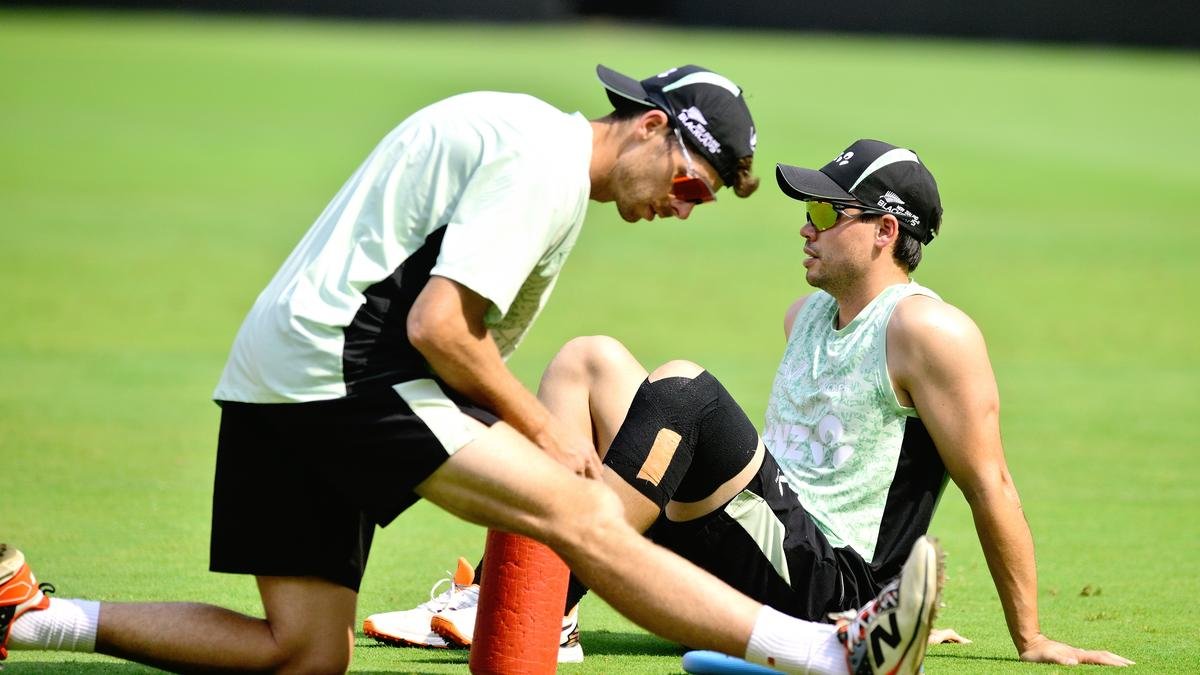
It is a similar case for the Kiwis, who have relied on an injury-ravaged Lockie Ferguson, who has delivered PowerPlay breakthroughs with his slower variations, while the world’s top-ranked T20I pacer, Jacob Duffy, has looked off-colour.
The spin department on either side has been efficient but not threatening. South Africa averages 51 in the middle-overs (7 to 15) in this tournament, while the corresponding figure for New Zealand is 79. South Africa and New Zealand’s spin aces, Keshav Maharaj and Mitchell Santner, have been parsimonious but can boast of only one scalp each in this competition. Opponents seem happy to minimise risk and play them out.
At a venue where spinners have only picked up eight wickets, compared to 17 by the pacers, in this tournament, the challenge for the exponents of the slower craft will be more pronounced.
Add two power-packed batting phalanxes at a high-scoring colosseum, and it makes for a lip-smacking contest. Tim Seifert and Finn Allen are coming off a record 175-run partnership that routed the UAE by 10 wickets. On the other hand, Quinton de Kock and Ryan Rickelton plundered 114 runs in 61 balls for their second-wicket partnership against Afghanistan here. Power and intent are stacked on either side, right from the top through the middle-order. The difference could be down to who blinks first in this zero-sum game.
Published on Feb 13, 2026
Discover more from News Link360
Subscribe to get the latest posts sent to your email.