The fact that Pakistan does not have to fly constantly across states, or the ocean, for this Group ‘A’ fixture and readjust to different conditions gives it a slight edge come Sunday. Yet, it will be its first game at the RPS this T20 World Cup, having secured successive wins at the neighbouring Sinhalese Sports Club (SSC) Ground. That uncertainty is one of the few things binding India and Pakistan together – neither quite knows what the Khettarama will offer.
India has so far played at Mumbai’s Wankhede Stadium and the Arun Jaitley Stadium in Delhi, winning both its games on sluggish pitches. Although Indian players have been vocal about their preference for flatter tracks in this tournament, the experience of handling tricky surfaces could prove valuable this weekend.
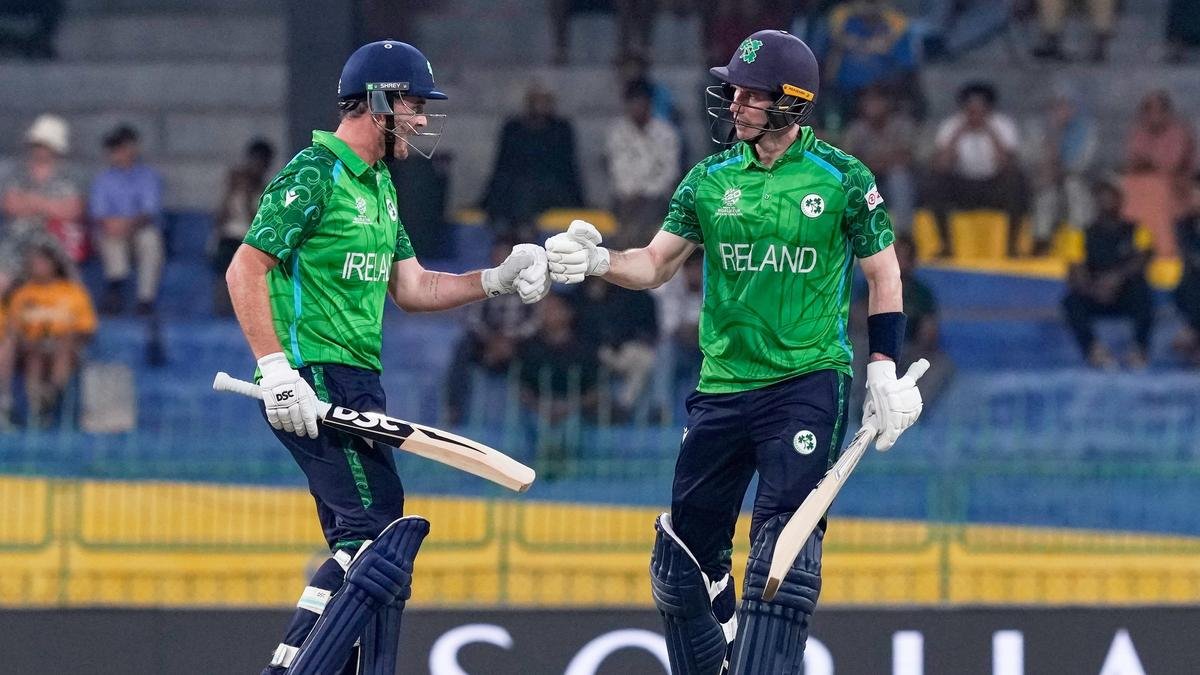
At the RPS, 20 wickets have fallen to spin across three games, including 10 in the night fixture between Sri Lanka and Ireland last week. India and Pakistan will also take the field at 7 PM.
The surfaces in all three matches have been slow, though not necessarily rank turners. The pitch has tended to get progressively slower through the game, with dew having little to no effect.
ALSO READ | Zimbabwe upsets Australia with a 23-run win in Colombo
“Initially, we thought the pitch would be a good one, with a score of 170-plus. But when the top order played, we saw how the pitch behaved. It was not that easy for them to get runs, especially against the spin bowlers,” Sri Lanka’s Kamindu Mendis had noted after the 20-run win over Ireland.
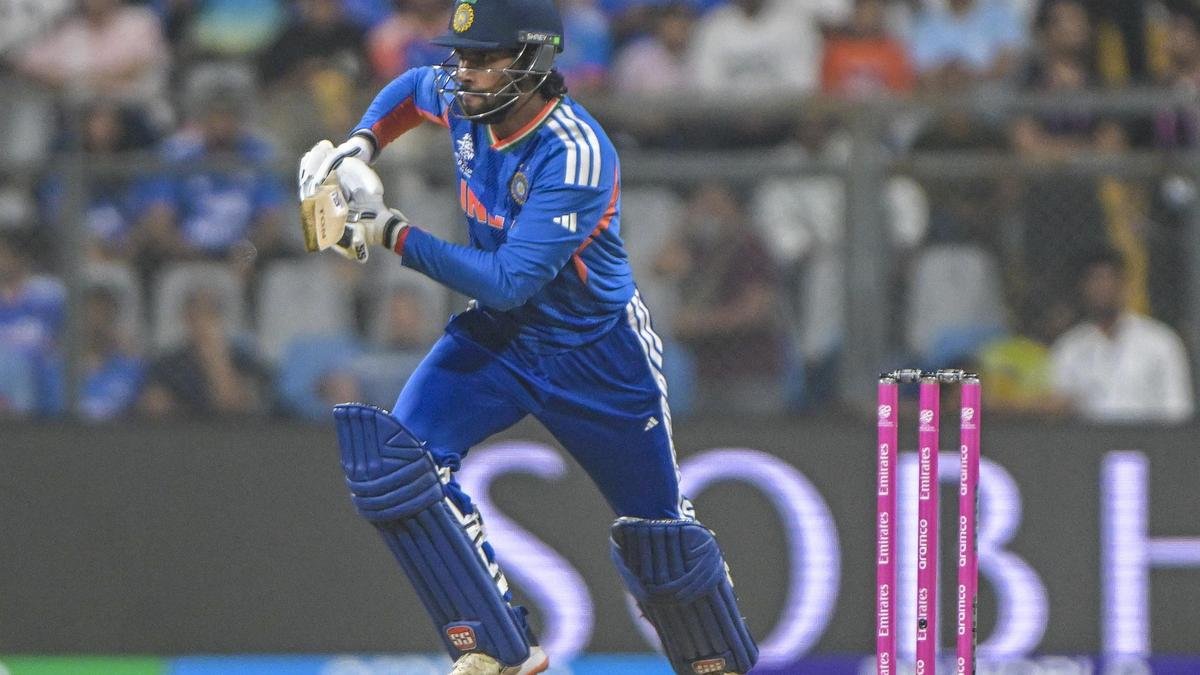
So far in this World Cup, India has lost eight wickets to spin at an average of 12.23 while striking at under 99. In contrast, its strike rate against fast bowlers jumps to 182, with the average nearing 50.
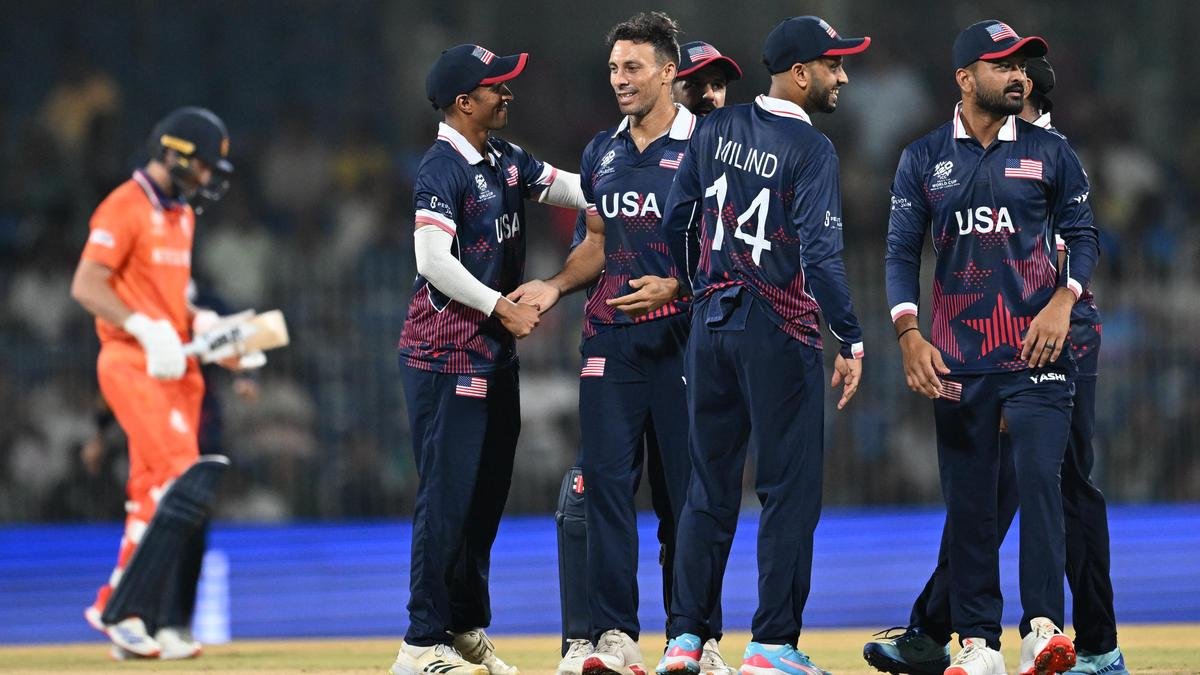
That disparity will be key against Pakistan, which did not hesitate to field four specialist spinners and bowled just one seamer against the USA earlier this week. Knowing the ground conditions at the Premadasa Stadium and India’s relative vulnerability against spin, the Salman Agha-led side could deploy a similar strategy.
Curb your enthusiasm
A key aspect of RPS is its ground dimensions. Ireland’s Harry Tector pointed out how difficult boundary-hitting can be at the venue: “I think that’s just trying to play to the nature of the ground as much as anything. It’s really big out there, so I felt like you were hitting a lot of good shots sometimes down the ground or into the pockets where usually you would get fours or sixes, and you’re only picking up twos.”
In Australia’s 3 PM game against Ireland, Matt Renshaw and Marcus Stoinis smartly used those dimensions to their advantage after losing four wickets early. “They used the surface area of the ground, didn’t try to overhit our bowling,” Ireland batting coach Gary Wilson said after the 67-run defeat.
“I think they only had some 35 dots in their innings. It was a really low dot-ball percentage. Whenever that happens, it becomes difficult to wrestle back control,” Wilson added.
On slower surfaces, utilising the hard new ball is important, but it is the middle overs that can make or break the game. Between overs 7 and 16 at the RPS, teams have scored at 7.4 runs per over, averaging 27.75. Interestingly, winning teams have scored marginally slower – about 0.2 runs fewer per six balls – but at a higher average by nearly three runs. The trend suggests wicket preservation, even at the cost of a couple of quiet overs, is not necessarily a poor tactic.
Notably, no batter from Sri Lanka, Australia or Zimbabwe – the teams that have won here so far – hit a six in the middle overs. Instead, they relied heavily on running between the wickets, with more than half the doubles in that phase coming from those sides.
For India, clarity in approach during these overs will be critical. On paper, that clarity exists. Tilak Varma had outlined the blueprint ahead of the Namibia game: “At number three and four positions, we can find gaps and rotate the strike. Our openers are aggressive, and we have powerful hitters down the order. So the middle overs become very important.”
“We have all kinds of shots in our team, so depending on the wicket and the situation, we’ll decide whether to attack or play accordingly,” he added.
Since 2025, however, India has significantly reduced its reliance on running doubles. In the 7-16-over phase, only about eight per cent of runs have come through twos; overall, just 8.14 per cent of team runs have come from running twice. At the RPS, where winning sides have scored more than 25 per cent of their middle-overs runs through doubles, India might need to adjust gears.
What Pakistan brings to the table
A relentless spin attack through the middle overs could make it difficult for Indian batters to break free. Abrar Ahmed offers mystery, Mohammad Nawaz brings left-arm orthodox variation, while Shadab Khan’s leg-breaks can be deceptive. Pakistan also has Usman Tariq, whose unusual sling-arm action and multiple variations can be difficult to read initially.
During India’s match against Namibia, Gerhard Erasmus employed a similar slinging action and finished with four for 20.

Usman Tariq’s unusual sling-arm action and multiple variations can be difficult to read initially.
| Photo Credit:
AP

Usman Tariq’s unusual sling-arm action and multiple variations can be difficult to read initially.
| Photo Credit:
AP
“It might play in your head for a couple of balls, but I think at this level you need to have trust in your own strength as well. Even if he is trying to do something different, we can go for sixes or boundaries at the same time,” Ishan Kishan said about facing Erasmus.
When asked whether it helped the Indian batters prepare for Tariq’s action, Kishan added: “I think at this level, we just watch a few videos and we get an idea of what kind of bowling is going to happen. So we’re just keeping it simple.”
What’s the winning score?
The average first-innings total across the three matches here has been 170. Wilson described Australia’s 182 against Ireland as a “very good score on this wicket.”
If the surface behaves as it has so far, the match may hinge less on a flurry of sixes and more on tempo management – who absorbs pressure and controls the middle overs.
Australian pacer Nathan Ellis summed it up neatly: “The surface showed again that in these games, you might need a lot of spin bowling, some change-ups and a bit of chaos.”
In a contest as emotionally charged as India vs Pakistan, chaos is almost guaranteed. The question is which side will handle it better.
Published on Feb 14, 2026
Discover more from News Link360
Subscribe to get the latest posts sent to your email.