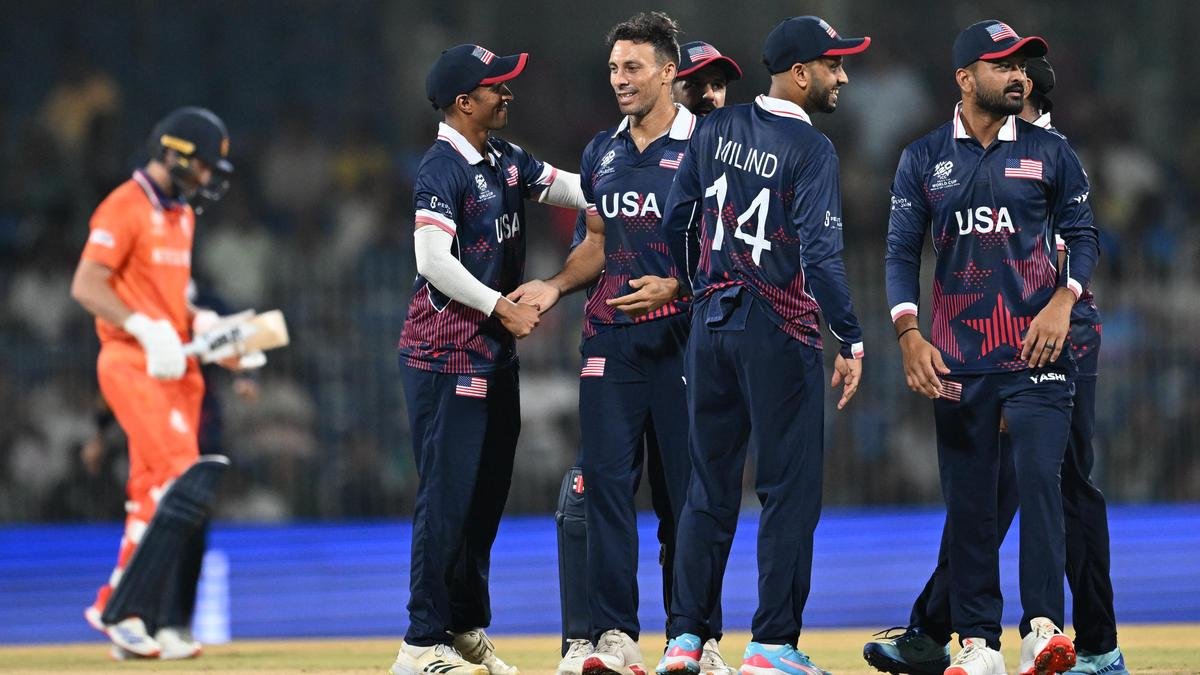
In 2024, the USA, as co-host, made headlines by reaching the Super Eights, riding a group-stage run that included a Super Over win against former champion Pakistan.
It was a performance that briefly shifted the conversation around American cricket from novelty to credibility, a reminder that the game’s borders are more porous than they once appeared, and that belief can travel faster than infrastructure.
The year since has been less generous.
The longstanding crisis at USA Cricket, driven by governance failure and financial instability, and culminating in the ICC suspending the board, robbed the team of the kind of preparation a marquee tournament demands.
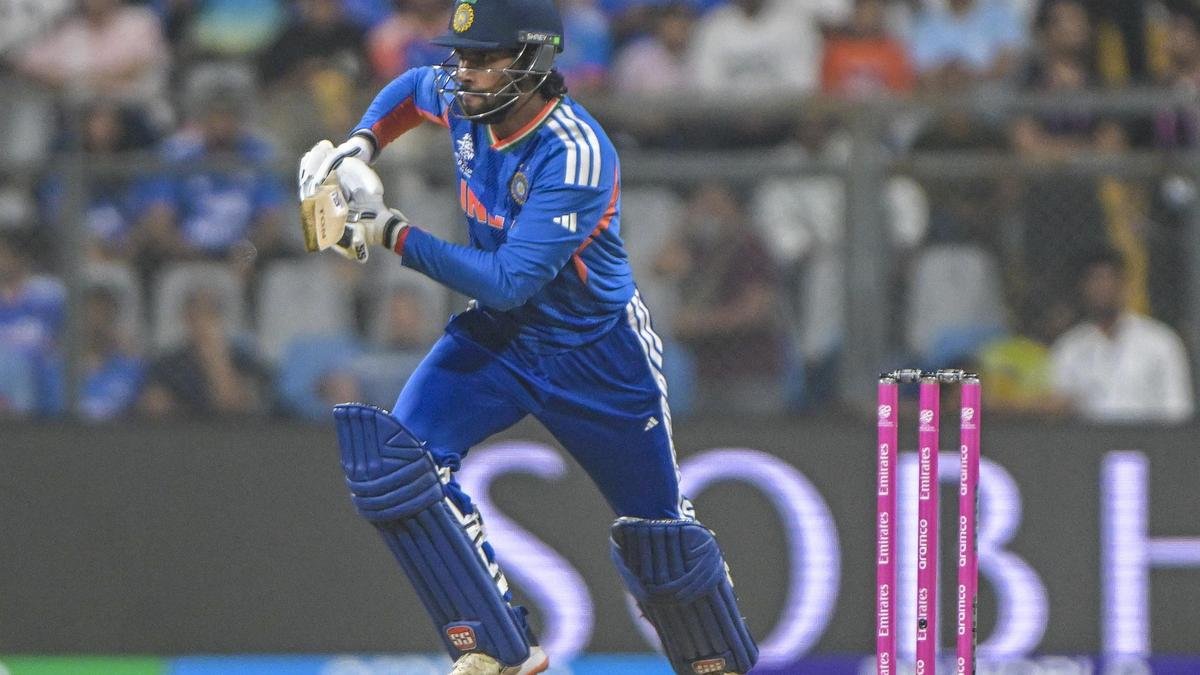
Before running India close at the Wankhede Stadium in Mumbai, the USA had not played a T20I since April 2025, when it won the North America T20 Cup. It won eight of the nine matches it played in 2025, but the opposition, Oman, Canada, Bermuda and the Cayman Islands, underlined the gap between activity and readiness.
That uncertainty has carried into the tournament as well. The USA has shuffled its batting order repeatedly, searching for the right balance between intent and security.
Even in this match, it left out Saurabh Netravalkar and Andries Gous, arguably its two biggest players, a decision that underlined how much of its campaign has been shaped by adjustment rather than continuity.
Familiar troublemakers
If the USA arrived with uncertainty, the Netherlands came with expectation. Among the Associate sides most likely to cause an upset at this World Cup, it sat firmly at the top of the list.
It has done it before, beating England in its first-ever T20 World Cup appearance in 2009, outplaying South Africa and Bangladesh at the 2023 ODI World Cup, and then very nearly beating Pakistan again in its opening game this edition. The Dutch have become familiar troublemakers: tactically neat and emotionally steady.
So when the Netherlands opted to chase in the first night game in Chennai, in what was a must-win clash for the USA, the pressure was immediate. This city has seen enough cricket to recognise tension early, and under lights the ground can feel smaller, the outfield quicker, the consequences sharper.
And with around 19,000 people in the stands, this did not feel like a match being played on the margins. It felt like a proper occasion. At the toss, Monank Patel spoke about wanting his top order to take more responsibility, to see through the first five to 10 balls rather than reaching for the big shot like a reflex.
ALSO READ | T20 World Cup 2026: Precariously placed England takes on Scotland in crunch clash
One could see it in the way he batted. The intent was still there, but it was tempered by a sense of sequence. There were only 18 dot balls in the USA’s PowerPlay as it surged to 53, Patel leading the way with a 22-ball 36 that included three fours and a six.
In that early surge, he carried the first half of a 50-run stand with Saiteja Mukkamalla, who played with the freedom of a man who had decided the night belonged to him. Mukkamalla, who plays for the Texas Super Kings in Major League Cricket, is part of one of the game’s newer, stranger pathways: an American franchise with an IPL lineage.
On a Chennai night, that made his strokeplay feel like a kind of homecoming, not by geography, but by association. He went on to score a 51-ball 79 at a venue that has offered batters plenty in this edition, the numbers telling their own story: a run rate of 8.86 being the highest at this World Cup so far.
And then the match changed its mood.
Advantage changes hands
The pitch, a mixed-soil surface used for the first time at Chepauk in this edition, had pace and bounce. It was the kind of wicket that invites the fast bowler to linger a little longer, and gives the spinner just enough to be brave. It suited Shadley van Schalkwyk’s change-ups, and it brought the USA’s spinners into the game as something more than containment.
It also produced one of those small, revealing passages that Associate cricket offers more often than the polished versions of the sport. Harmeet Singh, not the most natural mover in the field, was stationed at backward point. Scott Edwards, alert to the smallest weakness, kept guiding the ball towards him, once, twice, as if testing the same loose floorboard again and again. Harmeet fumbled, visibly frazzled, the sort of moment that can shrink a player in a do-or-die match.
Instead, it sharpened him.
The next over, with Edwards still there and still looking comfortable, Harmeet ran in and bowled an arm ball that cleaned him up.
The Dutch chase never quite settled. It did not collapse in a heap so much as fail to gather momentum: a 93-run win for the USA proving valuable enough to keep the faint flicker of Super Eight hope alive.
RELATED | T20 World Cup 2026: Mukkamalla, bowlers lead USA to thumping victory over Netherlands
History, too, had been in the background. The USA had not beaten the Netherlands in three previous men’s T20Is, but this was one of those nights when the solution kept slipping away, and the USA bowlers kept dragging the contest back into their grip.
What lingered, though, was not simply the result. It was the larger suggestion behind it.
In this edition of the World Cup so far, players from Associate nations have been among the leading run-scorers and wicket-takers, including from the USA and the Netherlands. That is not a brief anomaly. It is evidence of a shifting landscape, of a game whose talent has outgrown its old categories.
Published on Feb 14, 2026
Discover more from News Link360
Subscribe to get the latest posts sent to your email.