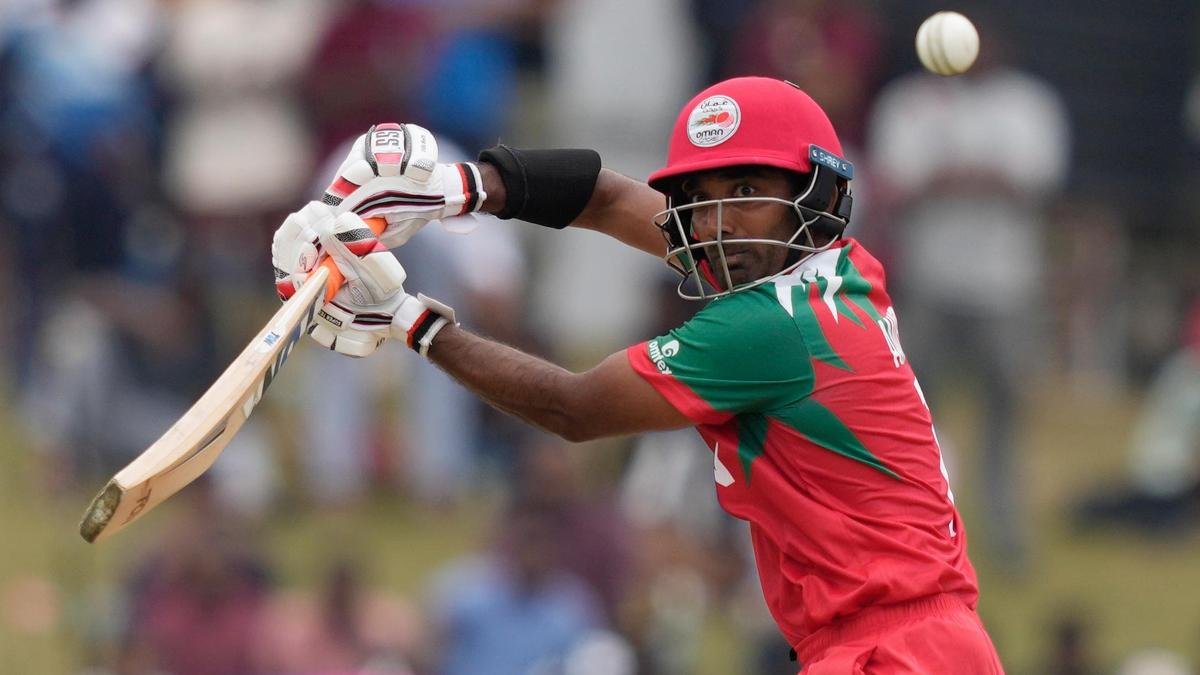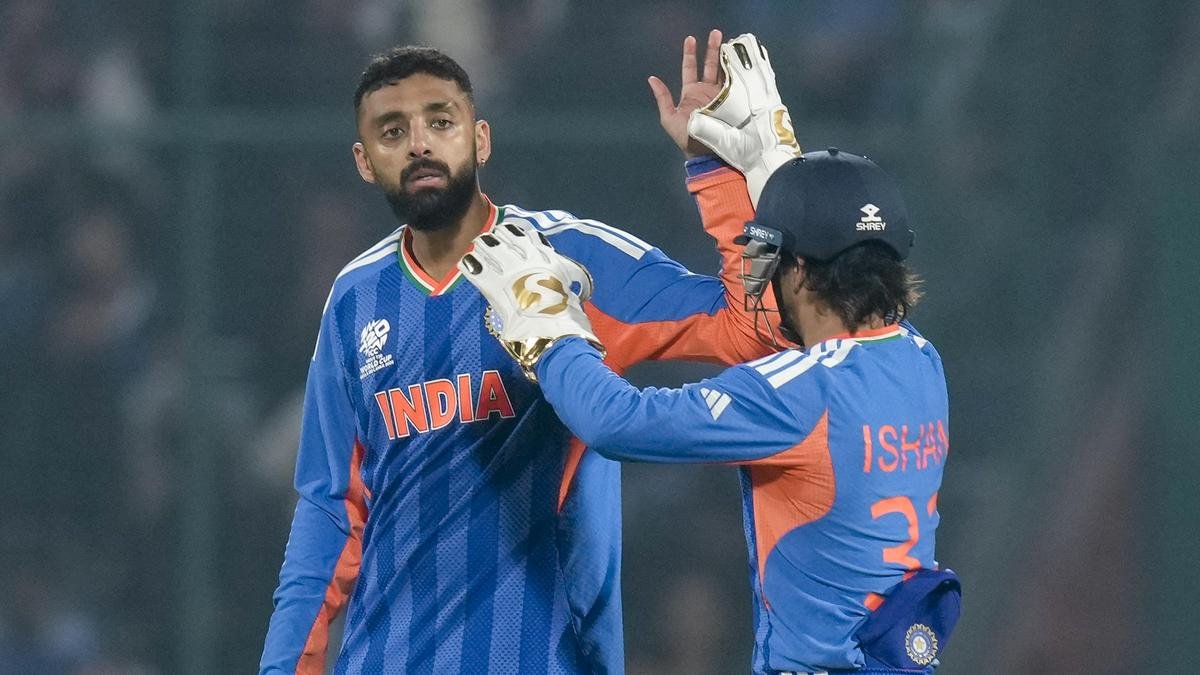

The hit-from-ball-one style of T20I cricket, which India has mastered under Suryakumar Yadav, has had to take a back seat due to the conditions on offer in the ongoing tournament. In the opening game against the USA, India lost its top order in no time after failing to read the slowness of the pitch before skipper Suryakumar took charge and took the side to a formidable total. Against Namibia, too, wickets fell at regular intervals after a rapid start. Namibia captain Gerhard Erasmus ended his four-over spell with four wickets for just 20 runs.
Erasmus’ success with his unconventional off-spin bowling—bowling from well behind the popping crease and switching to a slingy action—has taken centrestage, considering the similarity with the test India will face in its next encounter against archrival Pakistan on Sunday. Armed with the ‘mystery’ spin of Usman Tariq, who also bowls with a horizontal action, to add to the already packed spin arsenal of Mohammed Nawaz, Shadab Khan, Abrar Ahmed, and Saim Ayub, India will have its task cut out in Colombo.
Tariq’s unorthodox bowling action could potentially create the same problems that Erasmus created at the Arun Jaitley Stadium. The Indian batters struggled to deal with the Namibian off-spinner’s pace, or lack thereof—his speeds mainly hovered around 80-84 kmph—as evidenced by Axar Patel’s dismissal, wherein he completed his attempted sweep shot well before the ball arrived.
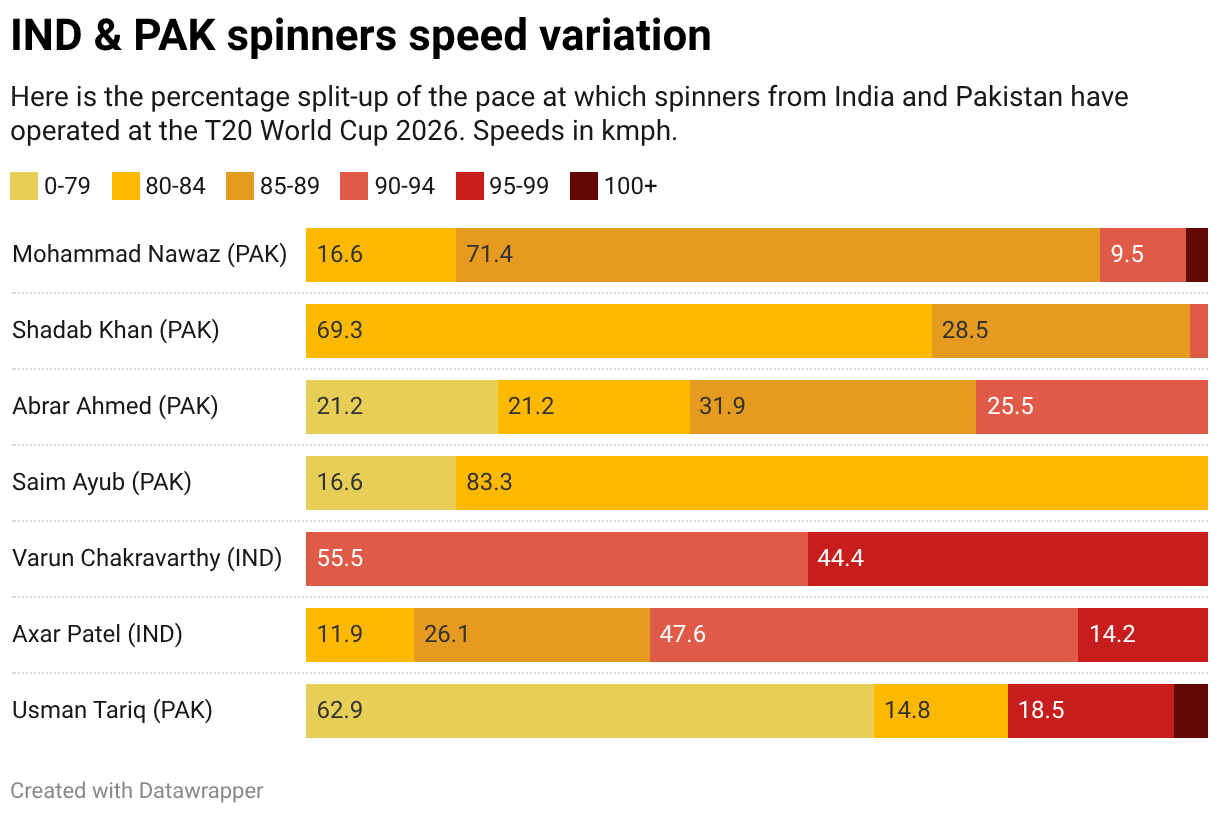
Tariq operates primarily at speeds below 80 kmph—63 per cent of his deliveries this World Cup have been below this mark. However, his stop-and-go action does not restrict him to the lower level of the pace spectrum. The 30-year-old mixes it up with deliveries close to and sometimes breaching the 100kmph mark. This disparity in speed could be a potent weapon against Indian batters. Abrar and Saim are also capable of lowering their speeds below 80kmph, although they mainly operate at a higher pace.

Varun Chakaravarthy is currently the No. 1 T20I bowler.
| Photo Credit:
K.R. DEEPAK

Varun Chakaravarthy is currently the No. 1 T20I bowler.
| Photo Credit:
K.R. DEEPAK
The Indian spinners, on the other hand, are much quicker than their Pakistani counterparts. Axar Patel mainly bowls upwards of 90kmph, but is capable of slowing it up when required. Varun Chakaravarthy, the No. 1 T20I bowler in the world currently, operates within a very narrow speed window. But what he lacks in terms of speed diversity, he makes up for with his accuracy.
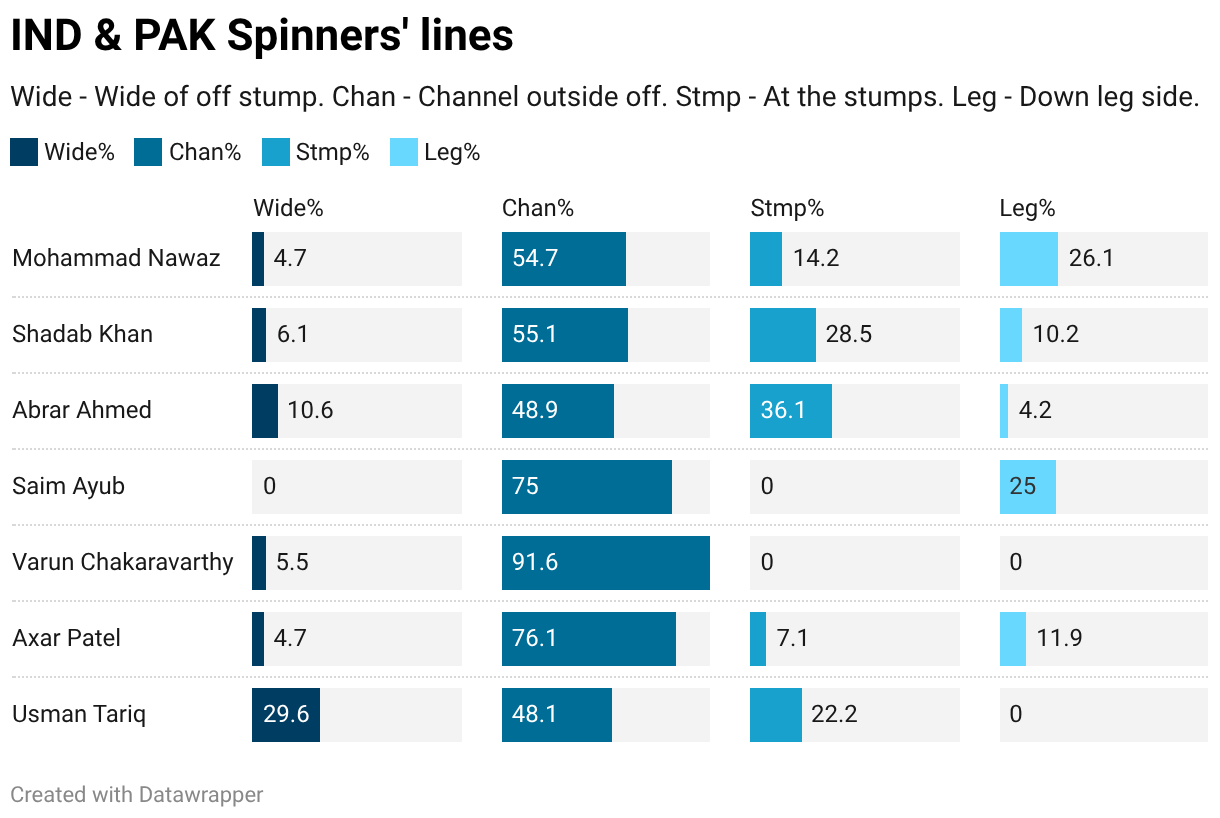
The above graphic indicates the line of the ball at the instance it makes contact with the pitch across the two World Cup games so far. Varun has been able to hit the channel outside off with an astounding 91.6 per cent of his balls. The Tamil Nadu spinner has not deviated too straight on even a single ball this tournament. Axar and Saim have also been accurate, delivering over 75 per cent of the balls just outside off, making it difficult for the batter. Tariq and Abrar’s trajectory has been a lot more spread out, registering the highest percentage of balls wide outside off stump among spinners across the two sides.
Another major difference between the spinners from the two sides lies in the deviation they get from the pitch. Finger spinners like Nawaz and Axar move the ball only one way off the surface. Saim too has bowled only his leggies in the tournament so far and is yet to use his right-arm off-break. Abrar and Shadab are traditional wrist-spinners, bowling deliveries that turn from right to left (to the right-hander), relying on the googly and the straighter ones as surprise deliveries.
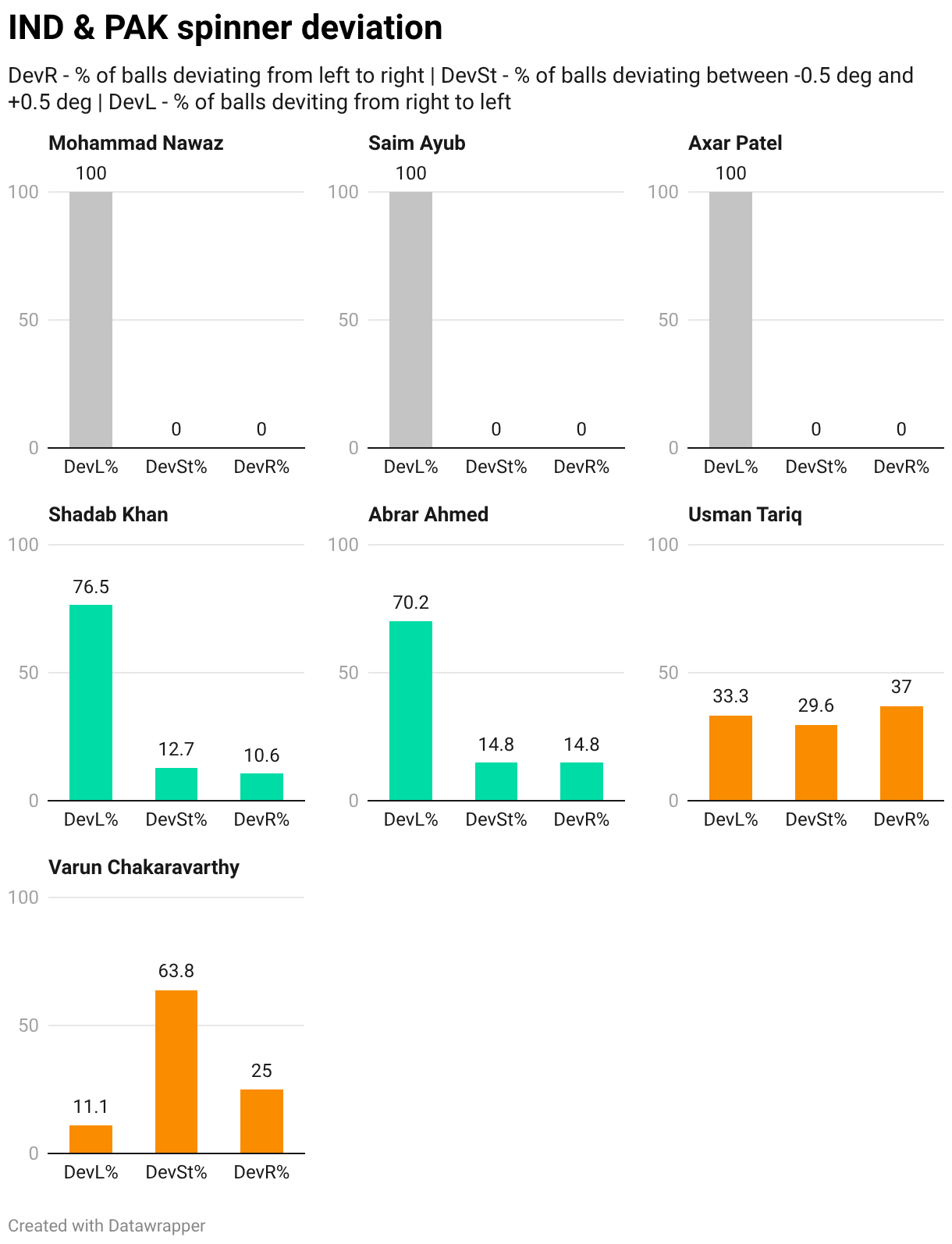
Varun and Tariq are the two outliers in this regard. The former has predominantly had less than 0.5 degrees of turn either way during the ongoing competition and uses the ball turning either way as a wicket-taking option. In the encounter against Namibia, he used the ball turning into the right-hander to outsmart Louren Steenkamp and JJ Smit. Steenkamp attempted to drive the ball outside off, while Smit brought out the sweep, only to find the furniture disturbed behind them. Tariq forces a different issue. In the game against the USA, the off-spinner’s deviation off the surface was almost equally split across each direction, making it difficult for batters to identify which delivery would be his stock ball.
The difference in modus operandi among the spinners across both teams makes the upcoming Group-A contest a tantalising prospect. For two teams that pride themselves on making the best use of subcontinent conditions, the way they manoeuvre around the spin threat will decide which way the eventual result of the match is headed. Despite the result not having a direct bearing on the position of teams in the final eight, it will surely give the victor a momentum boost heading into the business end of the tournament.
Published on Feb 14, 2026
Discover more from News Link360
Subscribe to get the latest posts sent to your email.