
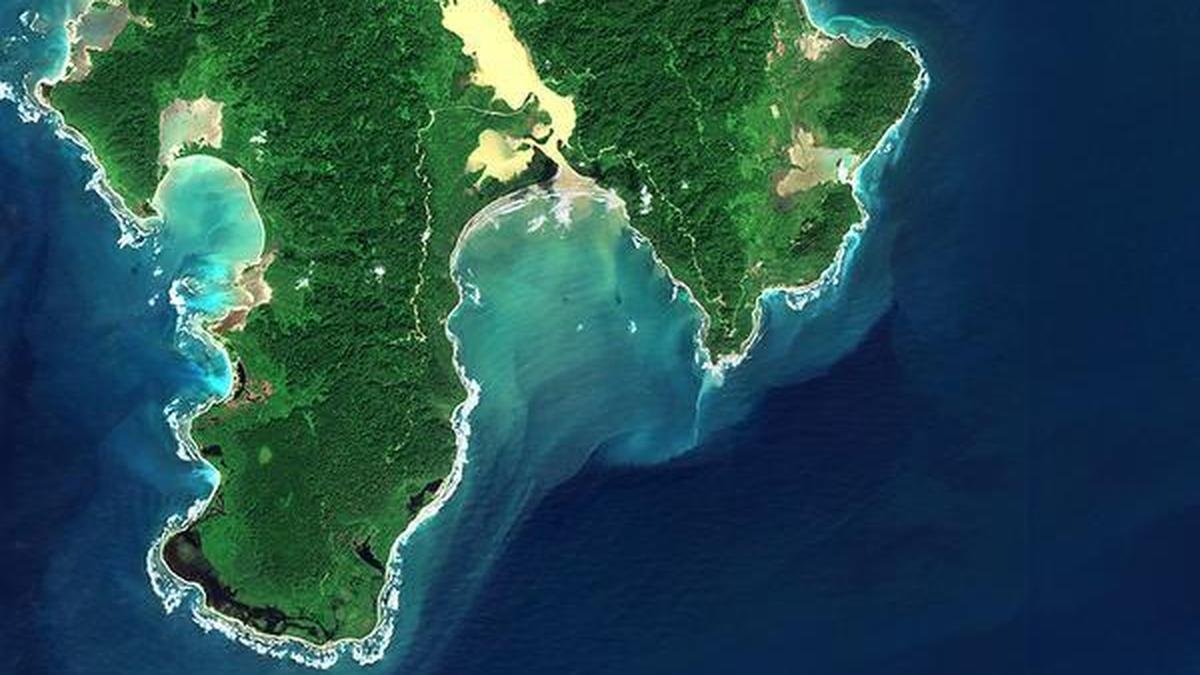
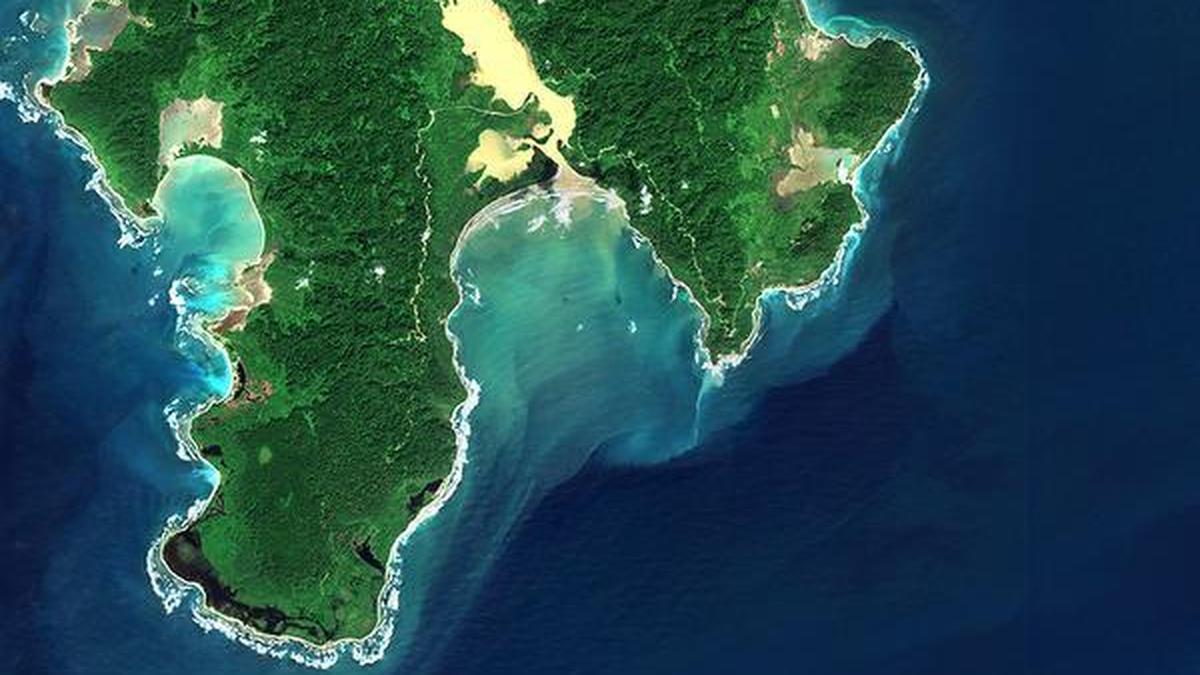
Satellite imagery captures the southern tip of Great Nicobar Island, specifically Galathea Bay in India. Photo by Gallo Images/Orbital Horizon/Copernicus Sentinel Data 2024
The ₹92,000 crore project will include a transshipment port, an international airport, a township, and a power plant to be built on more than 160 sq. km. of land. Of this, about 130 sq. km. is forest land inhabited by the Nicobarese and the Shompen communities, both Scheduled Tribes, with the Shompen categorised as a Particularly Vulnerable Tribal Group.
Also read | The making of an ecological disaster in the Nicobar
The Union Government had earlier defended the the project at the NGT in October 2025 saying that it has mandated conservation and monitoring programmes to run for the next three decades as the project is developed. “We have brought in the best scientific resources available to man this, to take this forward, to carry out research and suggest mitigation, and guide us through the thirty years of this project,” she said, stressing that the project “is going to be a national asset”.
While the environmental clearances granted to the project had been challenged before a Bench of the National Green Tribunal, the challenge to the forest clearances is being heard in the Calcutta High Court. The Calcutta High Court has posted the matter before it for “final hearing” in the week beginning March 30 this year.

The project has attracted flak from experts who have expressed concern over its ‘grave’, irreversible’ impact. More than 70 scholars, former bureaucrats, activists, lawyers, and environmentalists had written an open letter in 2025 urging Environment Minister Bhupender Yadav to “set aside political considerations” and focus on the project’s “grave and irreversible negative implications”.
The Hindu had reported in January this year that members of the Tribal Council in Little and Great Nicobar have allegedly been pressured by the district administration to “surrender ancestral lands” to make way for the project. Parts of the project in Galathea Bay, Pemmaya Bay, and Nanjappa Bay require the diversion of forest lands on which the indigenous Nicobarese people had been living before the 2004 tsunami.
Published – February 16, 2026 11:40 am IST
Discover more from News Link360
Subscribe to get the latest posts sent to your email.