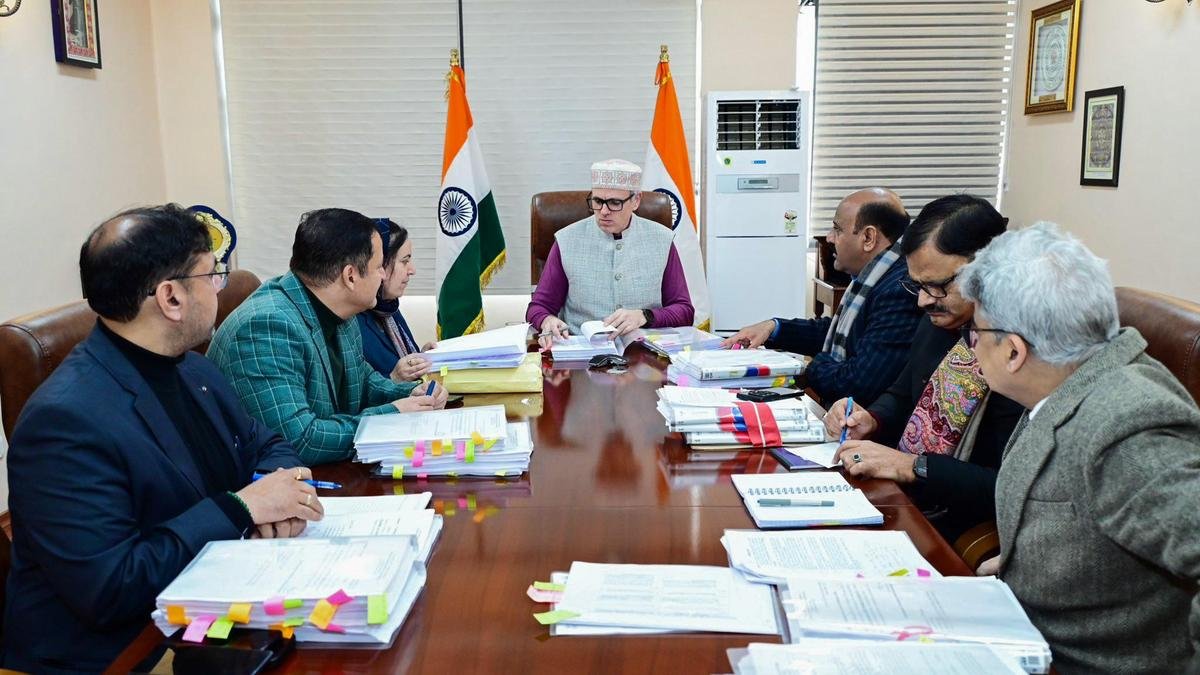
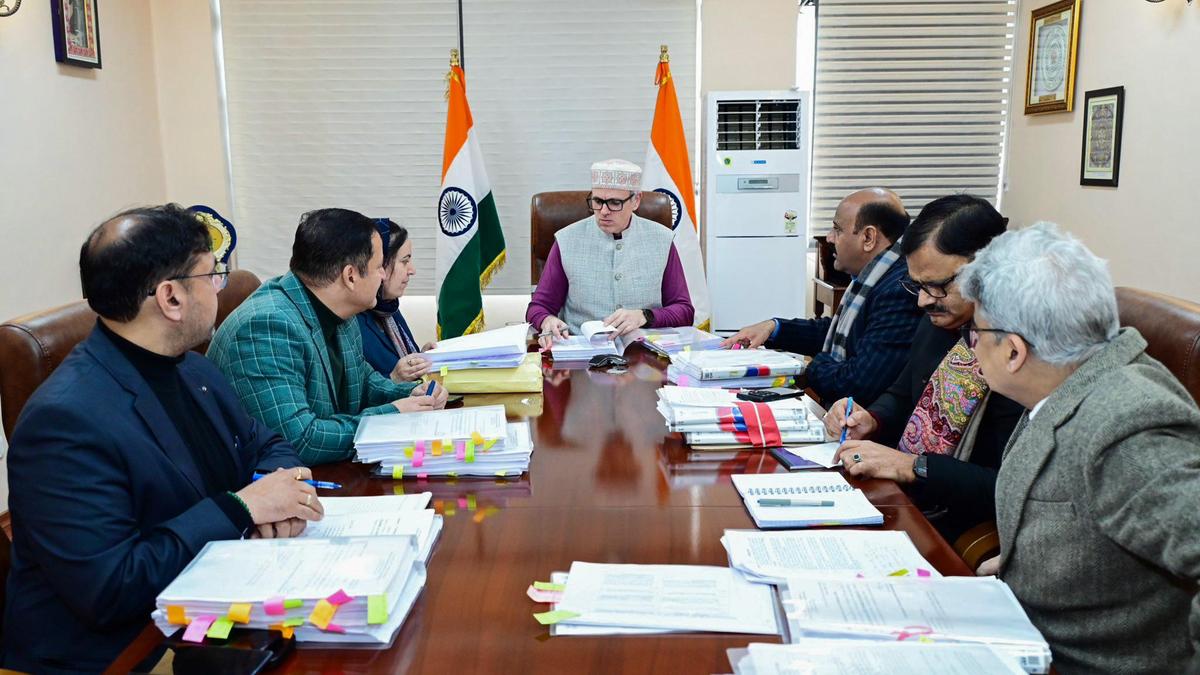
In a careful balancing act, the region’s smallest-ever Cabinet of six members comprise Chief Minister Omar Abdullah from Central Kashmir; Sakeena Itto from South Kashmir; Javid Ahmad Dar from North Kashmir; Javed Rana, a Pahari from Poonch in the Pir Panjal Valley; Satish Sharma from Jammu’s Chhamb; and Surinder Kumar Choudhary from the Pir Panjal Valley. File photo: X/@CM_JnK via ANI
Amid this din, however, the stories of Aga Syed Ruhullah Mehdi and Shammi Oberio — both National Conference (NC) parliamentarians — provide a glimpse into a less-discussed story — that of J&K’s inclusive politics.
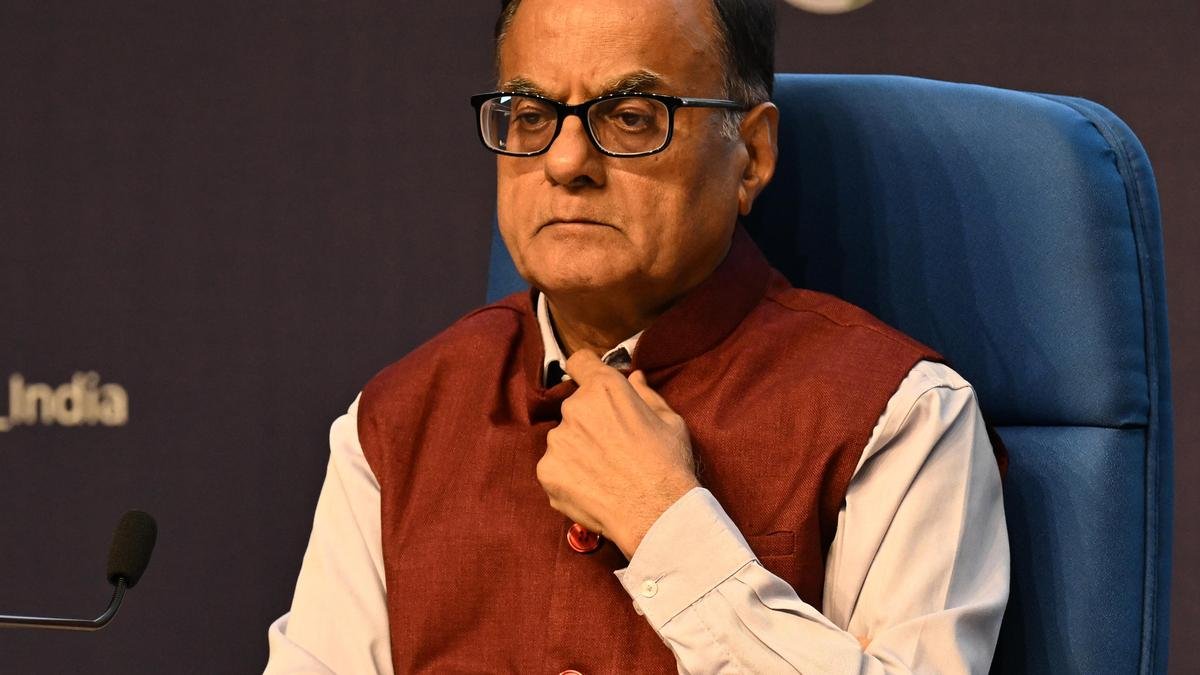
For the first time since the 1990s, none of the Abdullahs, who have long administered J&K, managed to make it to either House of Parliament in the 2024 general elections. There were also other notable changes during the elections. Shammi Oberoi, an eloquent Sikh from Srinagar, became the first from the community from the Kashmir Valley to enter the Rajya Sabha, in 2025. His two speeches in Parliament have won him accolades even from Opposition leaders in Kashmir, a rare gesture in present-day politics.
In the 2024 elections, Syed Aga Ruhullah Mehdi, a Shia cleric from an influential family, also became the first from the community to win parliamentary elections by a huge margin of 1.88 lakh votes. Earlier too, Shia leaders from Kashmir have represented the community, but only in the Rajya Sabha. Notably, it was a majority of Sunni Muslim votes that catapulted Mr. Mehdi to the position, enabling him to represent the Kashmir Valley against the backdrop of the dilution of Article 370 and the downgrading of J&K into a Union Territory in 2019.
Mian Altaf Ahmed Larvi became the first Gujjar leader from J&K in the Lok Sabha. The only region left unrepresented was the Chenab Valley. But with Sajjad Ahmad Kichloo from Kishtwar winning the Rajya Sabha elections, that gap was filled too.
Representation was the defining feature of the 2024 Assembly elections as well. The numerically upscaled 90-member J&K Assembly went to the polls after a decade. It was a moment for all the political parties to seize. The JKNC won 42 seats — 35 from the Kashmir Valley and seven from the Pir Panjal and Chenab Valleys, including two Hindu representatives. None came from the Jammu plains.
During the process of government formation, the NC’s strength rose to 54 with the support of Independents and the Congress (6 seats each). However, it was not numbers alone that defined governance. In a careful balancing act, the region’s smallest-ever Cabinet of six members comprise Chief Minister Omar Abdullah from Central Kashmir; Sakeena Itto from South Kashmir; Javid Ahmad Dar from North Kashmir; Javed Rana, a Pahari from Poonch in the Pir Panjal Valley; Satish Sharma from Jammu’s Chhamb; and Surinder Kumar Choudhary from the Pir Panjal Valley.
There were many firsts. Mr. Choudhary became the first Hindu Deputy Chief Minister from the Pir Panjal Valley and also the first without a coalition government in place. In the past, J&K had Hindu Deputy Chief Ministers only when political parties allied with either the Congress or the BJP. If not for numerical necessity, it was the compulsion of inclusive politics that led the government to allocate two Cabinet berths to the Pir Panjal Valley. Jammu would have been excluded from this model had Mr. Sharma not been inducted. He became the first Independent MLA to serve as Cabinet Minister.
The Peace of Westphalia in 1648 helped define the architecture of the modern nation-state and the idea of sovereign geography. Yet beyond sovereignty, the treaties also underscored the principles of balance of power and collective security — ideas that continue to shape democratic systems.
In modern democracies, voting is not merely about endorsing or opposing a political idea; it is also about ensuring that diverse communities and regions find representation within that sovereign framework. At a time when exclusionary politics is gaining ground everywhere, J&K’s political landscape serves as a reminder that inclusion is central to the legitimacy of governance.
Published – February 17, 2026 01:18 am IST
Discover more from News Link360
Subscribe to get the latest posts sent to your email.