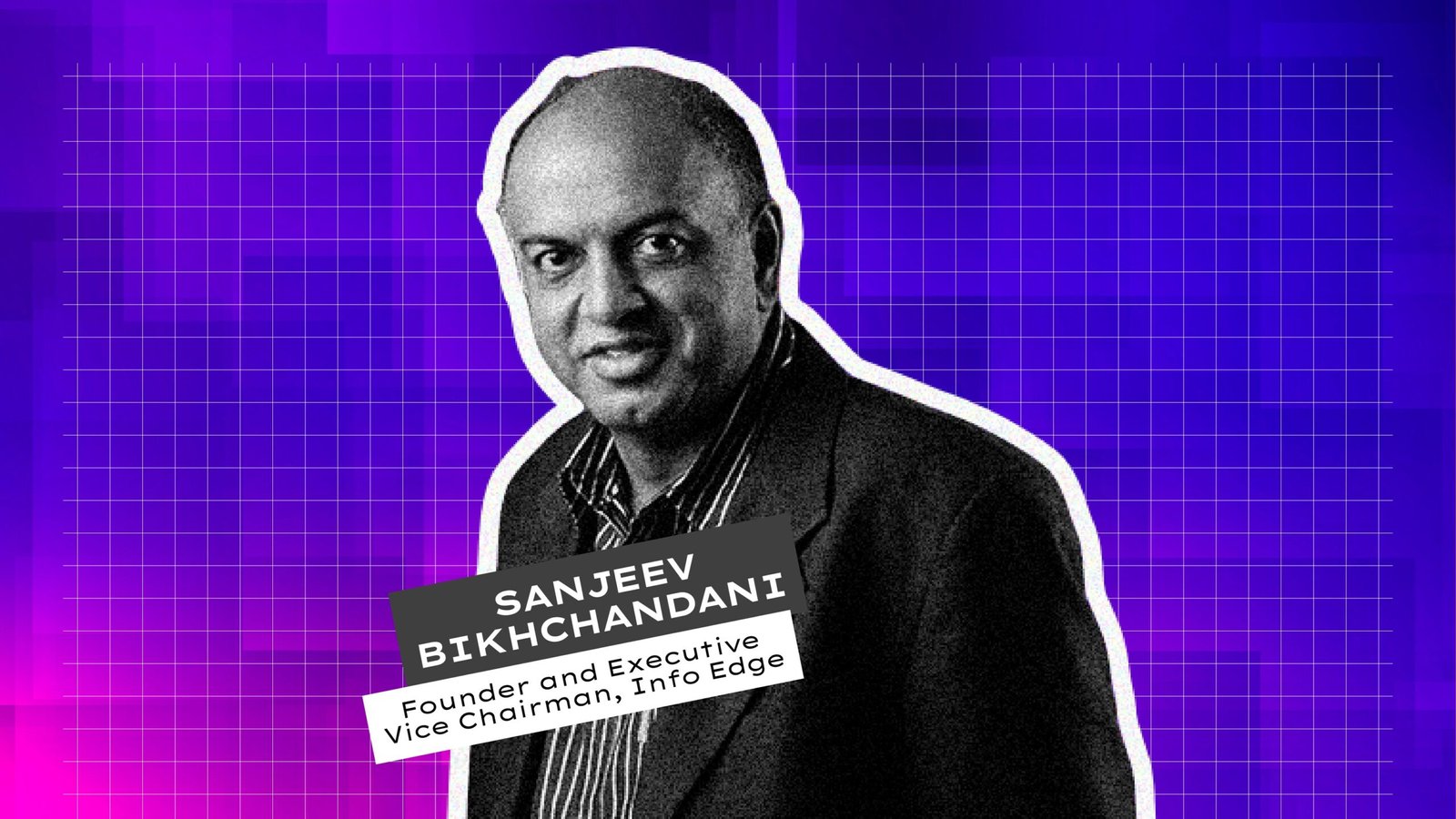

Bhikchandani, who has spent over three decades building Info Edge India and its Naukri.com platform, told industry leaders and policymakers at the India AI Impact Summit 2026 in New Delhi that past waves of technological change have generally increased productivity rather than eliminating jobs.
“So, first of all, I’ll say one thing, don’t panic,” Bhikchandani said. “Okay, I don’t know what the answer is, but we’ll figure it out. Second, you know, the truth is, I don’t know what’s going to happen, and nobody knows, right? But the environment is chaotic, it’s dynamic, it’s moving fast, and we got to go with the flow,” he said.
The summit highlighted mounting concerns about AI’s dual nature: its potential to create opportunities while rendering existing skills obsolete.
Media executives cautioned that journalism faces an existential threat as AI systems scrape content without compensating creators. Meanwhile, technology industry veterans flagged the vulnerability of India’s millions of workers trained in narrow “sub-skills” that machines can now automate faster and cheaper.
Amid these concerns, Bhikchandani offered a historical perspective drawn from his four-decade career spanning India’s computing revolution.
Reflecting on his time at Delhi University in the early 1980s, Bhikchandani described how private training institutes like NIIT began teaching computer skills in 1982, nearly 15 years before the university itself introduced formal computer courses.
“When a new technology comes in, very often institutions are not accountable to markets,” he explained. “Nobody would lose a job at (Government) because they didn’t introduce a computer course. Institutions that are not accountable to markets respond slowly.”
.thumbnailWrapper{
width:6.62rem !important;
}
.alsoReadTitleImage{
min-width: 81px !important;
min-height: 81px !important;
}
.alsoReadMainTitleText{
font-size: 14px !important;
line-height: 20px !important;
}
.alsoReadHeadText{
font-size: 24px !important;
line-height: 20px !important;
}
}

The pattern repeated itself in 1985, when the government announced plans to computerise India’s banking sector. The All India Bank Employees Association, then a powerful trade union, mounted fierce resistance. “There were all sorts of blowbacks, saying we will lose jobs,” Bhikchandani recalled. “But the government said, we are going ahead regardless.”
The outcome defied predictions. “Guess what? Nobody lost jobs. People became more productive. They served customers better.”
This historical precedent forms the cornerstone of Bhikchandani’s argument that current AI anxieties may prove similarly misplaced.
“So the second lesson is, when new technology comes in, there are almost always great fears of job loss. But very often, productivity goes up. The same number of people are doing more things. They are doing different things. They are doing more useful things,” he said.
“Can it be different this time? It’s possible. But will it necessarily be different? The answer is not necessarily.”
Naukri.com, which serves approximately 150,000 clients, has deployed AI-powered voice bots to reach previously unserved customer segments, the bottom 50% of clients for whom human sales calls weren’t economically viable. The technology hasn’t displaced workers but rather expanded service capacity.
“Thus far, at least nobody has lost a job in our company because of AI,” he said, while acknowledging uncertainty about the future.
Drawing on his own career trajectory, Bhikchandani described how technological fluency became a competitive advantage in his first marketing job after business school in 1989. He was among the first IIM graduates to use personal computers as part of their coursework, a skill that made him indispensable when most colleagues couldn’t operate the department’s four PCs.
“I became the go-to guy,” he said, noting that the technology itself wasn’t particularly difficult—his colleagues simply hadn’t learned it.
This experience shaped his advice to young workers navigating the AI transition.
“To all the young people here—you don’t worry about systemic problems. You don’t worry about policy issues. You just worry about your job and your career,” Bhikchandani said.
“What should you do to make sure AI doesn’t make you lose your job? Just learn 5, 10, 15 useful AI tools.”
The demographic advantage, he suggested, lies with younger workers. “Let me assure you, the older people in any company will not know them.”
His concluding warning carried an implicit threat about the cost of inaction: “If you don’t do AI, AI will be done to you. So you better do AI.”
Edited by Megha Reddy
Discover more from News Link360
Subscribe to get the latest posts sent to your email.