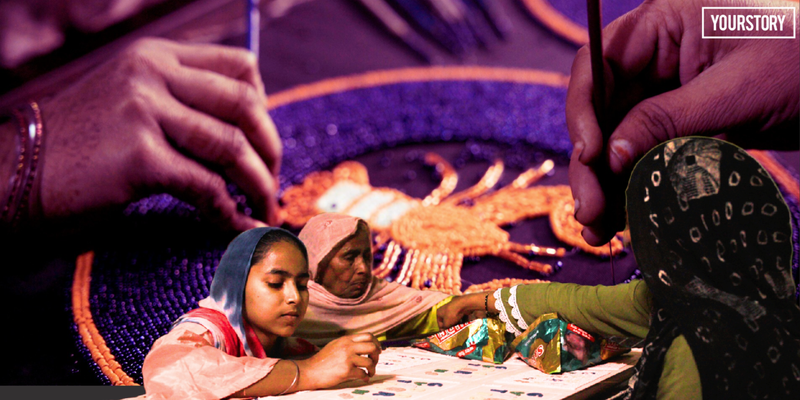
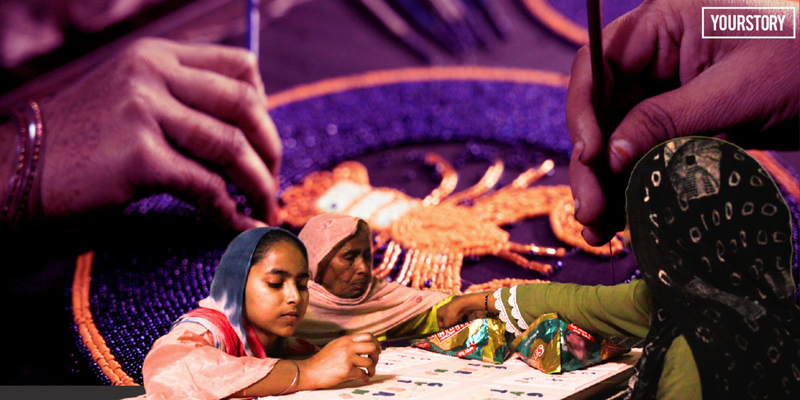

In Kasganj, Uttar Pradesh, hand zari work is sustained not in large factories but inside homes. Fabric arrives in bundles, patterns are traced, and women sit around wooden frames—known as adda—stitching metallic threads into panels that later become table covers, mats, purses, and utility pieces for gifting and everyday use.
This quiet ecosystem depends on steady hands, material supply, and a flow of orders that often originates outside the district. What appears as a finished product in urban markets begins as hours of patient embroidery inside neighbourhood homes.
Through the One District One Product (ODOP) framework, the cluster has gained structured visibility. For home-based artisans, this support translates into smoother access to credit, training exposure, and participation in platforms where repeat buyers emerge.
Organising a Home-Based Network
Naseem Akhtar, a Kasganj native, has spent decades coordinating this decentralised system. He links women artisans from neighbourhoods such as Baddoo Nagar, Hidayat Nagar, Mohalla Maun, and Nai Basti to steady work orders.
“Zari in Kasganj grew through repetition and trust,” he says. “Quality brings the next order.”
Training is gradual and practical. New learners sit beside experienced artisans, beginning with simple stitches until their work reaches production standard. Only when stitching becomes consistent does earning begin.
At the centre of the process is the adda—a wooden frame that keeps fabric stretched evenly, ensuring stability during embroidery. Materials are supplied by the organiser, while the artisans contribute labour and skill.
From Adda to Market
Unlike traditional sari-focused zari work, Kasganj’s cluster largely caters to export-oriented categories such as table mats, bags, and decorative covers. Designs often arrive from external companies. Patterns are transferred onto fabric locally before embroidery begins.
Once panels are completed, they return for cutting, stitching, and finishing, transforming embroidered fabric into final products ready for dispatch.
Quality control is critical. Uniform stitching and clean finishing determine whether a batch is accepted or rejected. Akhtar links the growth of his unit to institutional support and loan access under ODOP, which helped scale operations responsibly.
He also notes challenges such as fluctuating tariffs and price pressure that affect small producers. Yet the craft continues because it is rooted in organised home production and a trained workforce.
In Kasganj, zari is not just ornamentation—it is a livelihood woven quietly into daily life.
Discover more from News Link360
Subscribe to get the latest posts sent to your email.