
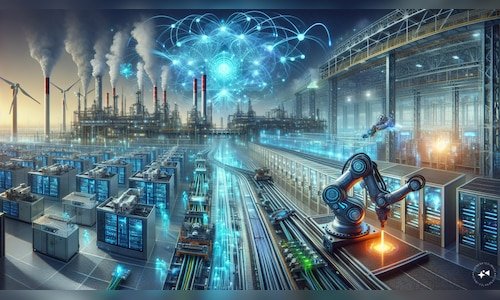
“They need power… and in power systems and in metals there are significant players.”
As hyperscalers scale up capacity, demand rises for switchgear, backup generators, cables and cooling systems — all essential to running data centres. Gupta said these ancillary industries could see sustained earnings visibility because AI workloads are extremely energy-intensive and require continuous uptime and temperature control.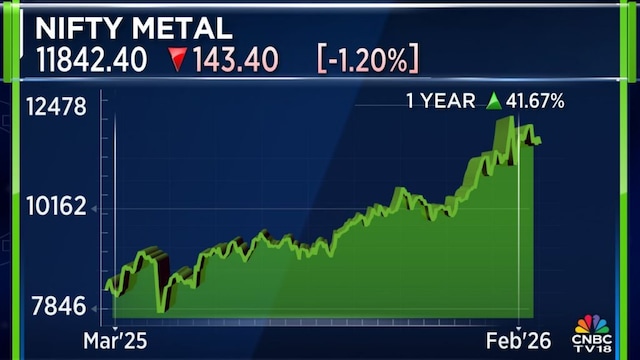
India may not manufacture semiconductors or memory at scale, but it has meaningful exposure to electrical equipment and engineering supply chains. He sees opportunities particularly in power equipment, generators and heating, ventilation, and air conditioning (HVAC) systems as data centre construction accelerates. The implication is that the AI cycle will resemble an industrial investment cycle as much as a technology one.
Also Read: India has the talent, data and policy edge to lead in AI: Industry leaders
The shift also reframes how investors should think about IT services. Rather than the sole beneficiaries of global digital spending, technology companies become only one layer in a broader ecosystem, while the infrastructure providers capture steady, multi-year order flows tied directly to capital spending.
Beyond the AI theme, Gupta remains constructive on the domestic economy as well. Corporate earnings have begun to improve alongside credit growth, with BSE-500 profits rising roughly 11–12%, indicating strengthening nominal activity. Within financials, he prefers lenders exposed to small businesses.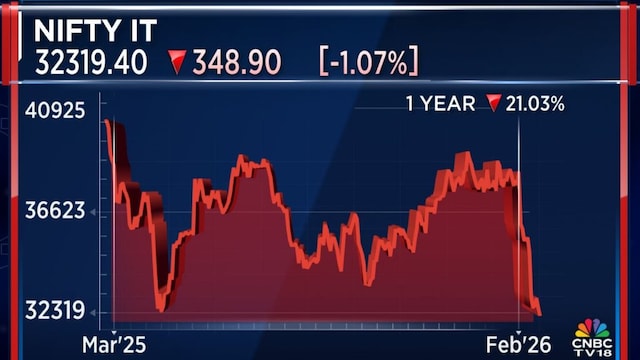
“Within the credit growth area, we are most bullish on the SME credit.”
He also sees early signs of a revival in private-sector investment after a prolonged pause, with companies indicating fresh spending in data centres, real estate and metals, alongside rising government defence outlays.
Also Read: Indian IT stocks nearing 2008 crash-era valuations: Wedbush’s Moshe Katri
“For the first time, after one and a half years, the companies in the earnings calls have made some constructive noises about the capex.”
That revival is feeding into transport demand as well. As construction and infrastructure activity pick up, commercial vehicle volumes are improving after two years of weakness, supporting both manufacturers and financiers.
“After two years of lull, we see commercial vehicle…there is a good runway ahead.”
For the entire interview, watch the accompanying video
Catch all the latest updates from the stock market here
Discover more from News Link360
Subscribe to get the latest posts sent to your email.