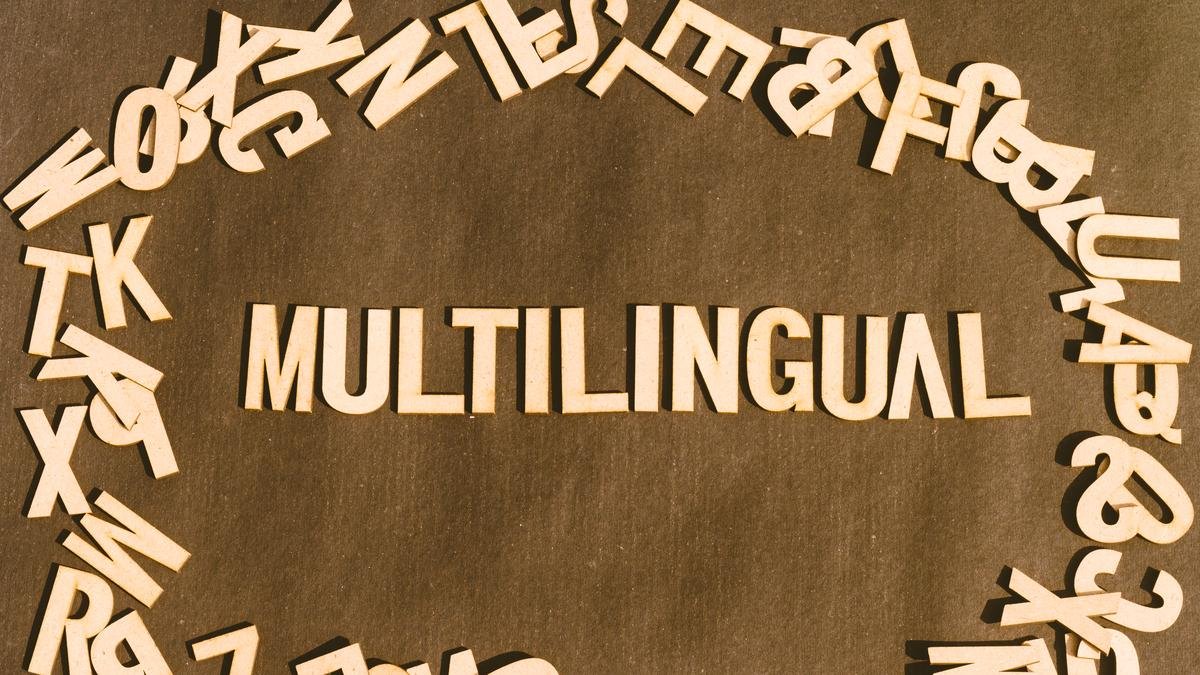
When a language disappears, we lose more than words. We lose a way of understanding the world built over generations. Safeguarding languages is, therefore, not only a cultural imperative. It is fundamentally a question of holding on to humanity’s accumulated knowledge, which in turn makes it an educational issue. This is why mother-tongue-based multilingual education (MTB-MLE) is critical.
Basis for quality education
As we mark International Mother Language Day (February 21), under the theme “Youth voices on multilingual education”, the message is clear: young people thrive when their languages — and, therefore, their identities — are recognised and valued in the classroom. When this happens, schools become spaces where children learn about themselves, others, and the world in all its diversity. UNESCO has long championed multilingual teaching, based on the language best understood and spoken, as a condition for quality education.
Each year, UNESCO publishes the State of the Education Report for India, focusing on a specific themes. This year, which is the seventh edition (2025), Bhasha Matters: Mother Tongue and Multilingual Education, brought together global research, new national evidence and practical lessons to explore the state of Mother Tongue and Multilingual Education in India. The report demonstrates that MTB-MLE is not only pedagogically sound but also transformative. It outlines 10 policy recommendations to guide India towards a more inclusive and equitable education system that treats linguistic diversity as an asset rather than a challenge. It also highlights what is working — from bilingual learning materials and teacher preparation to innovative digital solutions that bring multilingual resources to classrooms and communities
A barrier of language
Globally, over a quarter of a billion learners lack access to education in a language they fully understand. In India, nearly 44% of children enter school speaking a language that is different from the medium of instruction, according to the National Council of Educational Research and Training (NCERT) in 2022. For these children, learning begins with the added burden of decoding an unfamiliar language before grasping academic concepts. Weak foundational literacy and numeracy can lead to cumulative learning gaps, reduced confidence and, ultimately, a higher risk of dropout.
India has taken decisive steps to address this challenge. The National Education Policy (NEP) 2020, followed by the National Curriculum Frameworks of 2022 and 2023, places the child’s home or mother tongue at the centre of early education.
The Bhasha Matters report highlights promising examples. In Odisha, a long-standing multilingual education programme spans 21 tribal languages across 17 districts, supporting nearly 90,000 children. In Telangana, the use of Digital Infrastructure for Knowledge Sharing (DIKSHA)-enabled multilingual resources demonstrates how digital tools can expand access to learning materials in local languages. National initiatives such as PM eVIDYA, Adi Vaani (developed by a national consortium), BHASHINI (BHash-based ANd Intelligent Node for InclusioN in India) and AI4Bharat’s community-developed language technologies show how digital platforms and artificial intelligence can help document endangered languages, create local-language content and support teachers with multilingual resources.
Building on these examples, Bhasha Matters sets out a practical road map. It calls for clear state-level language-in-education policies grounded in MTB-MLE, stronger teacher recruitment and professional standards for multilingual classrooms, and reforms in pre-service and in-service training to embed multilingual pedagogy. It emphasises high-quality multilingual materials and assessments, community participation and indigenous knowledge, gender-responsive approaches, responsible investment in language technologies, and sustainable financing. Crucially, it proposes a National Mission for Mother-Tongue-Based Multilingual Education to coordinate action across ministries, research institutions, civil society and technology partners, ensuring that promising pilots become systemic reform.
Linguistic diversity is a driver
India’s linguistic diversity is not a barrier to development; it is a powerful driver of equity, identity and social cohesion. With States already demonstrating what is possible, and with clear policy frameworks in place, the country stands at the threshold of transformative educational change. This shift reflects a growing body of evidence: children learn best when taught in a language they understand.
On International Mother Language Day, the call is clear. Education systems must recognise and value every learner’s language, not only to improve learning outcomes but also to affirm identity, well-being and meaningful participation in society.
When young people’s voices are heard, multilingual education becomes more than a policy aspiration. It becomes a shared national movement. India’s multilingual moment has arrived — and its youth are helping to shape its future.
Tim Curtis is Director and Representative, UNESCO Regional Office for South Asia, and Member, Team UN in India. Read the State of the education report for India 2025 here
Published – February 21, 2026 12:08 am IST
Discover more from News Link360
Subscribe to get the latest posts sent to your email.