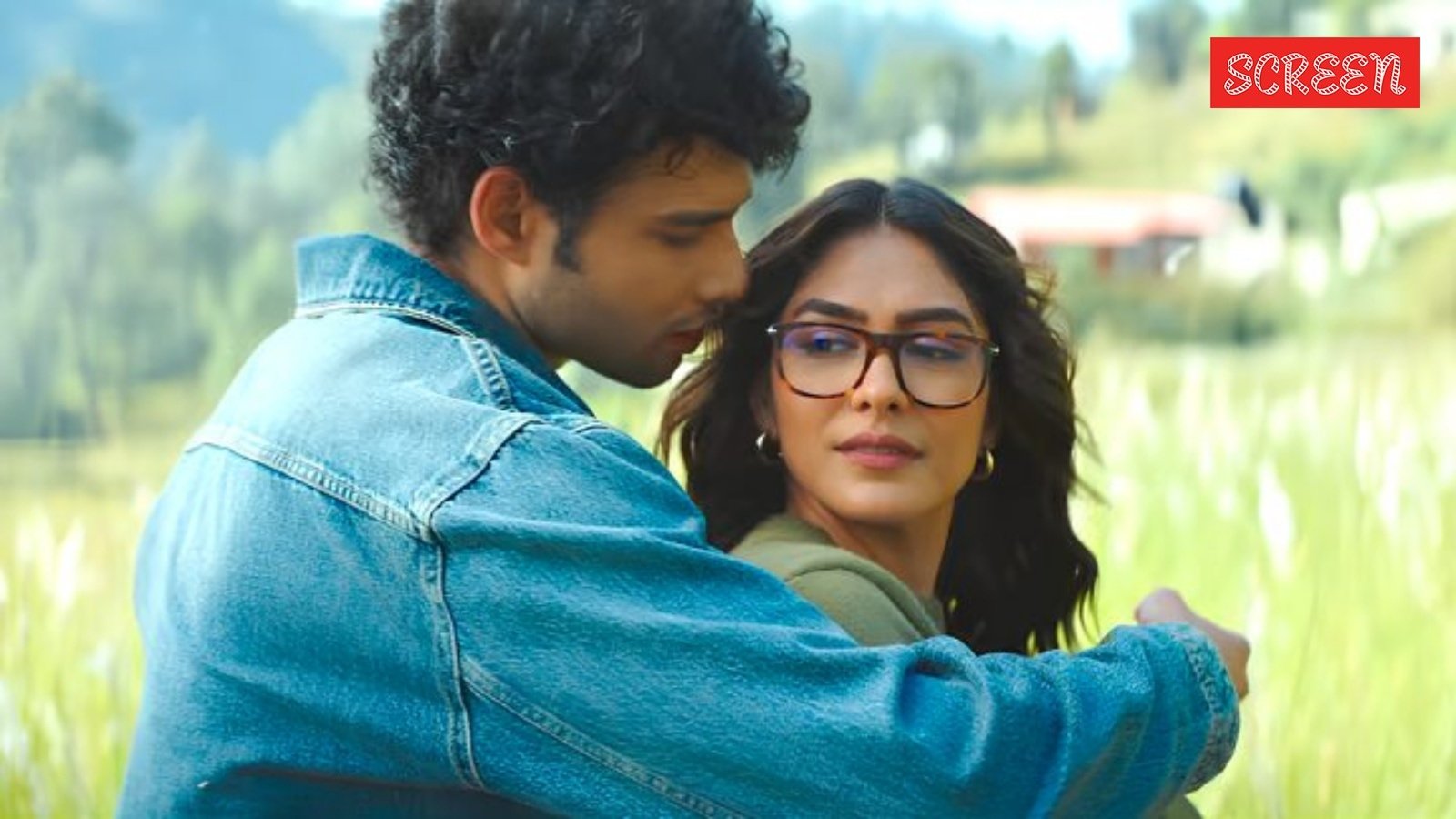
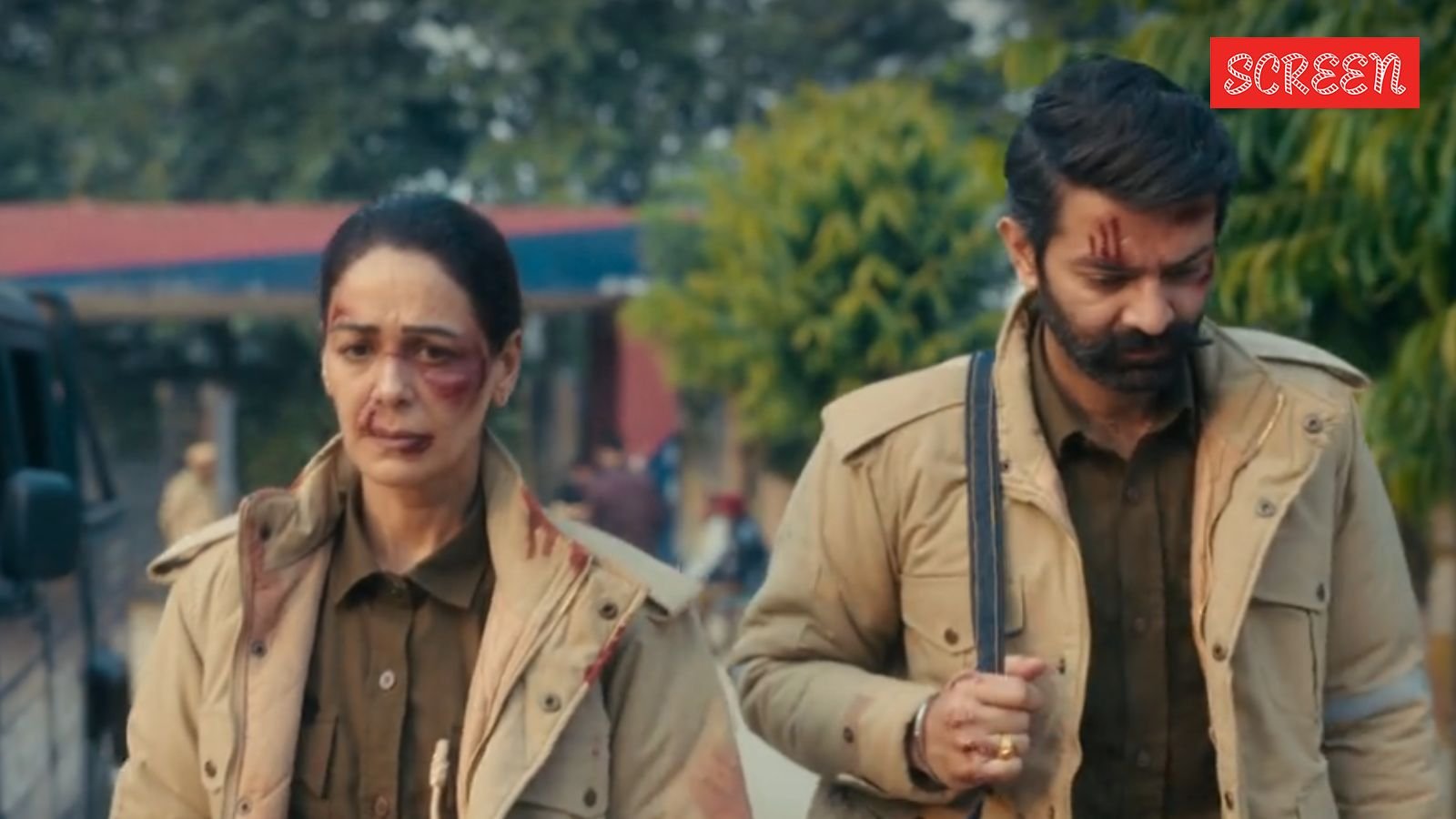
Long-form storytelling has, over the years, become a terrain that Sudip Sharma now inhabits with authority. Nearly a decade ago, he began by conceiving, writing, and eventually creating the first season of Paatal Lok, which erupted into public consciousness when it arrived in the uncertainty of the pandemic. He followed it with Kohrra for Netflix, a work as intimate as it was restrained, rooted in personal memory and emotional weather. Then, as if to deepen the imprint, came the second season of Paatal Lok last year, met with immense love. And now, with Kohrra 2, a work many are calling his finest yet, he seems to have reached an even sharper creative clarity. What remains remarkable is not simply his ability to craft such emotionally sensitive stories with consistent success, but the way he continues to unearth something vital, something urgent, within the well-worn corridors of the police procedural.
The fatigue is real, for him as much as for the audience. And yet, he disarms it. He finds, within its familiar scaffolding, a sophistication that feels earned rather than imposed. He does so alongside his fellow screenwriters, Gunjit Chopra and Diggi Sisodia, collaborators who have known each other for years and share an instinctive creative synergy. In an exclusive, spoiler-filled conversation with SCREEN, the three sit together to reflect on how season two of Kohrra emerged from the writers’ room: unpacking its themes, its characters, dissecting pivotal scenes, reimagining the grammar of the genre, and responding to its critics.

Excerpts edited for clarity and brevity:
To begin with, across both seasons, characters who push back against family, social norms, or their past, like Preet (Pooja Bhamrah) this season, and Paul (Vishal Handa) and Liam (Ivantiy Novak) earlier, are killed right at the beginning. Why always such a choice?
Sharma: I feel the person going against the grain of what is considered right in that time or place, when that person dies, several questions come up that are worth exploring. It becomes a kind of clash between tradition and modernity that exists in Punjab, and of course in the rest of India as well. So when such a person dies, there are multiple suspects that emerge from that conflict. From there on, it becomes a strong breeding ground for the procedural to unfold.
When you begin work, do the themes come first and then you build characters around them? Or do you begin with a character and discover what you want to say along the way?
Sharma: Not really. I’d say the theme comes much later. The first real exploration is the plot. The second layer is character. You start placing characters against the plot, juxtaposing the two, and seeing what tensions or surprises emerge. It’s only once you have a grip on both plot and character that themes begin to surface. When you start thinking deeply about characters: where they come from, what past they’re carrying, where they are now versus where they want to be, you begin to see patterns. And when you’re doing that across multiple characters, parallels start revealing themselves. At some point you realise, “This could be one of the themes of the show.” Then you return to the plot and begin refining it, chiselling it so that the thematic undercurrent becomes clearer and more cohesive. It’s very much a step-by-step process. I only wish it were simpler than that.
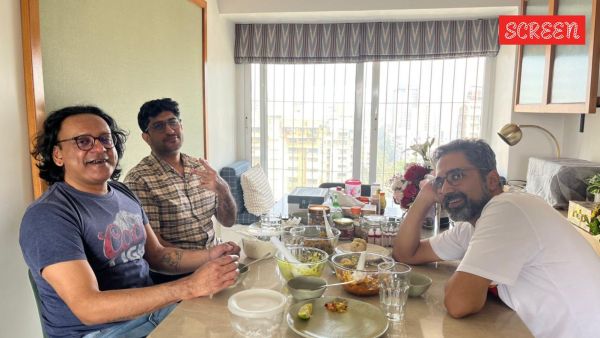 Inside Kohrra 2 writers’ room: Between taking down NRIs, Sudip Sharma, Diggi Sisodia, and Gunjit Chopra steal a moment to grab a meal.
So I’m assuming you go into detailed backstories for both major and minor characters?
Story continues below this ad
Chopra: It’s really about jamming together for two or three months. On different days, different things surface. A scene sparks a thought, that thought triggers an idea, and suddenly you’re chasing that thread. You keep juxtaposing possibilities and eventually something new begins to take form.
Sharma: For instance, the fight you see at the beginning of the second episode between Preet and Sam (Rannvijay Singh) came out of a discussion about their backstories. While unpacking that, the conversation drifted to the nanny and her own background. At one point, we had imagined the nanny as Mexican. But then we felt the story needed to be contextualised more closely. Making her Punjabi gave us a deeper inroad into themes we were already exploring. And from there, emerged another scene between the nanny, her brother, and her father at the police station. So, one thing leads to another. You follow a detail, and before you realise it, you’re deep down a rabbit hole, discussing the culture of nannies in Punjab.
Also Read | In Sudip Sharma’s superb Kohrra 2, the inheritance of mist shadows over tomorrow
Let’s talk about Dhanwant (Mona Singh). In crime dramas, it’s almost a given that a detective is haunted by the loss of a loved one. It’s a trope that’s been used repeatedly. Were you concerned about how it would land, and how did you make it feel distinct?
Story continues below this ad
Sharma: When you’re working within a genre, you have to respect its conventions. There’s little point pretending you’re doing something avant-garde while making a crime drama. The tropes exist for a reason. The key is to be aware of them, and then to reinterpret them in a way that feels fresh. It’s about how intelligently you enter those conventions and how you play with audience expectations. With Dhanwant, the idea was to reveal her inner life gradually. In the first couple of episodes, viewers might assume that her IVF journey is simply about not having a child. That’s the way we chose to hide the tropiness of it, by distracting the viewer, by alluding to something else, and then revealing it at a point when it has maximum impact.
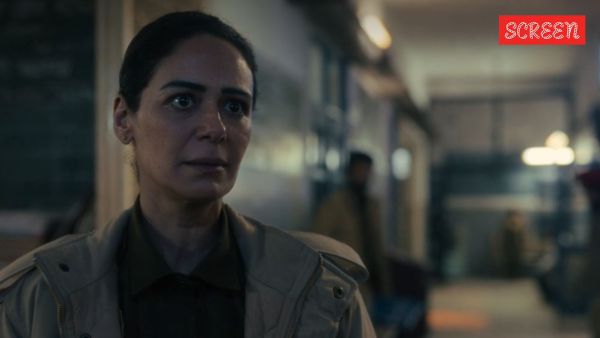 Kohrra 2 reinvents familiar tropes through the character of Dhanwant.
Dhanwant and Garundi’s (Barun Sobti) relationship starts on uneasy ground but slowly grows into one of mutual support and empathy. How was it developing that arc?
Sisodia: What we wanted to explore first was what it means for a female cop to be in Punjab. It was very easy for Balbir (Suvinder Vicky) and Garundi in season one to have a bond within a deeply patriarchal, feudal setup, because the system is very much aligned for them to have a resonance with it. Now, when you bring in a female cop, who herself has to fight that patriarchy, into that same space, and pair her with someone like Garundi, whose social conditioning has been shaped by that arrangement, it naturally creates friction. As a junior officer, he might already bristle at taking orders, especially when those orders come from a woman. So we felt it would create an interesting push and pull. And of course, over the course of an investigation, when people work closely together, they are bound to form a human bond, a connection. That’s how we see it, by the end, that tension gradually turns into a friendship.
One of the brilliant aspects of the show is how it suggests that patriarchy isn’t enforced by men alone, women also uphold it, sometimes consciously. This is captured perfectly in the scene at the very end, when Twinkle (Mandeep Kaur Ghai) tells Dhanwant, “A woman must know her place.”
Story continues below this ad
Sharma: See, that’s the classic case of the bully becoming the bullied. Once you step into a position of power, where you can call the shots, you naturally want the current order to persist, because it serves your interests.
Sisodia: And also, in that scene, what’s interesting is that she is enforcing patriarchy, but it comes from a very maternal instinct. That makes for a great dichotomy.
Migration is central to Punjab’s identity, and Sudip, you’ve explored it before in Udta Punjab. How did revisiting it allow you to examine themes like bonded labour?
Sharma: When you talk about something as complex as migration, multiple layers naturally emerge. It’s not just a single story. Especially today, it’s one of the most talked-about topics worldwide. In Punjab, a lot of labour comes into the state to work in the fields, but there’s also a significant outflow, people from Punjab going to work in Europe or America. The living conditions many of them endure, often without any social security or safety nets, is a reality worth exploring. I’d say we’re far from done with it; there’s much more to uncover as we go deeper.
Story continues below this ad
Chopra: For this specifically, we visited an NGO near Patiala and realised that addressing bonded labour isn’t just about rescuing someone from a situation. Someone might report a case, and the NGO might succeed in getting the person out, but rehabilitation is an entirely different challenge. People are dealing with years of trauma, and many are still not fully reintegrated into normal life. They carry that baggage with them. When we returned and discussed it in the writers’ room, we truly grasped the weight of it all.
Watch the episode of Cult Comebacks on Sonchiriya, here:
One criticism of the show is that the murderer is revealed only in the final episode, making it feel sudden and abrupt. As a whodunit, some feel it doesn’t quite work. How do you respond?
Sharma: I’ll be honest, a simple whodunit isn’t exciting at all. That style feels like it went out with Agatha Christie. It’s a reductive, old-school way of looking at the genre. We discussed this in the writers’ room: yes, the killer is formally revealed in episode six, but his track is seeded from the very first episode. The son is already searching for him, and there are constant hints woven throughout. Even the first episode is called ‘The Barn,’ and we keep returning to the barn, subtly signaling that there’s more to that place than what meets the eye.
Sisodia: Even with the fire, you discover bodies of people who were chained. So all of this is sprinkled throughout the episodes. The clues are there, you just need to pay close attention.
Story continues below this ad
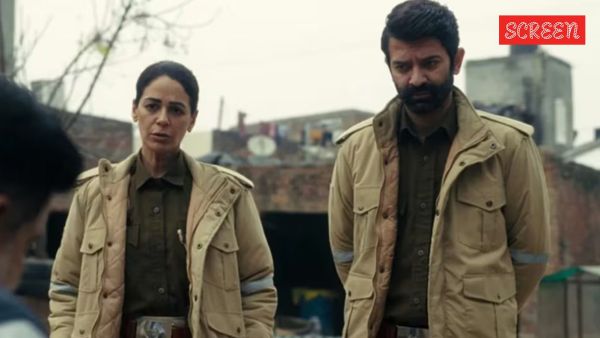 The writers of Kohrra 2 explore the development of the relationship between Dhanwant and Garundi.
Talk to me about how you arrived at the central theme of the show, the shadow the older generation casts on the younger, influencing not just their material lives but also the traumas they inherit.
Chopra: If you really look at Punjab, there’s a generational trauma embedded in its history. As a state, it has witnessed so much, every 20 years, something major has left its mark. We weren’t consciously trying to force that but when you dive into the backstories of the characters, it naturally emerges. Take the backstory of Pamma (Gurjant Singh), for instance. Growing up in a Punjabi family, you see how history and personal experience merges. I’ve seen that because I come from a Punjabi family. They are carrying something from history also, and something very personal, and sometimes it’s just very interconnected, and it starts all the way from partition. And it kind of stays with you.
I have to ask you about my favorite scene from the show: when Jung (Pardeep Singh Cheema) calls Garundi from the hospital. It’s so well performed, and the writing captures something very intrinsic to all human relationships.
Story continues below this ad
Sharma: It’s one of my favorite scenes as well. It’s that moment when everything is broken, yet there’s still something pulling you toward that one person. That’s so true of all estranged relationships in life, between a husband and wife, two lovers, or a father and son. Even when you’ve chosen to break away, how do you erase all the memories and everything else that binds you? That feeling was already present when we wrote the scene, but it’s really Pardeep’s performance that elevates it. I remember during the shoot, I broke down and had to rush out of the set because I didn’t want to cry in front of everyone. It was an incredibly powerful, heartfelt performance. There are few moments where the emotional truth being portrayed resonates with everyone present, and this was one of them. More than anything we did, it was Pardeep, the actor, who lifted the scene to another level.
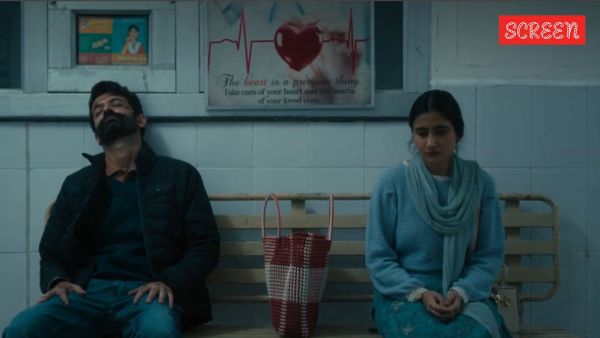 The final frame of Kohrra 2.
Lastly, about the final frame of the episode, with Garundi and Silky (Muskaan Arora) sitting at opposite ends of the bench, the camera tracking out, and the quote visible, it’s one that I think is going to stay with me for a long time.
Sharma: That’s the joy of filmmaking. You write something, and then the team comes in, everyone adds their bit. The script simply said there would be a bench, with the two of them sitting at opposite ends, and Garundi wouldn’t even know that Silky had returned. But Mukund, our production designer, suggested adding a hint of red in the frame. Since it’s a hospital, he thought of a poster with a heart. I loved the idea, and he asked for a quote to go with it, so we wrote one for him. Then Ishaan, our DOP, suggested tracking out instead of in. My original idea was to track into them, but he said, in the closing five minutes, we track into each character. Now, this is the moment to track out, to leave them in that space, to give them privacy. I thought, it was a great idea. And it turned out beautifully.
Discover more from News Link360
Subscribe to get the latest posts sent to your email.