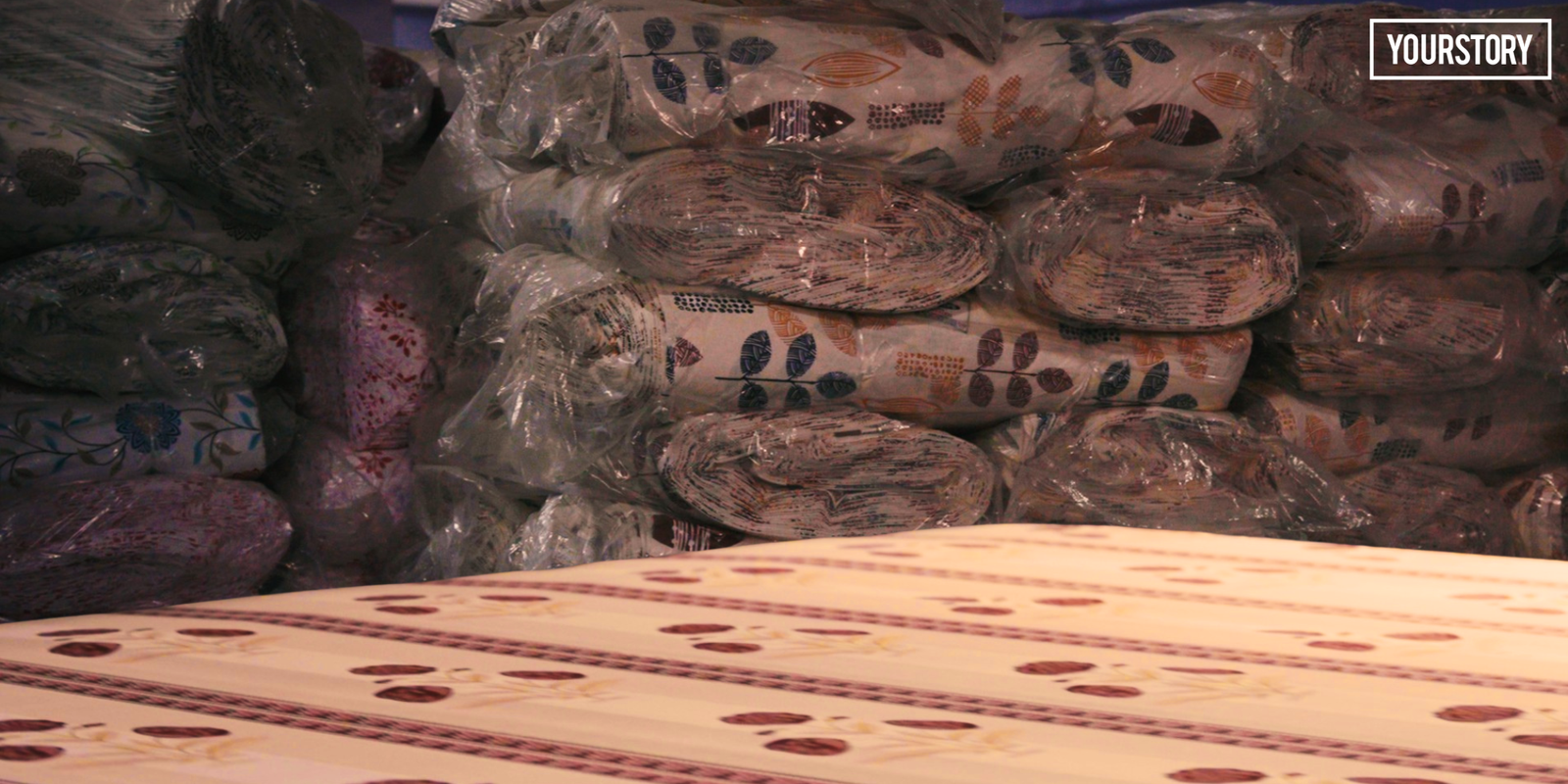
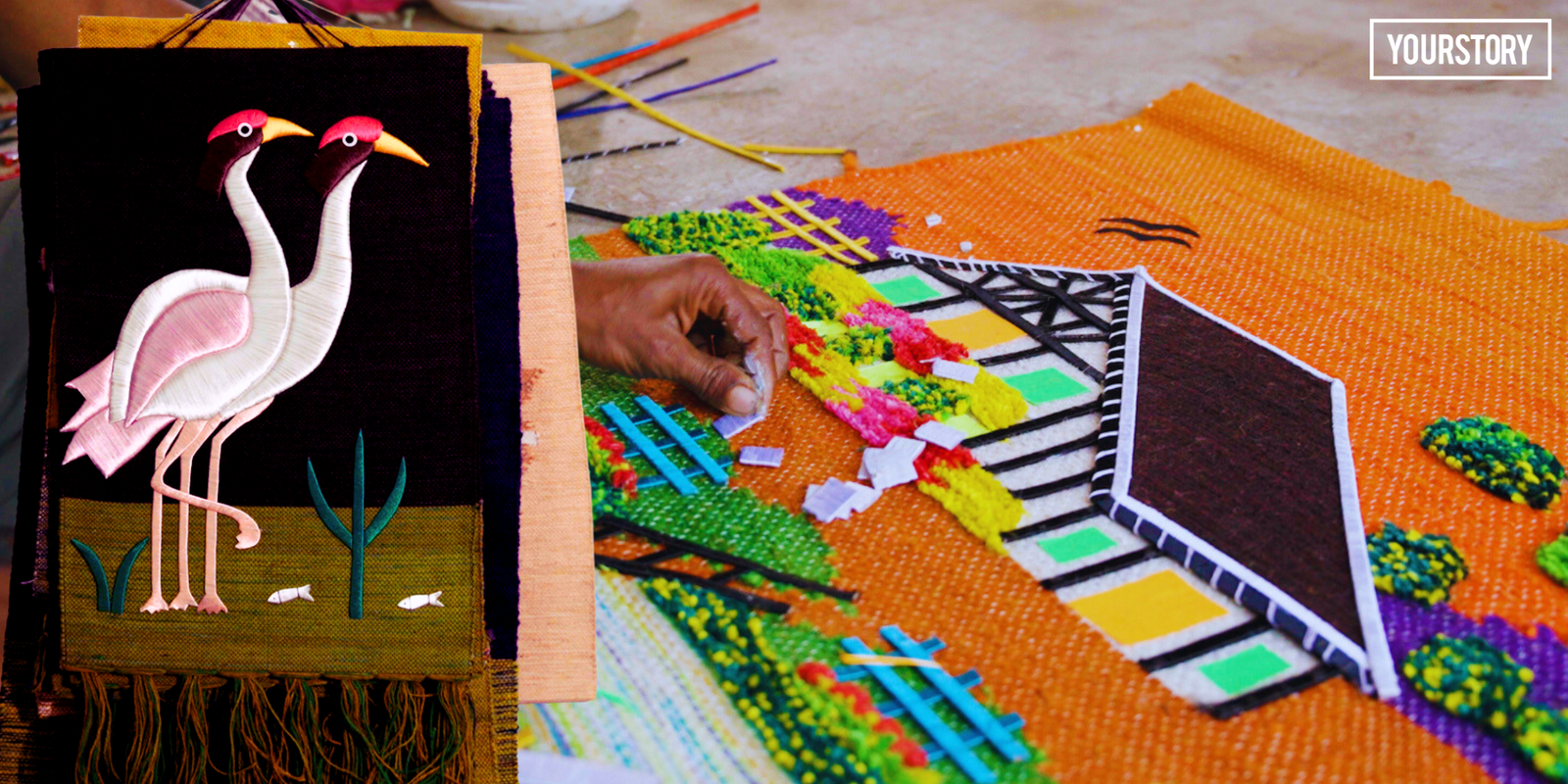
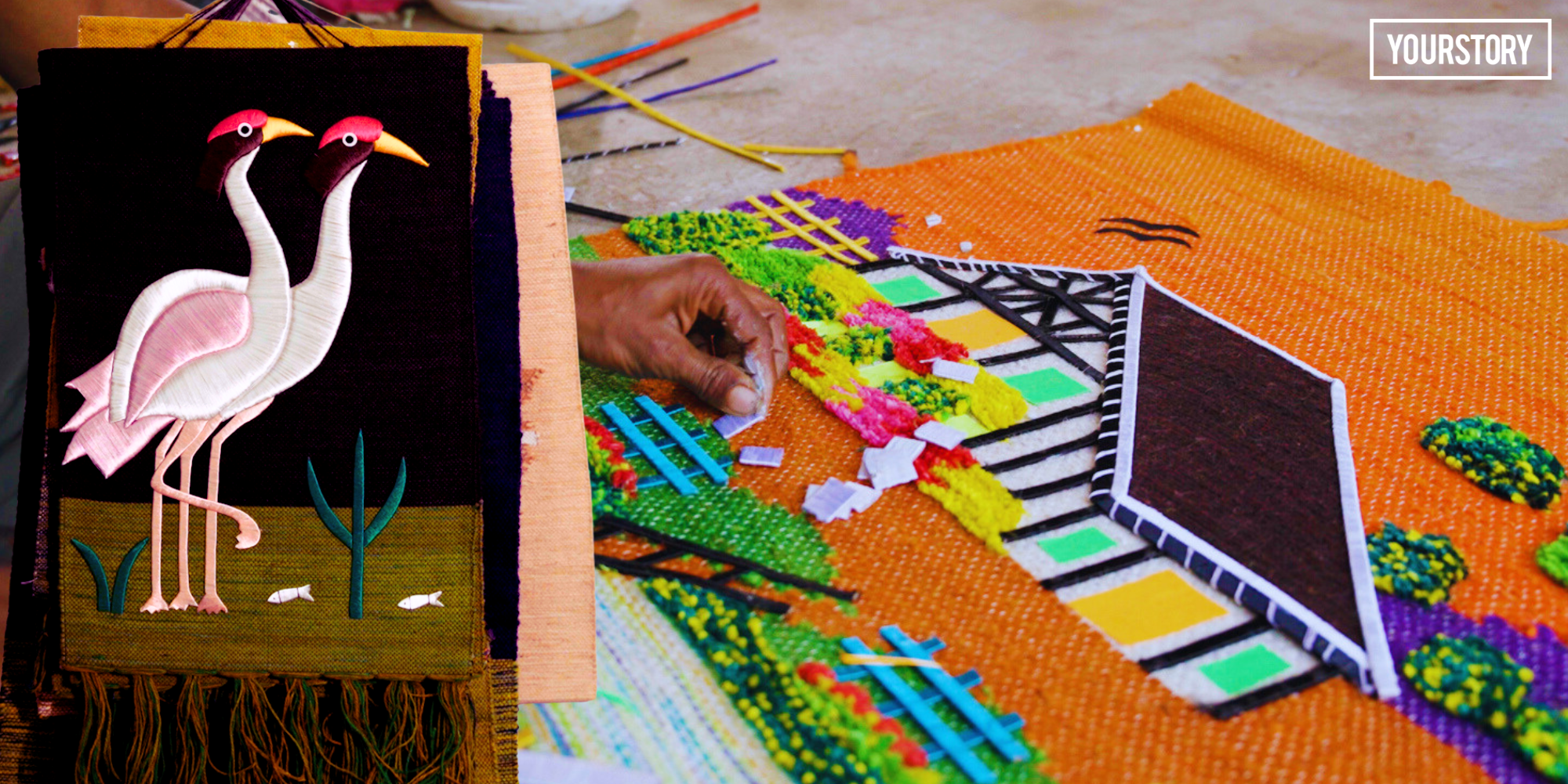

Behind each finished piece lies a distributed production chain across weaving units, dyeing setups, and home-based finishing tables, particularly in and around Paharpur Kalan village.
This craft cluster has gained structured visibility through the One District One Product (ODOP) framework, which supports district-identified products through credit access, training exposure, and exhibition platforms.
A Craft That Grew Into a Cluster
Babar Ali of Paharpur Kalan traces the origin of this ecosystem to his father, Mohammad Israil Ansari, who introduced the craft in the village and trained others until production expanded beyond a single household.
Initially focused on thread-based items, the unit gradually shifted to wool and eventually to jute — responding to buyer demand and scalability. Early products moved through traders to markets in Varanasi and Delhi, while some orders reached international destinations such as Italy, Japan, and Nepal through intermediaries.
As demand grew, production divided into specialised tasks: dyeing, weaving, stitching, and finishing handled by different artisans across households.
Material, Process, and Finish
Raw jute is sourced primarily from Varanasi. It is cleaned, whitened, dyed, and dried before weaving begins on handlooms and pit looms.
After weaving, pieces are sorted and moved to finishing. Women artisans handle stitching, patching, cleaning, and final assembly. For wall hangings, rods and fittings are attached before packaging.
Quality depends on colour stability, clean detailing, and a flat, structured finish suitable for display. Ali notes that improved framing and presentation can further enhance durability and dust protection.
Market Reach and Recognition
The craft slowed during the pandemic but regained momentum through exhibitions and direct buyer interactions. Ali credits ODOP-backed loan support and exposure at melas for helping the cluster scale responsibly.
He also highlights the importance of GI recognition associated with Ghazipur’s jute wall hanging craft, which has strengthened its identity in wider markets.
In a craft sustained by many hands, steady demand is what keeps the loom active.
Discover more from News Link360
Subscribe to get the latest posts sent to your email.