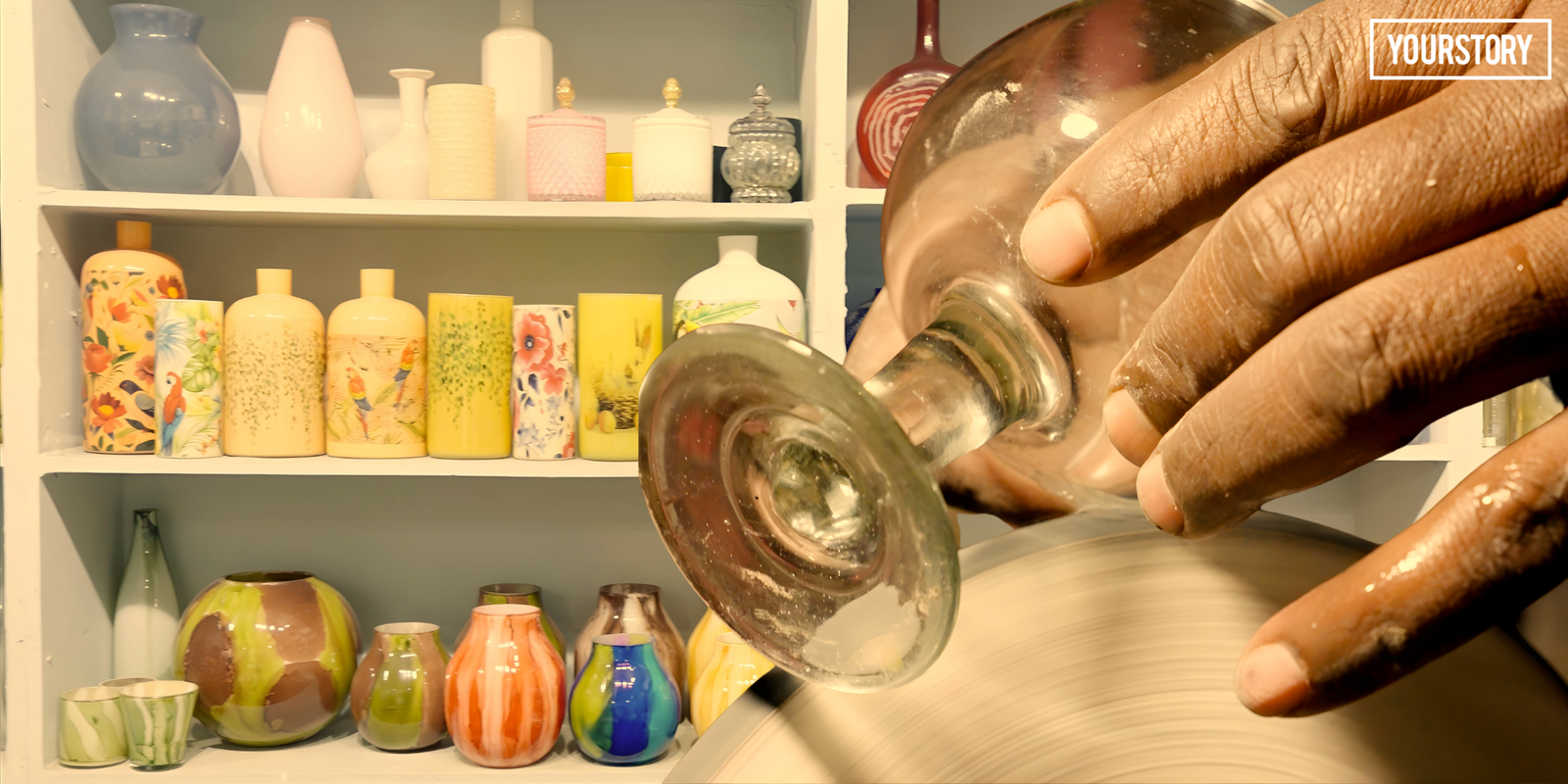
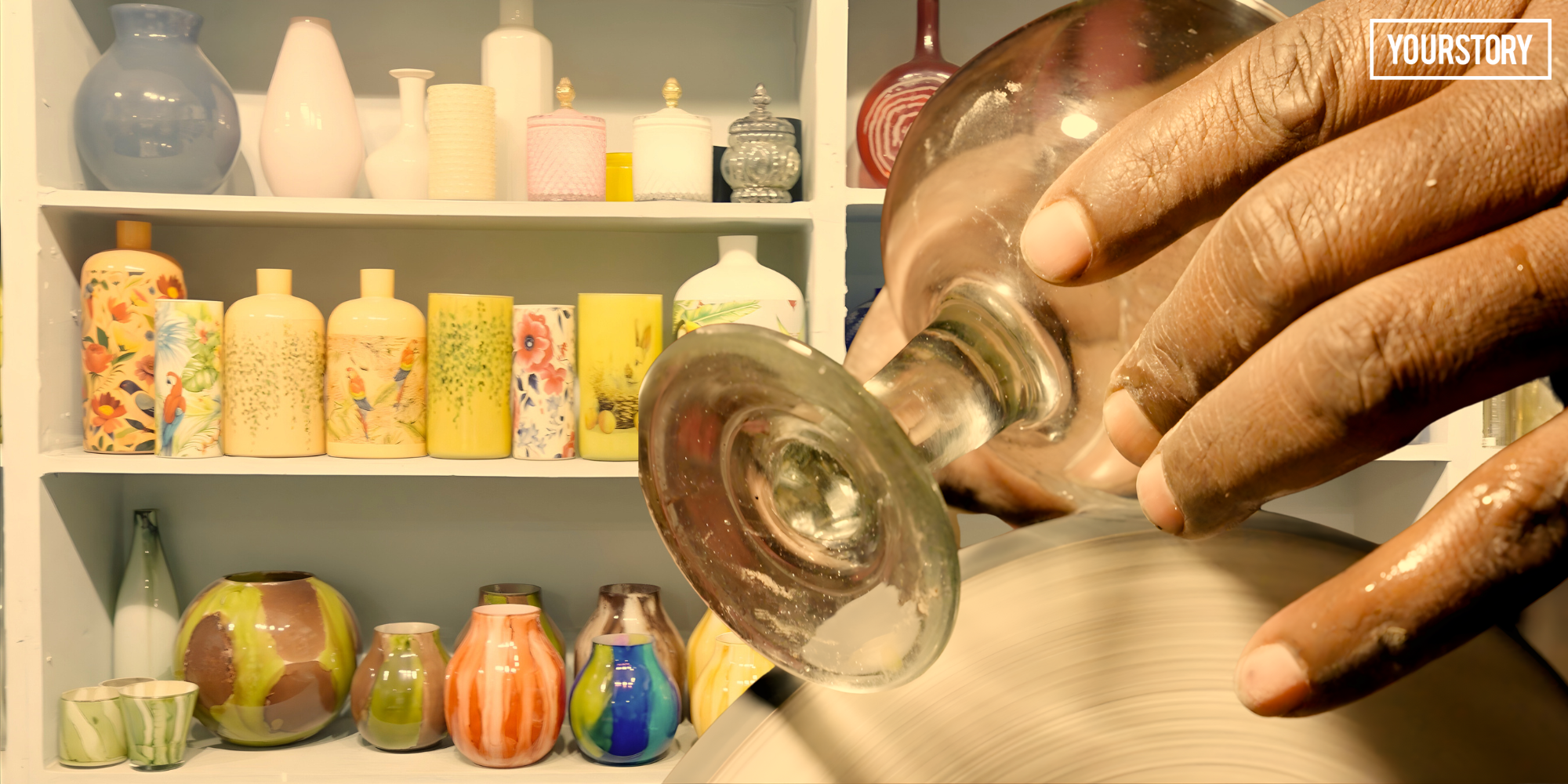

In Firozabad, Uttar Pradesh, glass is more than an industrial product — it is a recycled resource, a design medium, and a district identity. Known widely for its glassware industry, Firozabad has built a production ecosystem around furnaces, recycled cullet, mould-making, blowing, cutting, painting, and finishing.
Within the One District One Product (ODOP) framework, glassware represents the district’s manufacturing strength. But for many entrepreneurs, the story is not only about furnaces — it is about reimagining old material into new-market products.
Recycling as an Advantage
Recycled glass forms the backbone of much of Firozabad’s production. It reduces raw material cost, keeps furnaces running efficiently, and supports smaller units that depend on steady supply cycles.
Singraj Yadav, who arrived in Firozabad in 1971 for studies, gradually entered the glass trade while working in factories and learning sales roles. By the 1980s, he was supplying glass products to the Indian Army — a milestone that strengthened his professional confidence. In 1993, he moved seriously into exports, securing a $75,000 order after months of effort — a significant figure for that period.
In the mid-2000s, he started his own unit from home, blending recycling with design-led thinking. Today, some of his signature lines are made from 100% recycled glass, crafted to resemble “vintage” collectibles rather than standard utility items.
From Traditional Bottles to Decorative Lines
A turning point came when a Delhi retailer introduced him to the pricing potential of vintage-style goods. Yadav drew inspiration from Gangajal, clear glass to colourful glasses and transformed that reference into a new product line. Over time, he shifted from clear glass to coloured variants, incorporating painting, cutting, and metallic finishes.
As precious metal embellishments became expensive, the focus shifted toward colour blending, form innovation, and surface texture — details that add value without pushing prices beyond reach.
Innovation Through Moulds and Materials
Over decades, Yadav has built a library of approximately 3,000 moulds, allowing rapid prototyping when buyers send new design briefs. Once samples are approved, production moves into batch manufacturing and export schedules.
A recent pivot has been toward borosilicate glass. After spending nearly two-and-a-half years mastering multi-colour joining techniques, Yadav and his son introduced products that combine durability with vibrant design. Today, multi-colour borosilicate pieces are among their fastest-selling items.
In Firozabad, vintage inspiration meets modern experimentation. Recycled glass becomes design, and furnaces continue to shape products that travel far beyond the district’s boundaries.
Discover more from News Link360
Subscribe to get the latest posts sent to your email.