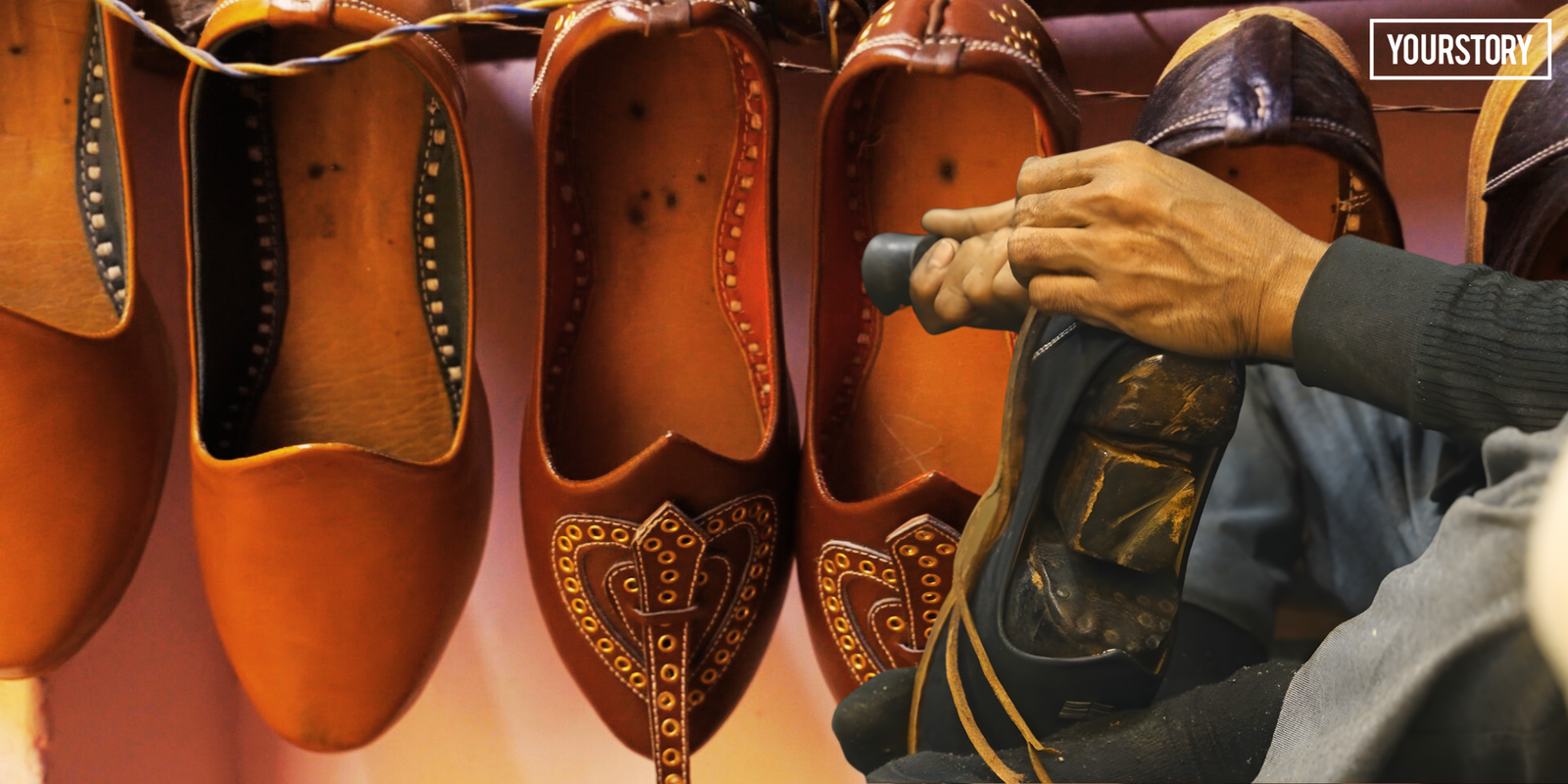
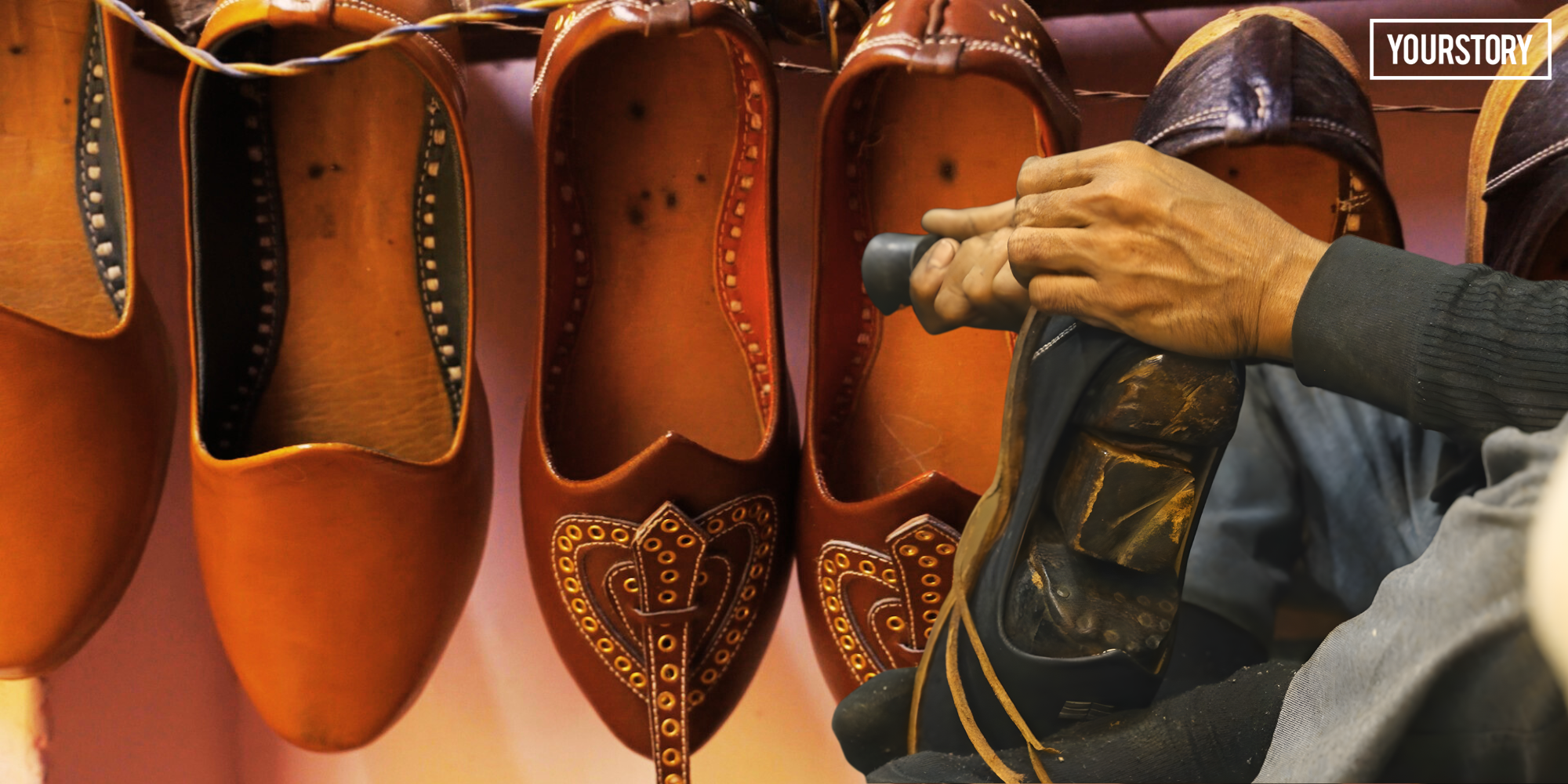

In Hamirpur, Uttar Pradesh, the Nagra juti is more than footwear. It is a handmade leather craft rooted in local skill and sustained by a small but steady livelihood chain. In Sumerpur, artisans continue to cut leather, stitch uppers, shape soles, and finish each pair manually, keeping the craft aligned with tradition while adapting to modern comfort.
Among them is Shyam Babu, a Nagra juti maker who describes the product as pure leather footwear built through a fixed sequence of steps. One defining feature of the Nagra juti is its traditional straight design — it can be worn on either foot, without a strict left-right distinction. For buyers, this familiarity carries cultural continuity; for artisans, it distinguishes their work from factory-made footwear.
Shyam Babu traces the craft back decades in the region, shaped by generational learning. Skills are absorbed at home through repetition and observation rather than formal training. While the core technique has endured, the ecosystem around it has shifted. Raw materials are now sourced from outside markets such as Agra, Kanpur, and Jalandhar, increasing dependence on external supply chains.
From Leather to Finished Pair
The making process begins with selecting leather. Thicker hides are used for soles, while uppers are typically made from goat or sheep leather, depending on availability and buyer preference. The sole is cut first, followed by upper preparation using size-based patterns. Once traced and cut, the upper is stitched to the sole.
The pair is then placed on a wooden frame to hold its structure, pressed for shape, and finished through smoothing and detailing. Over time, artisans have adapted the build — older versions were heavier and suited to rough terrain, while newer designs are lighter and more wearable for everyday use.
The Nagra juti is recognised under the ODOP framework, which has strengthened visibility through exhibitions and promotional platforms. Yet, as Shyam Babu explains, sustainability still depends on direct buyer access and fair earnings. For him, the craft’s future rests on steady demand and easier market linkage, so that the next generation sees value in continuing the tradition.
Discover more from News Link360
Subscribe to get the latest posts sent to your email.