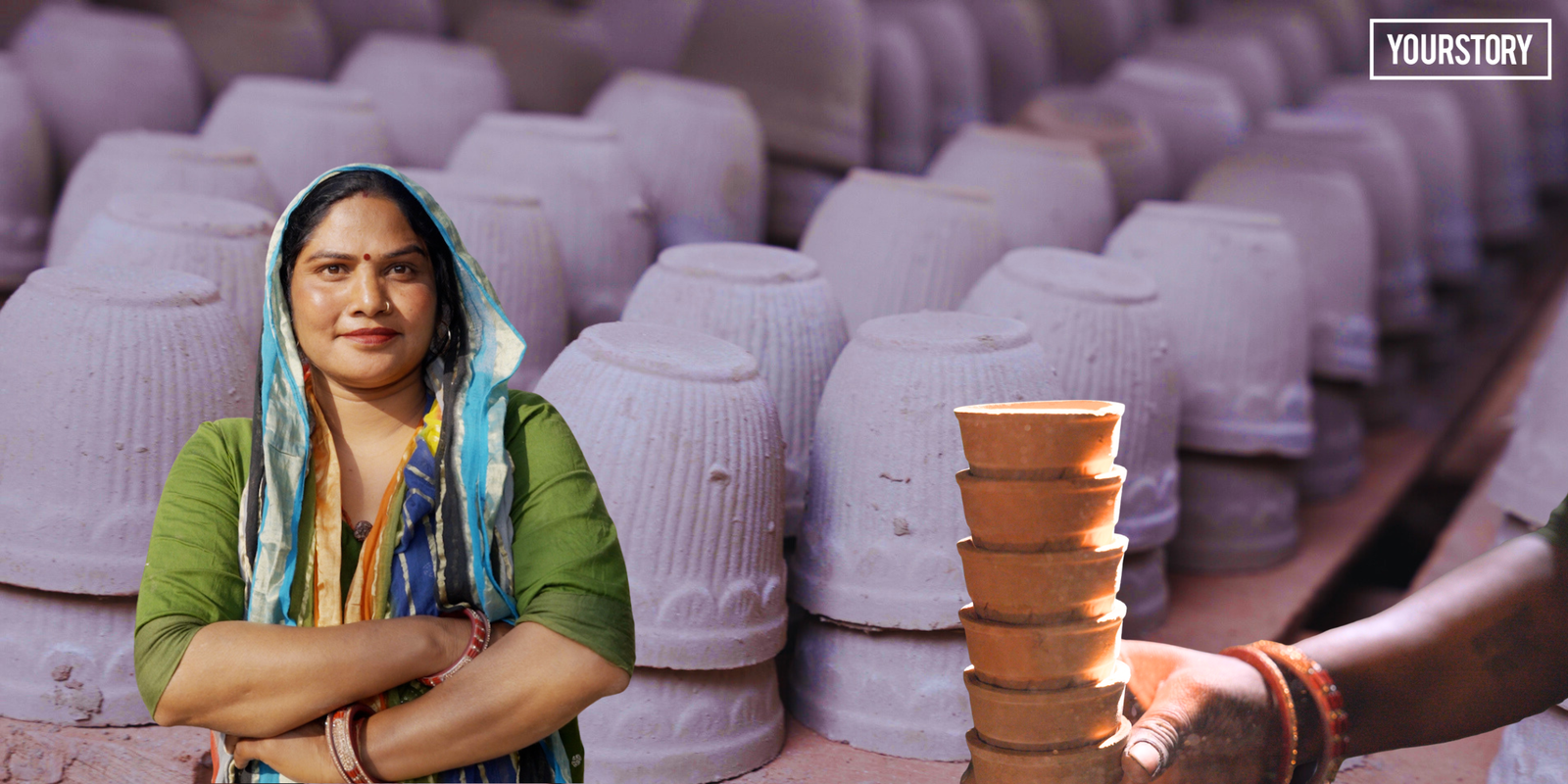
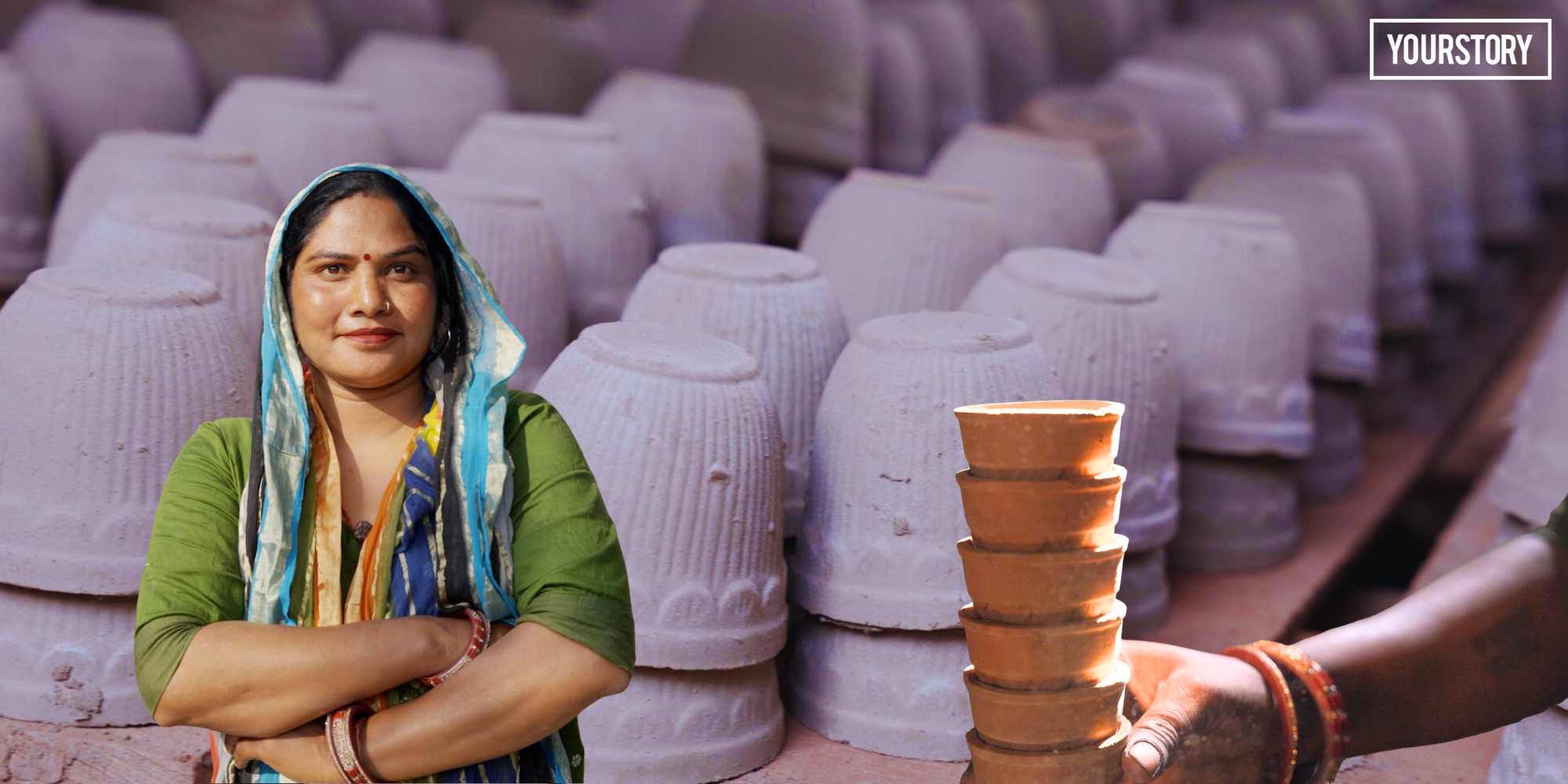

Prajapati lives in a village in the district and identifies herself with the Prajapati community, traditionally associated with pottery. She describes her products simply, without expanding the list into a business pitch: clay kulhads for tea, cups for lassi, and coffee, and small bowls used for milk-based desserts. The unit also makes diyas, and she says she wants to add larger items later, such as plates and cooking pots, as the enterprise stabilises.
A craft remembered, a business attempted
The impulse, she says, came from memory as much as from opportunity. She recalls her grandfather making clay utensils by hand and the place these vessels had in everyday food and drink, especially the taste of water and the slower cooking associated with traditional earthen pots. Over time, she began thinking about whether that older work could become a viable livelihood again, particularly when she saw how demand for disposable and single-use serving ware continues to change in urban markets.
She also links her return to clay to a broader belief about health and food habits, a claim she frames through observation rather than data. “Mitti ke bartan use karne chahiye,” she says, urging people to return to earthenware in daily life. The quote reflects her personal conviction, even as the business itself is shaped more by orders, supply routes, and the practical limits of a small unit.
Support, paperwork, and the push to start
Prajapati says she first learnt about the Mukhyamantri Yuva Udyami Vikas Abhiyan (CM YUVA) Yojana through social media, where she followed speeches and updates that mentioned support for traditional livelihoods. Following this, she approached a bank to enquire about this intiative, describing the early stage as slow and document-heavy, with repeated requests for paperwork and initial hesitation from some branches.
What helped, she says, was finding a manager known to her, who explained the documentation and process, and urged her to apply through the required channel. She completed the documents and quotations for machines and materials within a few weeks, and after approvals, money was deposited into the account, in parts, as she purchased equipment and arranged supplies. She refers to a contribution she had to make from her side and a subsidy component, but does not describe her business as fully set for scale yet.
Today, the unit runs with family labour and a small team. Prajapati works alongside her husband and children, and she says two artisans help with shaping and finishing, while firing, packing and local deliveries are managed by the family . Sales are largely within Noida, using a small vehicle that her husband drives to deliver to shops, hotels, canteens, and tea counters.
She is clear that the enterprise is still in the early stages, constrained by the amount she can invest and how quickly she can add capacity, but it has brought a sense of steadiness to a household routine that now revolves around production cycles and predictable local demand. The shift, for her, is not framed as a breakthrough but as the slow replacement of uncertainty with work that repeats, pays, and can be built on.
Discover more from News Link360
Subscribe to get the latest posts sent to your email.