
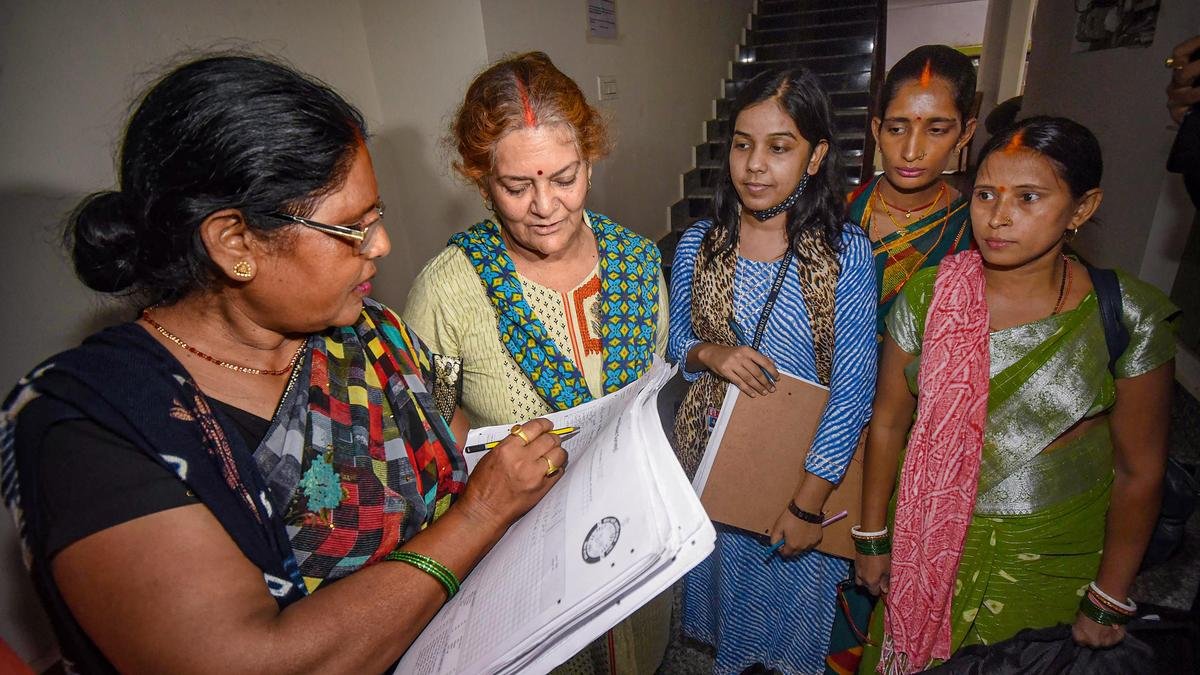
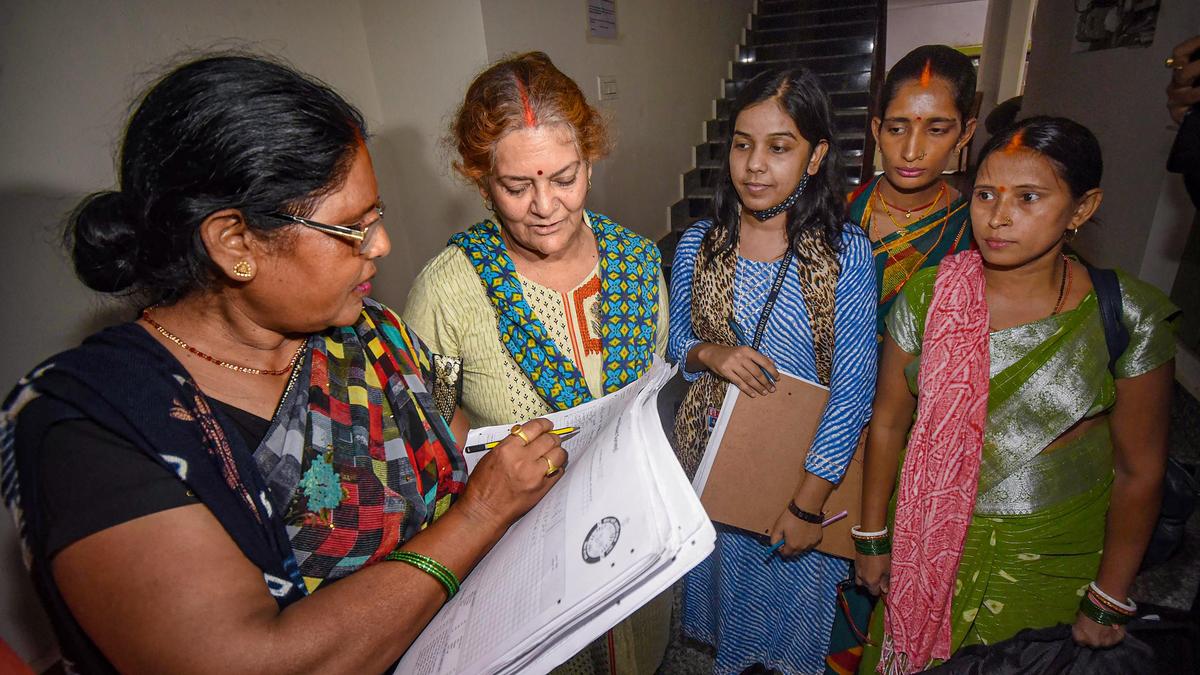
The second phase is population enumeration, when the demographic, socio-economic, cultural, and caste details are to be collected. It will be conducted in February 2027. Representational file image.
| Photo Credit: PTI

Mritunjay Kumar Narayan, RG&CCI, said that around 32 lakh field functionaries will be deployed to carry out the “task of national importance, covering the entire country within a prescribed time frame.”
To effectively manage and monitor the various census-related activities, a dedicated web-based portal — the Census Management and Monitoring System (CMMS) — has been developed, he said.
The first phase of the census is houselisting operations, during which 33 questions regarding housing conditions and amenities will be asked. It is scheduled from April 1 to September 30 in all States and Union Territories.
The second phase is population enumeration, when the demographic, socio-economic, cultural, and caste details are to be collected. It will be conducted in February 2027.
The communication to the States said that the ensuing Census 2027 will make extensive use of digital technology to enhance the quality, efficiency, and timeliness of data collection and dissemination. “Data will be collected through digital mode, marking a significant and transformative step towards the modernisation of the census process,” it said.
The CMMS will facilitate end-to-end management of the entire census operations, including the creation of users at various levels, handling of training modules, creation of house listing blocks (HLBs) and supervisory circles, the generation of appointment letters and ID cards of enumerators and supervisors, and the near real-time monitoring of field operations.
In addition, the Houselisting Block Creator (HLBC) Web Mapping Application has been developed as an integrated component of the CMMS to facilitate geo-tagging and demarcation of HLBs. Each HLB is expected to cover around 700-800 people.
For the first time in census operations, “working maps” shall be generated through the HLBC App with the latest available satellite imagery to enable clear identification of habitations and settlements.

The RG&CCI said that in “some of the States where proper and accurate village/town boundaries are not available, for example, northeastern States, Jammu and Kashmir, Ladakh, Chhattisgarh, etc., the village locations (points) have been updated using various geospatial data sources such as Pradhan Mantri Gram Sadak Yojana (PMGSY) and Bharat Maps (NIC) that are available in the public domain.”
The enumerators will use their personal phones to collect the data on the App created for the HLO phase.
Published – February 25, 2026 11:30 pm IST
Discover more from News Link360
Subscribe to get the latest posts sent to your email.