The Sanju factor
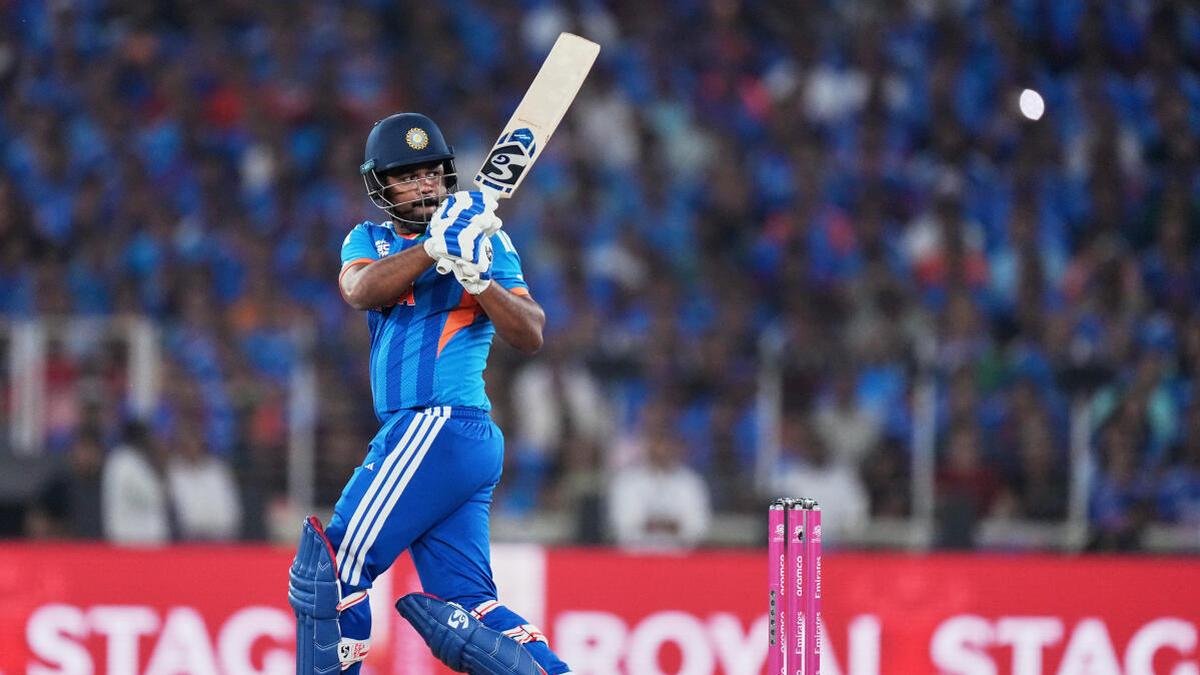
The introduction of Sanju Samson came as a timely intervention for India’s floundering top order in this T20 World Cup.
In the first five matches, India’s opening partnership averaged 6.80. Samson was not included in the line-up in four of these, with Ishan Kishan and Abhishek Sharma making the cut instead.
In the next four, starting with the Super Eight match against Zimbabwe, that figure shot up to 48.75 as Samson partnered Abhishek up front. Through the Super Eights, only two teams—Pakistan and New Zealand—fared better than this. However, none managed to set the tempo as quickly as India.
In finishing with 321 runs, Samson surpassed Virat Kohli’s record from 2014 for the most runs by an Indian in a T20 World Cup edition. Samson’s accumulation at a strike rate of 199.37 was only bettered by New Zealand’s Finn Allen (200.00).
That his performance was part of a larger redemption arc only made his campaign more memorable.
The X-factor
Jasprit Bumrah was once again the bowling linchpin in India’s title march, topping the wicket-taking charts with 14 scalps, including a career-best four for 15 in the decider against New Zealand.
Bumrah’s average of 12.42 and his economy rate of 6.41 were the best among bowlers who bowled at least 150 deliveries in the tournament.

Bumrah was the most proficient employer of the yorker in the tournament.
| Photo Credit:
AP

Bumrah was the most proficient employer of the yorker in the tournament.
| Photo Credit:
AP
The 32-year-old was the most lethal in the PowerPlay, conceding at less than a run-a-ball (5.90) and picking up six wickets. However, he yielded wickets for India at the death too. Between overs 15 and 20, Bumrah nabbed six batters and operated at an economy rate of 6.50.
Bumrah was also the most proficient employer of the yorker. With five wickets at an average of 2.80 off that length, he was miles ahead of the pack, which also included Lungi Ngidi, Jason Holder, and Sam Curran.
The ‘Ax’ effect
India’s catching in this T20 World Cup came under immense scrutiny. It had shelled 13 chances in the field and had a catching efficiency of 71.7 per cent till the end of the Super Eights, the worst among the eight teams in the round.
But Axar Patel grabbed crucial catches in the semifinal against England, and did so in breathtaking fashion, to ensure India was not left to rue missed chances.
Early in the innings, Bumrah deceived Harry Brook with a slower delivery that led to the England captain fluffing his front-footed drive in the air. Axar sprinted roughly 20 yards from the edge of the ring to deep cover and flung himself forward to snaffle the chance.

India’s Axar Patel relays the catch to Shivam Dube for the wicket of England’s Will Jacks.
| Photo Credit:
PTI
India’s Axar Patel relays the catch to Shivam Dube for the wicket of England’s Will Jacks.
| Photo Credit:
PTI
His second catch of Will Jacks came when India was under pressure and England, chasing the daunting 254-run target, was no longer an improbable threat. In the 14th over, Jacks sliced a wide full toss from Arshdeep Singh. Axar darted to his left at deep cover to grab the ball inches inside the boundary before releasing it to Shivam Dube for a relay catch as he tumbled across the line.
“On a [flat] wicket like this one, it is important to support your bowlers and I’m glad I could do that,” Axar said after India edged out England by seven runs.
Late flourish
While contributions from Samson and Ishan took the limelight, Dube’s crucial support in the final phases flew under the radar.
During the broadcast of Sunday’s final, Ian Bishop mentioned that if nobody was talking about Dube, it meant he had done his job. Indeed, that was the case even in the final as Dube plundered James Neesham for 24 runs off the final over.
In hindsight, India already had enough on the board, but the late surge allowed the co-host to tighten the noose around New Zealand heading into the second innings.

Dube’s crucial support with the bat in the final phases flew under the radar.
| Photo Credit:
EMMANUAL YOGINI
Dube’s crucial support with the bat in the final phases flew under the radar.
| Photo Credit:
EMMANUAL YOGINI
Even in the semifinal against England, Dube contributed a significant 43 runs off just 25 balls while taking on England’s prime wicket-taking threat, Adil Rashid.
Among batters who faced at least 30 balls in the death overs in this World Cup, only Jacks and Sherfane Rutherford had a better average than Dube’s 74, and only three batters scored at a higher tempo than his strike rate of 211.42.
Leading from the front
Leading up to this T20 World Cup, India had been a trailblazer. However, during its title defence, India was not firing on all cylinders. Abhishek and Varun Chakaravarthy had been the biggest match-winners for the side over the last year but struggled in the World Cup.
But Suryakumar Yadav, himself under fire for a batting slump, aced his role as a leader. He showed faith in both players, and it paid off. Abhishek chipped in with a blazing fifty in the final, while Varun finished as the joint-highest wicket-taker.

Suryakumar’s team stands out since it braved the burden of expectations.
| Photo Credit:
PTI
Suryakumar’s team stands out since it braved the burden of expectations.
| Photo Credit:
PTI
Even with Samson, Suryakumar made a timely change to the top order to fix India’s opening muddle.
On multiple occasions, the Indian captain held himself back to promote others when a match-up or situation demanded. Dube’s promotion to No. 4 to take on Rashid in the semifinal was a case in point.
Though India already had two T20 World Cup trophies, Suryakumar’s team stands out since it braved the burden of expectations. First, to live up to the reputation as the best team, and then to deliver in front of a home crowd.
Published on Mar 09, 2026
Discover more from News Link360
Subscribe to get the latest posts sent to your email.