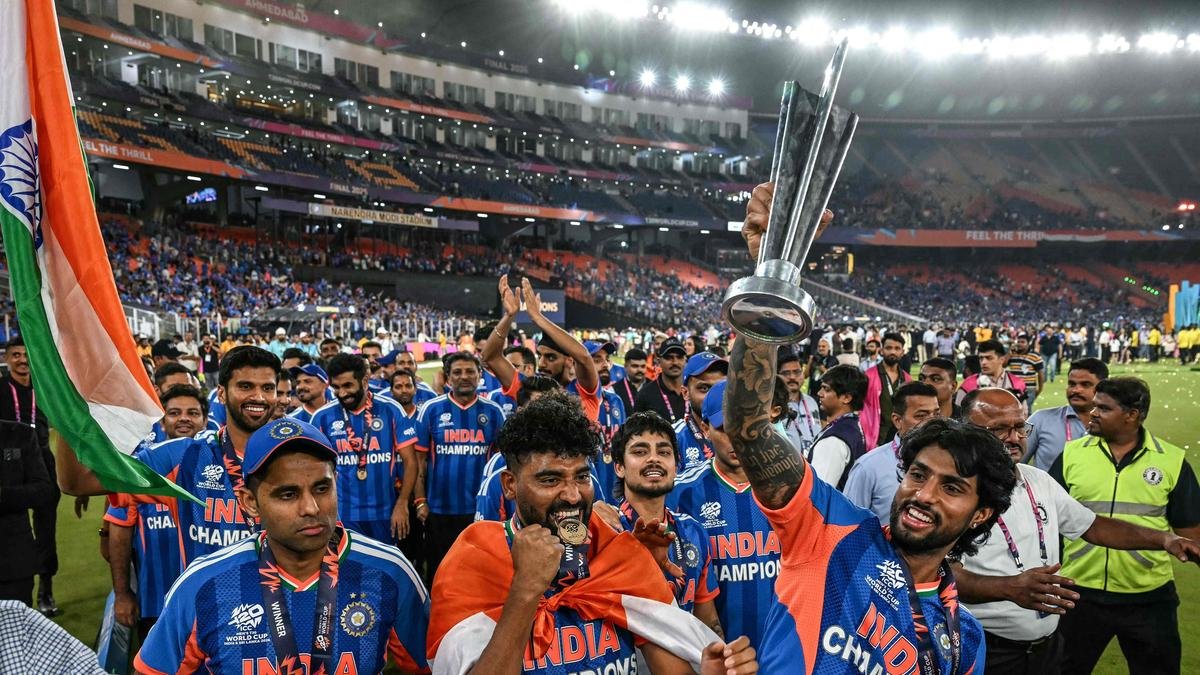
When Suryakumar Yadav’s men claimed the ICC T20 World Cup at New Zealand’s expense in the Narendra Modi Stadium here on Sunday, it seemed preordained. Such was India’s dominance. The host retained the title, previously won in 2024, and tided past the pressure of playing in the backyard as soaring expectations could at times choke.
Including the latest conquest, cutting across ODIs and T20Is, India has won five World Cups, and three Champions Trophies. Additionally, nine Asia Cups and the 1985 World Championship of Cricket in Australia, were all secured. This triumphant run commenced in 1983 when Kapil Dev held aloft the World Cup at Lord’s.
Yet, consistency in winning global trophies started only in 2024 as two T20 World Cups and a Champions Trophy have been seized since then. The latest successful effort was mounted on muscular batting and a bowling that had Jasprit Bumrah to step up all the time.
That India would get through the group stages and enter the Super Eight was a foregone conclusion. The more difficult part was in sustaining form in the knock-out phase. Yes, the clash against Pakistan at Colombo had its own set of difficulties, primarily off the field due to complicated diplomacy and historical angst.
READ | An arm around the shoulder in tough times — Team India’s mantra behind emphatic T20 World Cup win
| Photo Credit:
AP

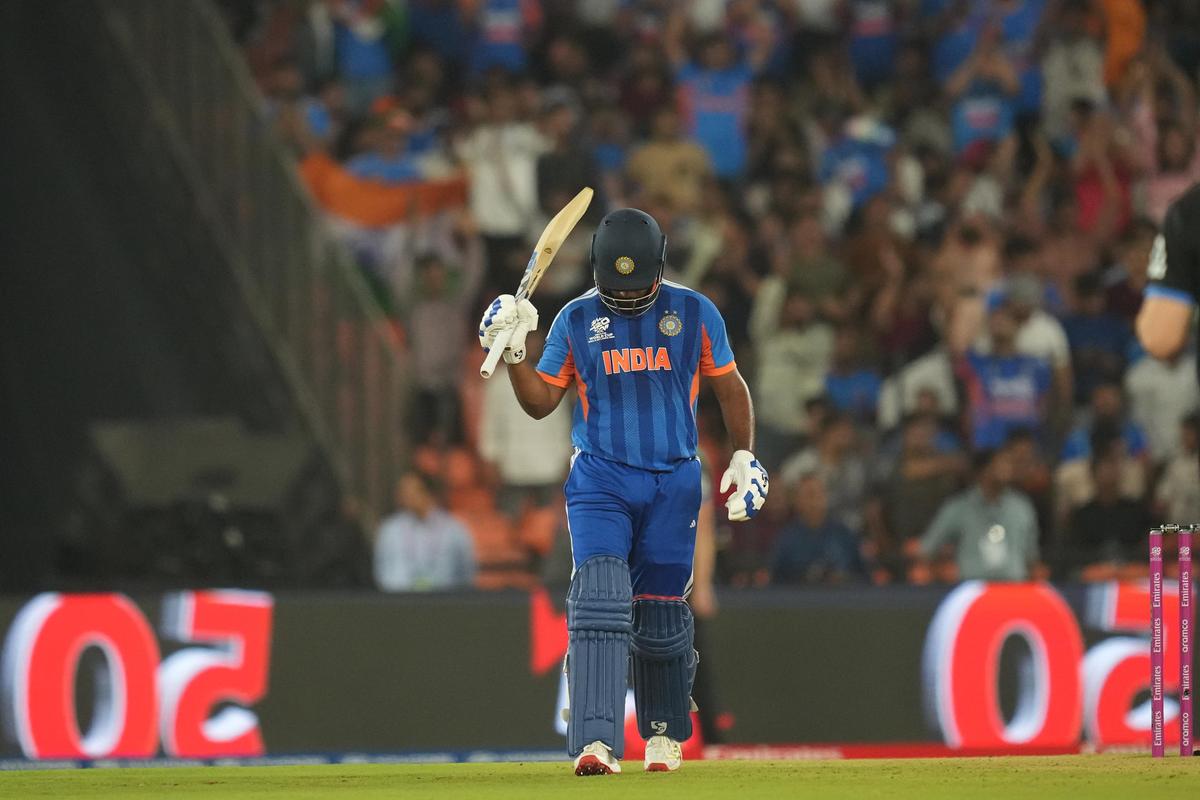
Sanju Samson top-scored for India in its last three matches against the West Indies, England and New Zealand.
| Photo Credit:
AP
But in all these encounters, India prevailed. South Africa offered a reality check, just like it did during the 2011 50-over World Cup. But then and now, the host moved ahead. This was a campaign in which opener Abhishek Sharma struggled for a large part despite two fifties, with one coming in the final. And Varun Chakaravarthy, who along with Bumrah, finished as the highest wicket-taker with 14 scalps each, had his lukewarm days too.
But India always marched on. Sanju Samson’s comeback atop the batting tree and his three consecutive 50-plus scores in the last three games, ensured that opening blues were no longer an issue. Ishan Kishan, Tilak Varma and Shivam Dube, all flexed their bats. Hardik Pandya, at times with runs, key crucial wickets and bustling energy on the field, was critical to India’s propulsion.
That men like Kishan and Axar Patel, would also be remembered for their fielding, is a reflection of how India ticked most of the boxes. India in the blue shade is on the ascendant.
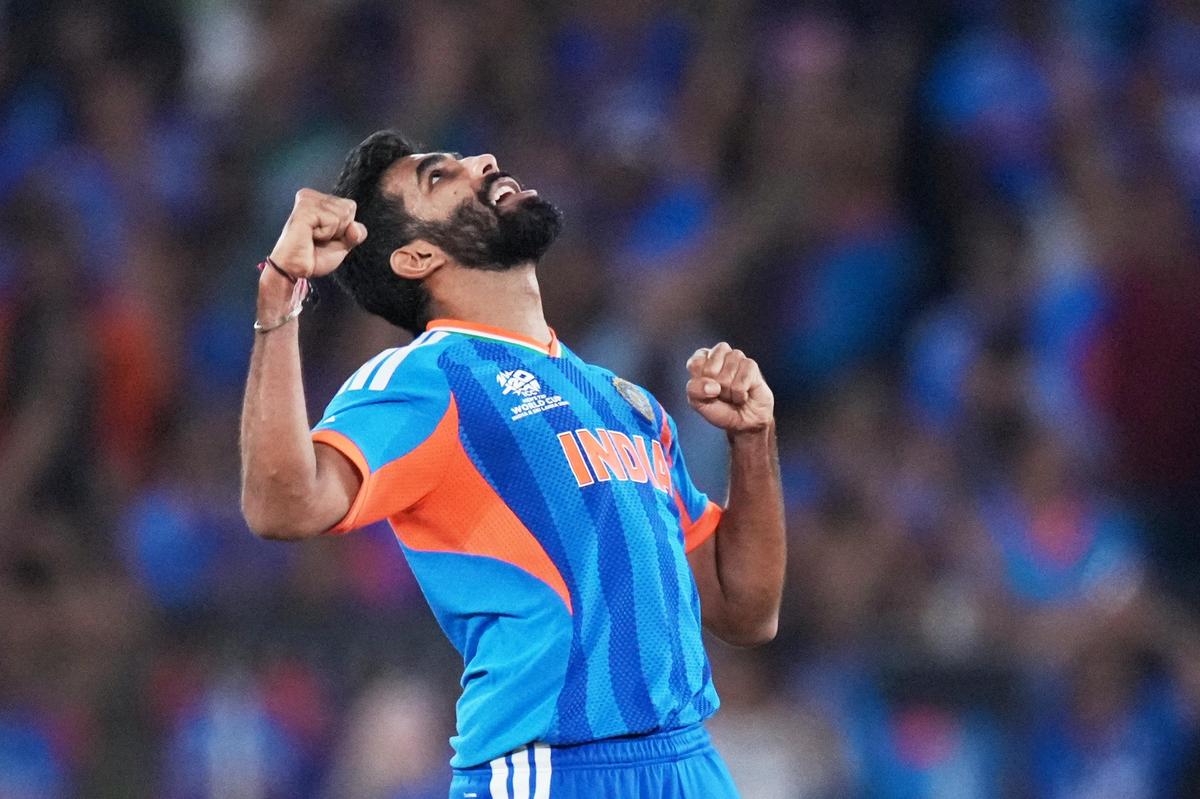
Jasprit Bumrah scalped 14 wickets to finish as the joint-highest wicket-taker in the tournament.
| Photo Credit:
AP
Jasprit Bumrah scalped 14 wickets to finish as the joint-highest wicket-taker in the tournament.
| Photo Credit:
AP
Hopefully there would be success in Test whites too, an attribute that went missing as New Zealand and South Africa came visiting and left with series triumphs. It is one aspect that coach Gautam Gambhir has to address.
Jammu and Kashmir winning the Ranji Trophy is another clue to how cricket’s roots have spread wide, and India is bound to benefit, even as the Indian Premier League saunters into view.
Published on Mar 09, 2026
Discover more from News Link360
Subscribe to get the latest posts sent to your email.