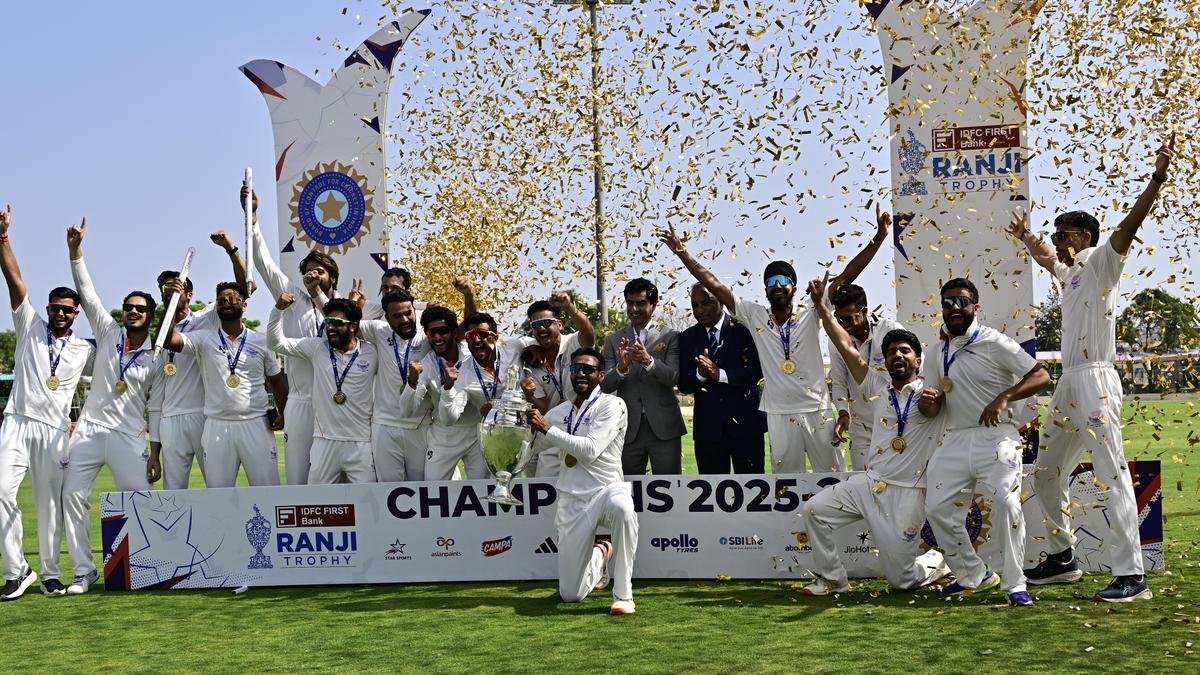
In October 2025, only a very brave man would have picked Jammu & Kashmir to win the title. But Paras Dogra and his band of merry men upset the cricketing hierarchy and disregarded pedigree to clinch its maiden domestic red-ball crown. Coming as it did after the reverse to Kerala in last season’s quarterfinals, when the southern side progressed via a narrow one-run first-innings lead, the success was sweeter.
J&K registered outright wins over five former champions — Rajasthan, Delhi, Hyderabad, Madhya Pradesh and Bengal. In the final in Hubballi, it outclassed eight-time champion Karnataka by securing a massive 291-run first-innings lead and then grinding the star-studded outfit, comprising the likes of K.L. Rahul, Karun Nair, Mayank Agarwal and Devdutt Padikkal, into an unrecognisable pile of dust.
“I never thought that we could win the Ranji Trophy,” said coach Ajay Sharma immediately after the triumph. “It’s a proud moment for the team and all the people of Jammu & Kashmir. We beat so many former champions with a lot of experience and Test cricketers. We had no hero. Now, everybody is a hero.”
Chief among them was pacer Auqib Nabi, who took a tournament-high 60 wickets at an average of 12.56 and a scarcely believable strike-rate of 28.43. There were seven five-wicket hauls, and four of those came in the knockouts, as Nabi finished with a whopping 104 Ranji Trophy wickets across the last two seasons combined.
The 29-year-old’s performance versus Karnataka was the acme as he bowled a deadly five-over spell on day three to send back Test batters Rahul and Karun, and this edition’s top-scorer R. Smaran. Karun and Smaran, in fact, fell for ducks, with the former cleaned up and the latter caught behind.
The usually flashy Abdul Samad added a dose of solidity to his batting to total 748 runs, the highest for his outfit. He scored at a strike rate of 69 — subdued by his standards, but still the highest among the nine batters who scored more than 700 runs this campaign.
| Photo Credit:
K. MURALI KUMAR

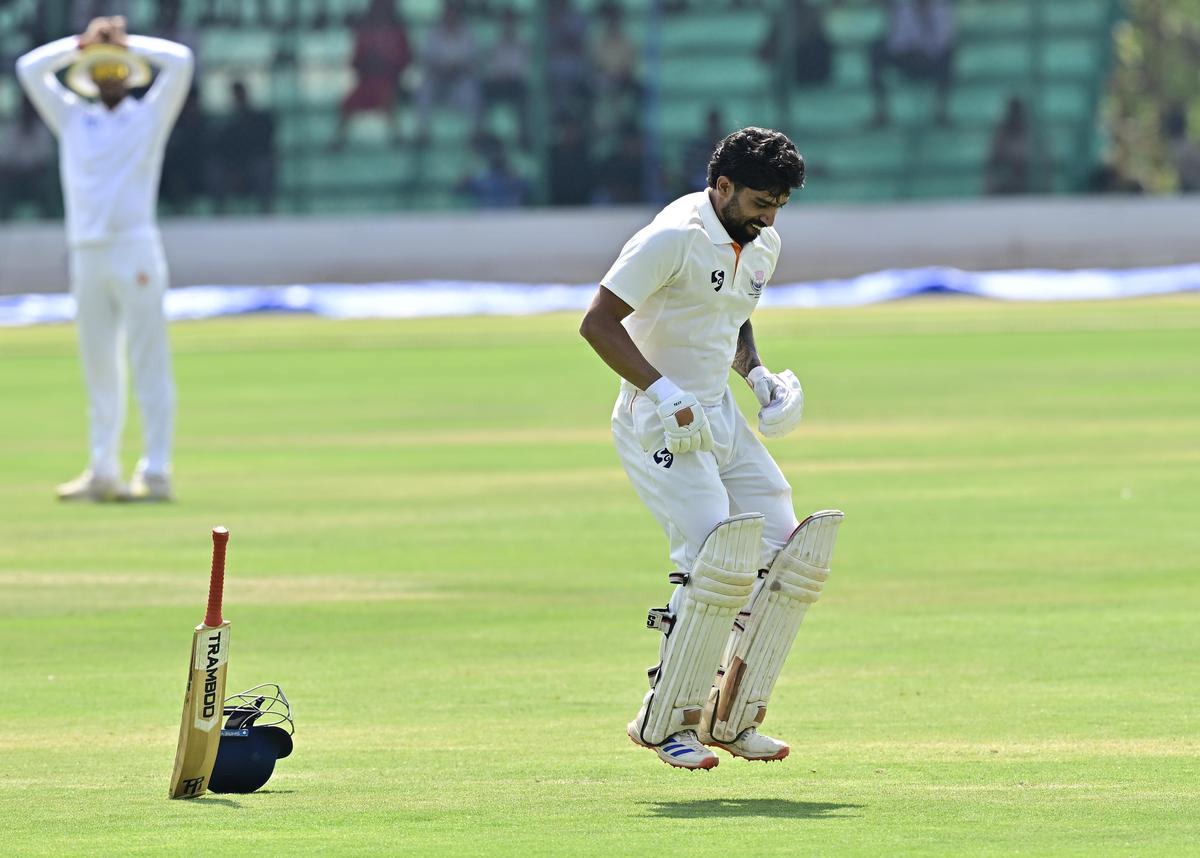
Finishing act: Sahil Lotra’s century on the final day denied Karnataka any chance of coming back into the game.
| Photo Credit:
K. MURALI KUMAR
In Dogra, 41, the squad found the perfect fulcrum. This was Dogra’s second year with J&K, and being from Himachal Pradesh, he proved to be the perfect agent to amalgamate players from different parts of the Union Territory and improve the dressing-room atmosphere, which used to be perilous once.
Dogra delivered with the bat too, scoring 637 runs, including centuries against Mumbai and Delhi. He also crossed 10,000 Ranji Trophy runs to become only the second man to do so after Mumbai legend and former India opener Wasim Jaffer.
While these men held the side together across the entirety of the campaign, J&K found custom-made heroes for specific match situations too.
On the eve of the final, the team lost experienced batter Shubham Khajuria and upcoming all-rounder Vanshaj Sharma to injuries. But the replacements, Qamran Iqbal and Sahil Lotra, both excelled, scoring fine second-innings centuries to shut the door on Karnataka.
Shubham Pundir, who had accumulated just 205 runs leading into the all-important fixture, made a classy 121, while Yawer Hassan chose the summit clash to reach his highest score of the season — 88. All of which contributed to J&K making 584 runs, the most it had in a single innings in 2025-26.
Much of the credit for J&K’s ascent has rightly been given to the BCCI sub-committee that took over the affairs of the Jammu & Kashmir Cricket Association in 2021. Current BCCI president Mithun Manhas was part of that grouping before he switched to the top cricketing job in the country. The Jammu-born former Delhi captain — who also turned out for J&K in 2015-16 and 2016-17 — was a constant presence in Hubballi as he witnessed history being made.
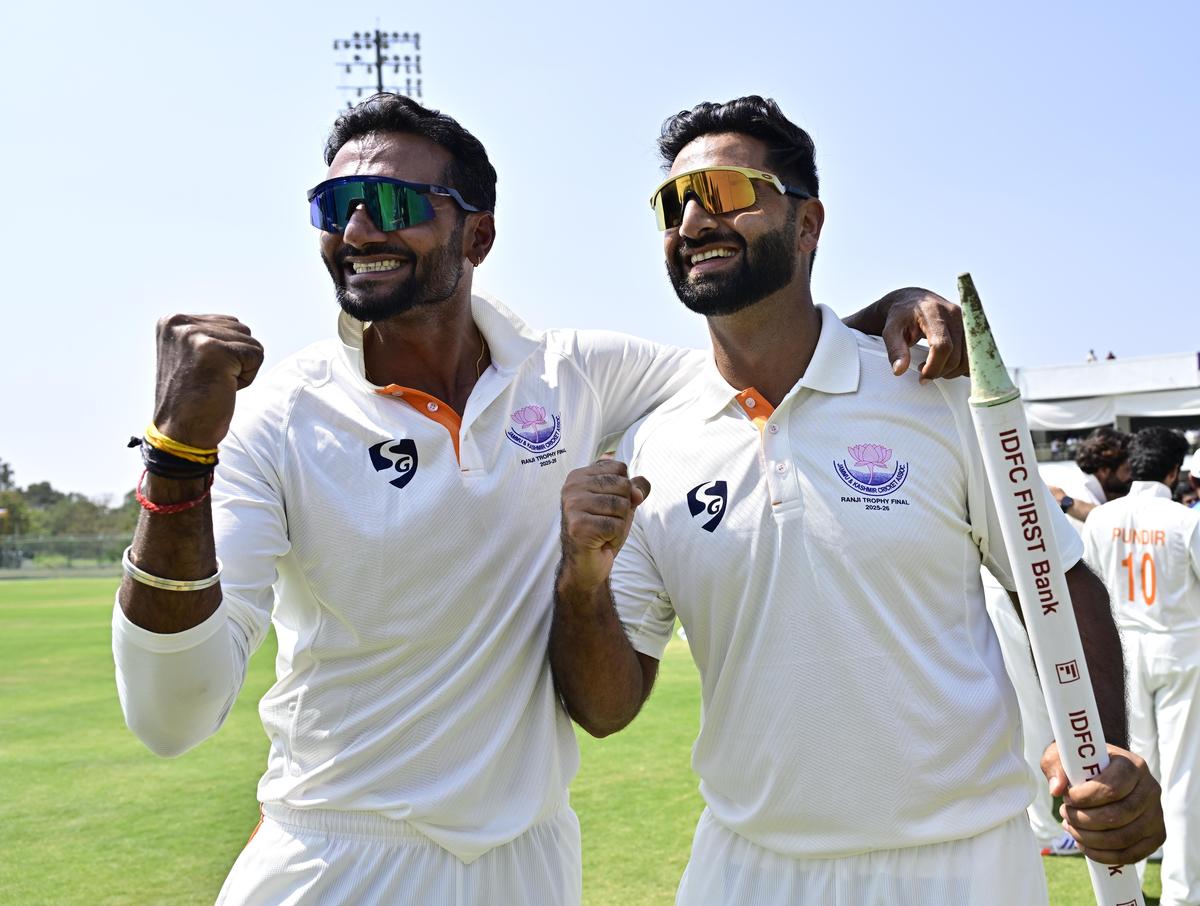
Driving force: Paras Dogra and Auqib Nabi, the chief architects of J&K’s successful campaign.
| Photo Credit:
K. MURALI KUMAR
Driving force: Paras Dogra and Auqib Nabi, the chief architects of J&K’s successful campaign.
| Photo Credit:
K. MURALI KUMAR
“It’s been a long journey,” said Manhas. “The association before us tried their level best. But the real game-changer happened in 2021. We used to get a lot of flak way back because the system was such.
There used to be a quota of eight from Srinagar and eight from Jammu. We never believed in such a system. There’s only one quota and that was merit. We saw that a system had to be set in place. We formed a Cricket Advisory Committee (CAC), imported red soil from Maharashtra, conducted all camps with SG and Kookaburra balls. Now, there are about 10 to 12 red-soil wickets and 10 to 12 black-soil wickets.
“Then, we hunted for talent. We clubbed three districts into a zone and sent all our selectors, coaches and staff to pick up the best possible talent. Then we started grooming them. So, a lot has been done,” the 46-year-old added.
However, it would be remiss not to acknowledge the role of former cricketers and coaches who helped keep alive the interest in the game. It was Parvez Rasool who broke the glass ceiling first when he became the first J&K cricketer to play for India in June 2014.
He, along with fellow J&K captains such as Samiullah Beigh, toiled long and hard as J&K reached the last eight in 2013-14 and 2019-20 as well. From the legendary Bishen Singh Bedi to Sunil Joshi to Irfan Pathan, all have coached and mentored players for the better. As Rasool rightly told Sportstar ahead of the title-decider, the recent highs were all “part of the same process”.
“I think this is a very big achievement for each and every individual from J&K,” said Samad. “Not only the players and the staff, but also the people, youngsters and aspiring cricketers. People will now be more interested in cricket and they will try to practise and come in for the trials as well. I think this is going to change the lives of many.”
Top performers in the 2026 season
Most runs
R. Smaran (Karnataka) – Innings: 14 | Runs: 950 | Average: 86.36 | HS: 227* | 100/50: 4/3
Ayush Doseja (Delhi) – Innings: 12 | Runs: 949 | Average: 105.44 | HS: 209 | 100/50: 4/5
Sanat Sangwan (Delhi) – Innings: 14 | Runs: 828 | Average: 69.00 | HS: 211* | 100/50: 3/3
Most wickets
Auqib Nabi (Jammu & Kashmir) – Innings: 17 | Wickets: 60 | Average: 12.56 | Best: 7/24 | 5WI: 7
Mayank Mishra (Uttarakhand) – Innings: 16 | Wickets: 59 | Average: 17.69 | Best: 17.69 | 5WI: 42
Shreyas Gopal (Karnataka) – Innings: 19 | Wickets: 48 | Average: 23.14 | Best: 8/110 | 5WI: 2
Published on Mar 10, 2026
Discover more from News Link360
Subscribe to get the latest posts sent to your email.