Hitting against the turn came naturally to me. It depended on how the field was set. I used to use my feet to get to the pitch of the ball. Or I would use the depth of the crease and play off the back foot, either playing a pull or a cut. And I think a lot of confidence came from the way I batted against Warne in the first innings, where I got 59. Batting with the tailenders, I had to play my shots. As John (Wright) rightly mentioned, one of the best shots of my career was off Warne when he was bowling round the wicket into the rough. I hit it through midwicket. Then, off the same length, through the covers. I hit him to the left of mid-off, between cover and mid-off.
What strikes me straight away is what we learned from that Test match and the series. Despite losing the first Test in three days, we went to Kolkata with a lot of optimism. We didn’t dwell on that loss, and we did a lot of introspection.
At the end of the Mumbai Test, we found that we had actually won more sessions than Australia. But the sessions we lost, we lost badly. (Mathew) Hayden and (Adam) Gilchrist just took the game away from us in one session, from lunch to tea. Then we were bowled out in the second innings. That’s why we lost the Test match.
I remember walking into Andrew Leipus’ (physio) room and telling him I would be fine in three days. He asked me to take off my T-shirt and look in the mirror to see how my back was tilted to the left. It is called a List (a lateral [sideways] tilting or shifting of the trunk away from the side of pain). I cried because I wanted to play that Test. I wanted to make a statement because that series was very important to me. Luckily for me, Andrew worked on my back. Even though I was only 50 to 60 per cent fit, both John and Sourav backed me to play the match. It also gave me the confidence that my captain and coach had shown so much faith in my abilities.
I remember Australia got 445, with Steve Waugh getting a century (110). We were bundled out for 171, and I was the last man out for 59. I was happy with the way I had batted. We were asked to follow on, and I was removing my pads when John came up and tapped my shoulder. “Relax, I don’t want you to remove your pads,” he said. I was surprised when he told me I had been promoted to No. 3 in the order. Sourav asked me to just go out and play the way I had.
I had always enjoyed batting at No. 3 right from my younger days, but obviously Rahul (Dravid) had done so well in that position. The situation was grim: 274 runs behind. But everyone wanted to be counted in the second innings. (SS) Das and (Sadagoppan) Ramesh gave us a good start, and I walked in at 52. We lost Ramesh, Das and Sachin (Tendulkar). Then Sourav and I put on 117 runs. We ended the third day at 254. It was a humongous task to save the game. The stadium was nearly empty when we walked back.
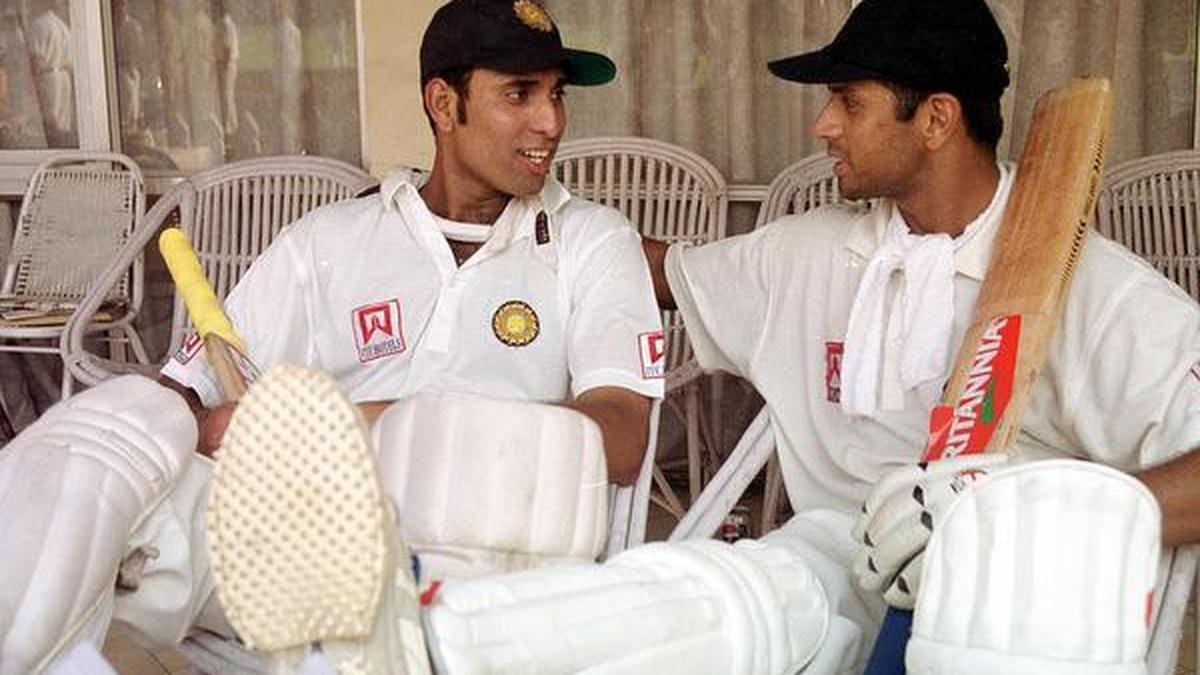
Not once did Rahul display any disappointment at being pushed down the batting order. He had excelled at No. 3 and was the vice-captain of the team. He told me one thing as we walked out to bat on the fourth morning. Challenge yourself to bat through the whole of the fourth day. Repeat what we had done one month back against West Zone in Surat, where we had put on a 409-run partnership in the Duleep Trophy match (Laxman 217, Dravid 188). I loved that Rahul had his plans in place: bat out the day. His resilience was to the fore.
Rahul and I are the kind of batters who never look at the scoreboard. We always played for time. We knew the more time we spent in the middle, the more runs would flow. We would aim for one hour at a time. We were determined not to be content or complacent. It was clear that we had to save the Test. Winning the match was not on our minds on the fourth day. We achieved the goal by finishing the fourth day unseparated. We had added 335 runs for the day. Importantly, we had dominated the opposition by batting with a positive mindset. Australia had a strong batting line-up, and we knew we had to bat and bat.
I was battling my spasms. Rahul was fighting dehydration because he had come into the game with a viral fever. We were also inspired by the team’s morale. There was so much positivity. I was told that Sourav stood in the dressing room the whole time. The joy in the Indian dressing room when we returned unbeaten at the end of the fourth day was incredible.
I was close to my triple century, and John walked up to me on the fifth morning when I was doing my warm-up. The Australians were bowling a negative line. We planned to bat for an hour, score quickly and declare. We could sense a chance of winning by grabbing some early wickets. There was a lot in the pitch for the spinners. I also remembered what my parents told me: Team comes over self. I did not get my triple century, but I had played for the team. I knew my parents would have been happy.
It was a great team effort. Sachin swung it our way with his three wickets (Gilchrist, Hayden and Warne) in successive overs on the final day. There were some stunning catches taken. Ramesh took a blinder at forward short leg off Warne’s bat for Harbhajan’s hat-trick. Hemang Badani, who came in as a substitute, took a fantastic catch at backward short leg to get rid of Jason Gillespie. Also, Adam Gilchrist getting out first ball in both innings was huge. What a coincidence that we took seven wickets in the last session of the first and fifth days!
A lot of credit should be given to Sourav for the way he handled the team. He had amazing faith in the young brigade. I remember I was leading the Board President’s team in the tour match against the Australians in Nagpur. Harbhajan was playing that game. At lunch, Sourav called me to check on Harbhajan. I had been fielding in the slips and told Sourav that Harbhajan was getting great drift in his bowling. Sourav told me not to bowl him at all. I remember the selection committee chairman, Chandu Borde, asking why I was not bowling Harbhajan, and I conveyed Sourav’s message. It was an indication that Sourav had Harbhajan in mind as the main off-spinner.
I have played a lot with Rahul. A hallmark of his cricket is his commitment to the team and the game. How he fought the demons in his mind to tackle the best of the bowlers and go on to dominate them. His physical endurance and mental fortitude are of the highest order. You can’t find a better team man than Rahul.
I always believed that Sachin was a very underrated bowler, and in fact, for me, the toughest bowler to face in the nets. He used to bowl a lot. He was so smart, a real thinker of the game. He could bowl medium pace, off-spin and leg-spin. He got the ball to turn big. He could bowl the googly, the flipper.
I learnt a lot from John in that Kolkata Test. He was hard at times, but always well-intentioned. He always thought about the players’ best interests. John was instrumental in changing our mindset. Sourav had his own strengths, giving a lot of security to all the players, especially the youngsters. John got us into the “team first” mindset. He also never tried to hog the limelight. He created a culture within the team. For any team to succeed, you need those values. It doesn’t matter whether you are a superstar or a junior member. You had to abide by them. That culture was not negotiable.
(As told to Vijay Lokapally)
Published on Mar 13, 2026
Discover more from News Link360
Subscribe to get the latest posts sent to your email.