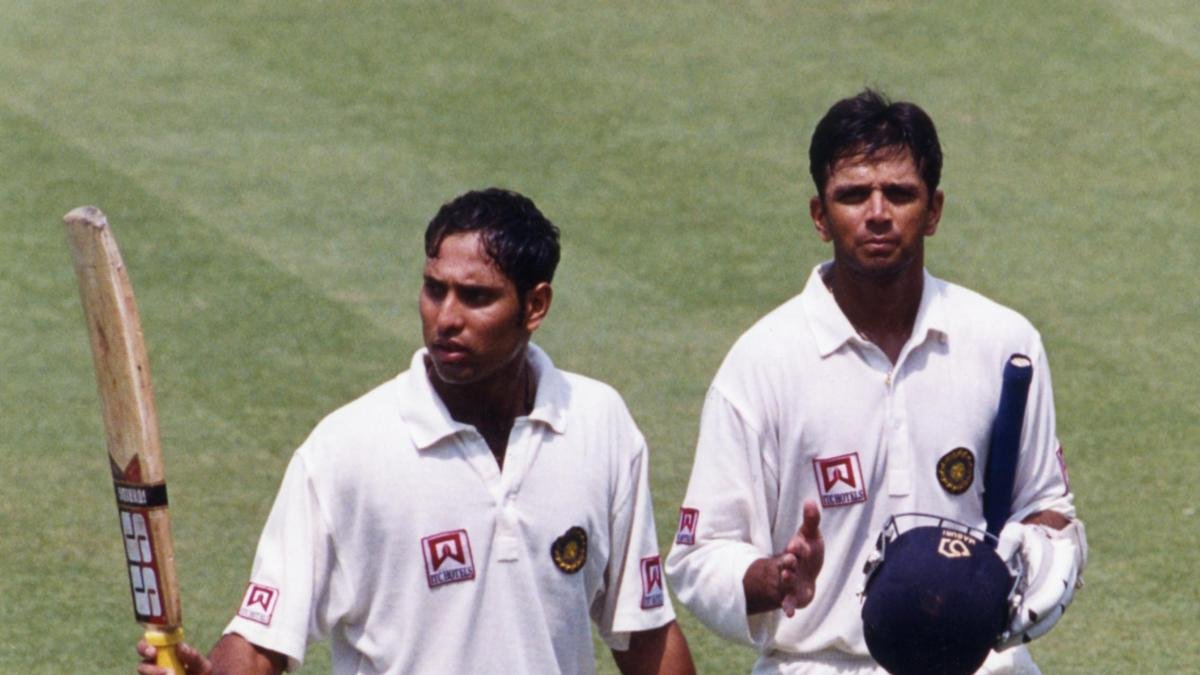
We lost in Mumbai, and then there was a short gap before we played in Calcutta. There was a practice game in Delhi, so we all got to go back home, but the pressure was constant. There was a lot of criticism. The Australians won so easily because they were such a dominant team, and this was a big opportunity for them.
Laxman had a stiff back, which had to be treated and managed. His injury and my sickness – it was strange how things worked out. In Bombay, that brilliant innings from Adam Gilchrist (122) actually took the game away from us. There were some freakish moments as well, including Sachin Tendulkar getting out in the second innings. It was closer than the 10-wicket defeat suggested. It took brilliant innings from Matthew Hayden (119) and Gilchrist to set up the Australian win. We could have been more competitive.
Personally, I fell ill with a fever. I did not go to practice for two or three days before the Test match, once we had assembled. In fact, I did not practise at all. My kit was already at the ground, so the first time I saw the wicket was on the morning of the match. I had not even been to Eden Gardens because I was in the hospital, and there was doubt about whether I would play. Luckily, I recovered and went through the fitness test on the morning of the match and passed it. There was pressure on us as a team because we had been unbeaten in India for a long time. Here we were, 1–0 down, up against a strong Australian side.
In Calcutta, it was disappointing to be bowled out for 171. In three consecutive innings, we had not performed as a batting unit. One would be lying to say that at that stage, we were thinking of winning after being asked to follow on. It was a great decision by John Wright to promote Laxman in the second innings, at number three. He had been the last man out, and John wanted him to continue because he was in form and playing well. It meant I had to move down to number six. It also meant I had a little more time to prepare, to wait and, perhaps, to be more nervous. But it worked out well. It gave me the chance to come in later and build that partnership with Laxman. That evening, I went out and scored seven runs.
It was a call taken by John and Sourav Ganguly, and it worked. It was the right call because Laxman was batting beautifully. He was probably one of the most exceptional players of spin I have ever seen. At that stage, he was the only batsman who looked capable of putting pressure on the Australians. That is exactly what he did. He put them under pressure, scored quickly and batted exquisitely. His control on some of his off-side shots was absolutely superb. I always say it was a privilege to have the best seat in the house to watch one of the great innings of Indian cricket.
I spent the third evening with Saba Karim. He invited me over for dinner. He and his wife, Rashmi, prepared a home-cooked meal. I had known Saba from our playing days and from tours to the West Indies and South Africa. He was working and living in Calcutta at the time. The dinner had been planned in advance. I never liked staying in my room too much because I sometimes felt I would become too nervous. I preferred going out and meeting people. I returned to my room early and slept. On the fourth evening, however, I was too tired to step out. I needed drips after the game because I had lost so much fluid. I was put on drips in the dressing room because I was cramping badly. It had been an extremely hot day. After that, I simply rested in my room.
As we walked in to bat on the fourth morning, the idea was to compete, build a partnership and see how far we could take it. We were not thinking too far ahead. Our focus was on staying in the moment and supporting each other. We had batted together quite a lot in junior cricket and earlier that season had put on a very big partnership for South Zone against West Zone in the Duleep Trophy. We knew each other well and were able to support each other. Throughout the innings, I remember him encouraging me and constantly telling me to stay there and keep building the partnership. We did not talk much, but there was always support if needed. Our games complement each other. Laxman is a stroke-maker, and I am different in my own way. On the fourth day, I nearly matched him in runs (Laxman 166, Dravid 148). Our understanding was excellent. It was special to do that with him.
It was a pleasure to watch Laxman in full flow. He was batting on another level that day. He attacked and defended with equal intensity, and his control against spin was remarkable. He was in command, even hitting from the rough. As my innings progressed, I grew in confidence as well. The pitch was fairly flat, although the ball was turning slowly. Only towards the end of the day did it begin to deteriorate. By then, we had taken a lead, and it was in the back of our minds that Harbhajan Singh was bowling well and we had a chance. It was not certain, but we had a chance. Indian pitches tend to deteriorate on the fourth and fifth days. We bowled very well on the final day.
It is hard to explain Australia losing seven wickets in the final session on both day one and day five. It was one of those things. On the first day, they had the advantage until we pulled the game back, thanks to Harbhajan Singh’s brilliant hat-trick and some superb close-in catching by Ramesh. The crowd’s support also mattered. They cheered every ball and every wicket. The noise and the atmosphere at Eden Gardens were incredible. It spurred us on like nothing else. We have to be grateful for the role the crowd played. They were magnificent. Even now, I can still remember the energy and the atmosphere they created.
I went in to bat just before the close. Laxman had already batted superbly (109), but there was not much batting to follow. Nayan Mongia was in after me and, with due respect to the others, I knew this was effectively our last pair. We were still 20 runs short of wiping out the deficit. As the partnership developed, we began batting with greater confidence the next day.
I also remember the late Chetan Chauhan, our manager. He was very encouraging. During the partnership, whenever I came in, he would speak to Laxman and me and offer inspiring words. How can I not mention Sachin Tendulkar’s bowling on the final day, or Harbhajan, who was mesmerising? Sourav was brilliant as a captain. John Wright was a major influence. I knew John from my days at Kent, and I had recommended his name to the BCCI. He had many qualities as a coach – passionate and someone who wore his heart on his sleeve. He was very good for Indian cricket.
Steve Waugh’s hundred on the second day was special too. I looked up to him and remember having conversations with him about batting and cricket. He was a phenomenal player and captain. Cricket is about performances and statistics, but it is also about earning the respect of your opponents. Writing the foreword for his autobiography was an honour.
The Australians were gracious after the loss; they came up and congratulated us. That meant a lot. In some ways, it was not just that we had won the match, but that we had earned the respect of the most dominant team in world cricket at that time.
(As told to Vijay Lokapally)
Published on Mar 13, 2026
Discover more from News Link360
Subscribe to get the latest posts sent to your email.