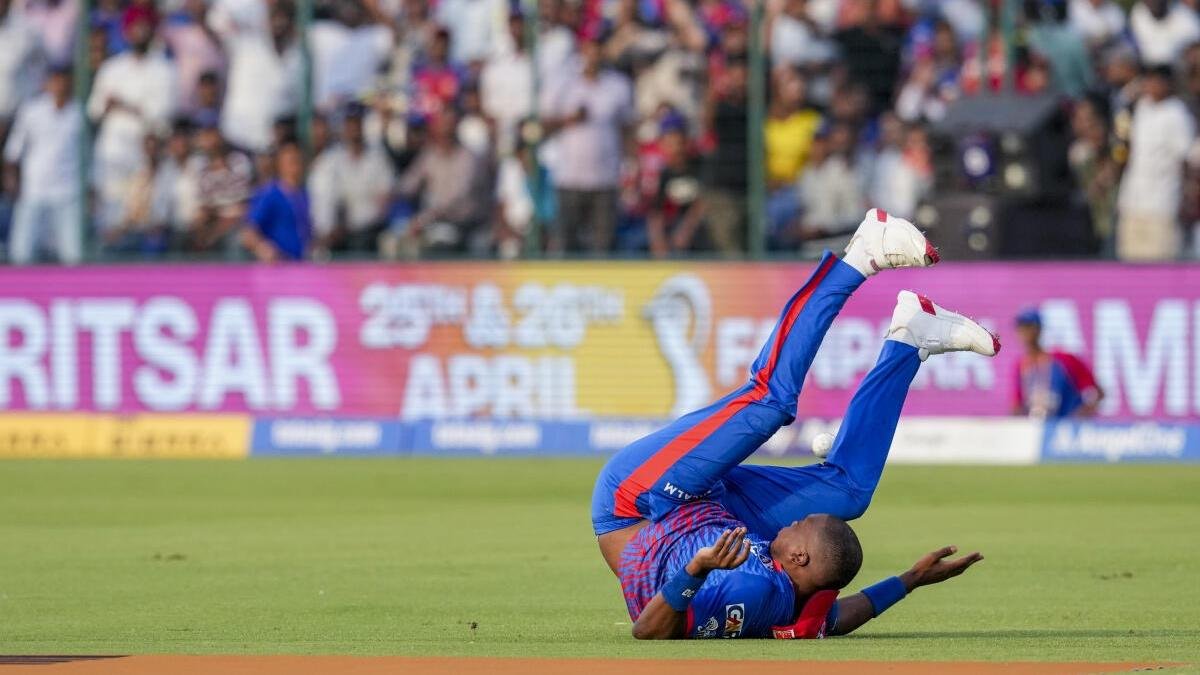
Let’s start with the concussion substitute. Firstly, the name should be changed to ‘seriously injured’ substitute. The rule was brought in for players who were incompetent to play the bouncer, so if they got hit on the helmet and were thought to be concussed, the player could be substituted by another player outside the 11 whose speciality was similar to that of the one who was concussed. Over a period, this was also used for players who got hit on the head while fielding or struck the ground badly while attempting a catch and felt the after-effects.
Fair enough, if the injured player is not going to be able to take further part in the game, then he could be replaced by another who did pretty much what the injured player did. But why restrict it only to a concussion? There are players who break a finger or an arm or a rib but cannot get a like-for-like replacement, even though they aren’t likely or able to take any further part in the game. Clearly, the substitute has to be for an external injury and not for muscular mishaps, which cannot be seen. Yes, with modern technology, it is possible to see the genuineness and extent of a muscular injury, but then there is always the possibility of this being misused. What we saw in the Delhi Capitals game against Punjab Kings was Lungi Ngidi, who fell badly on his head while running backwards for a catch, being replaced by a leg-spinner who was also a decent hitter.
Ngidi, as those who follow the game know, is a fast bowler who has shown great skill in bowling the slower delivery in the T20 format of the game. As a batter, he doesn’t have much to show, so how was a leg-spinner who could bat allowed to substitute for Ngidi? The only reason could be that Ngidi’s slower off-breaks were the same speed as the leg-spinner’s. Ngidi, by the way, doesn’t even bowl the back-of-the-hand delivery, so there was nothing like-for-like in his substitute.
Then there were two back-to-back ‘above-the-waist’ deliveries bowled at speed during the Kolkata Knight Riders vs Lucknow Super Giants game, where the umpires correctly called it a no-ball, but the bowler was allowed to bowl the next delivery when he should have been banned from doing so. The reason given was that the second above-the-waist delivery was not deemed dangerous because it was not aimed directly at the batter. This again is pretty subjective, and while there’s the clear provision for the bowler to be banned from bowling the rest of the innings, this unnecessary subjective rule allowed the bowler to complete the over. The rule should be black and white and not subject to interpretations, which can cause debate.
Then there’s the ‘wide ball’ call for a bouncer going barely over the batter’s head. This is like asking a fast bowler to bowl with one hand tied behind his back. C’mon, give him some leeway. After all, with boundary lengths being shortened even though there’s enough space to push them back, the bowlers are being short-changed, and now, with this interpretation where the ball is called a wide if it goes above the batter’s head in his normal stance, the quickies are being handicapped even more. If that rule can be tweaked to allow the quick a margin of one foot, approximately the length of the bat handle, above the head while in his batting stance, that would give the fast bowler some relief and encouragement to fire in some more.
This takes me back to when bouncers were totally banned in limited-overs cricket. So, we saw batters who would usually be batting at number nine or 10 in Test cricket being promoted to bat at three or four as so-called pinch-hitters in the 50-over game.
They would merrily swing their bats and clobber bowlers of the calibre of Wasim Akram, Waqar Younis, Curtly Ambrose, Courtney Walsh, Allan Donald, Brian McMillan, Javagal Srinath, Zaheer Khan, Venkatesh Prasad, Andrew Caddick and company, to all parts of the ground, knowing nothing would come back at their heads.
This is not to pat my back, but when I took over as Chairman of the ICC Cricket Committee, the other members joined me in bringing the bouncer back in the format, albeit one per over per batsman. The pinch-hitters disappeared. More importantly, the bowlers got one of their weapons back. You don’t restrict a batter from playing any shot, do you? So why restrict the bowlers from trying all the varieties that they possess?
That’s why there is a case to give the speedsters a little more leeway as far as the definition of the wide bouncer is concerned.
A good batter should be able to score off a bouncer, which is about a bat handle’s height above his normal stance. That might even up the battle slightly in a format where, more often than not, even the best fast bowlers in the game are in for a hiding.
So, c’mon Sourav Ganguly, when you chair the next ICC Cricket Committee meeting, spare a thought for the bowling fraternity too.
Published on May 06, 2026
Discover more from News Link360
Subscribe to get the latest posts sent to your email.