It is the type of shot that has been integral to cementing his reputation as one of the best T20 batters in the world. He hit his first ball in international cricket for six through that same region. Many fine bowlers have tried to stop him from scoring behind square on the onside, and most have failed.
In 2026, however, that shot proved something of a false dawn, as the Indian T20 captain carried an indifferent run of form from the T20 World Cup into a disappointing IPL 2026 for Mumbai Indians. In his first 10 innings, Suryakumar scored 195 runs at an average of 19.50 and a strike rate of 145.52 as the five-time champion spluttered and coughed towards the foot of the table.
More interestingly, Suryakumar’s proclivity for scoring behind square on the onside has been significantly reined in. Over the last five IPL seasons, he has generally scored a little over a quarter of his runs in that region, including 27.8% in his record-breaking 2025 season, but that figure has dropped to 17.4%.
Instead, his runs behind the wicket have shifted more towards the offside, where he has scored 24.6% of his runs compared to 15% in 2025.
The volume of runs scored behind square is not the only change to his batting in that area of the field. Across his career, the 35-year-old’s strike rate through backward square leg has almost always been close to two runs per ball (a strike rate of 200), but this year it has dropped to 144.44.
The clincher? In his first 10 innings this season, Suryakumar has been dismissed four times caught at backward square leg. Two of those dismissals came while playing the sweep shot against spin, and two came against pace while hooking and pulling the short ball.
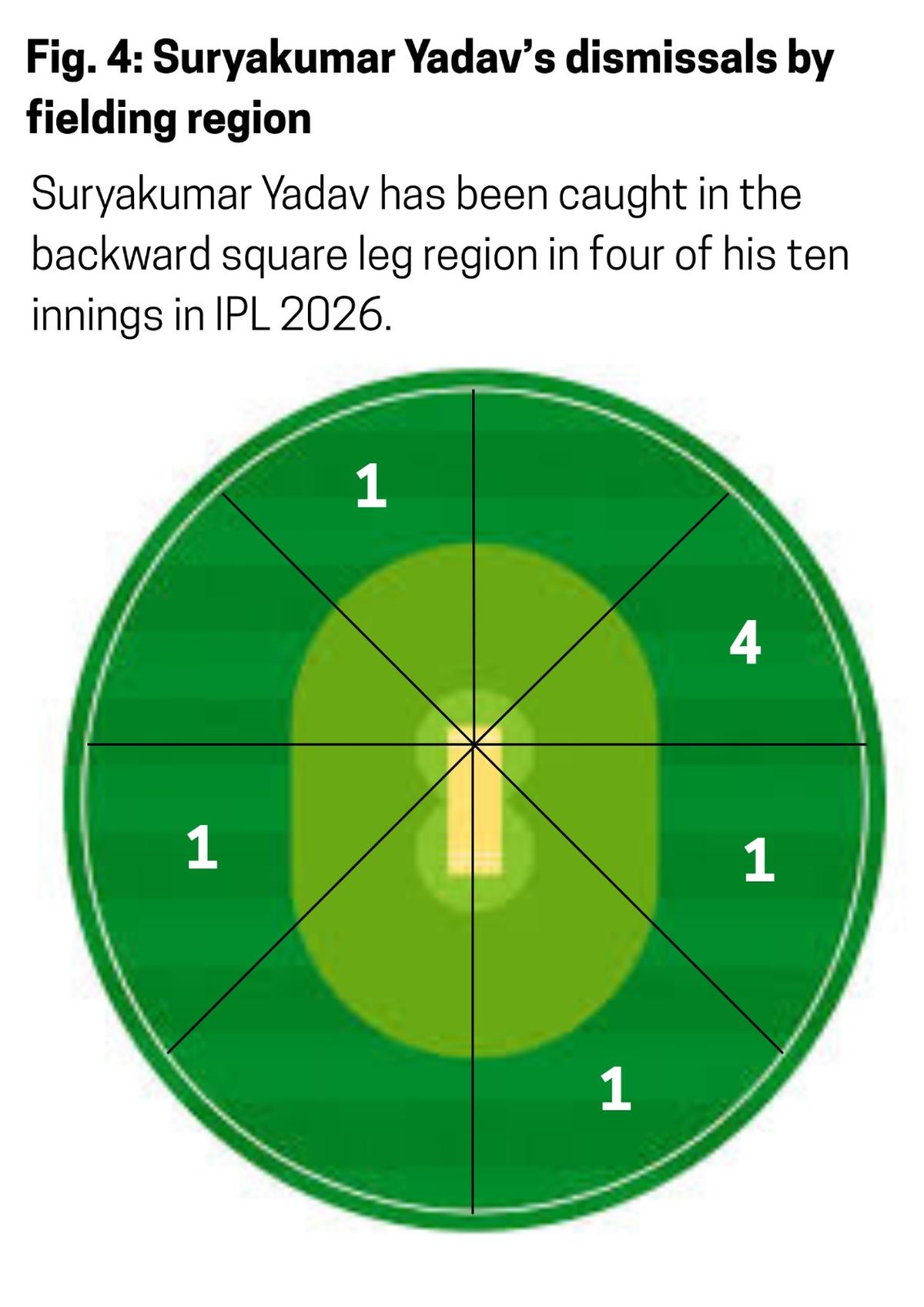
In short, his batting behind square on the onside, one of the hallmarks of Suryakumar’s distinctive and groundbreaking style of T20 batting, has become something he can rely on less and less.
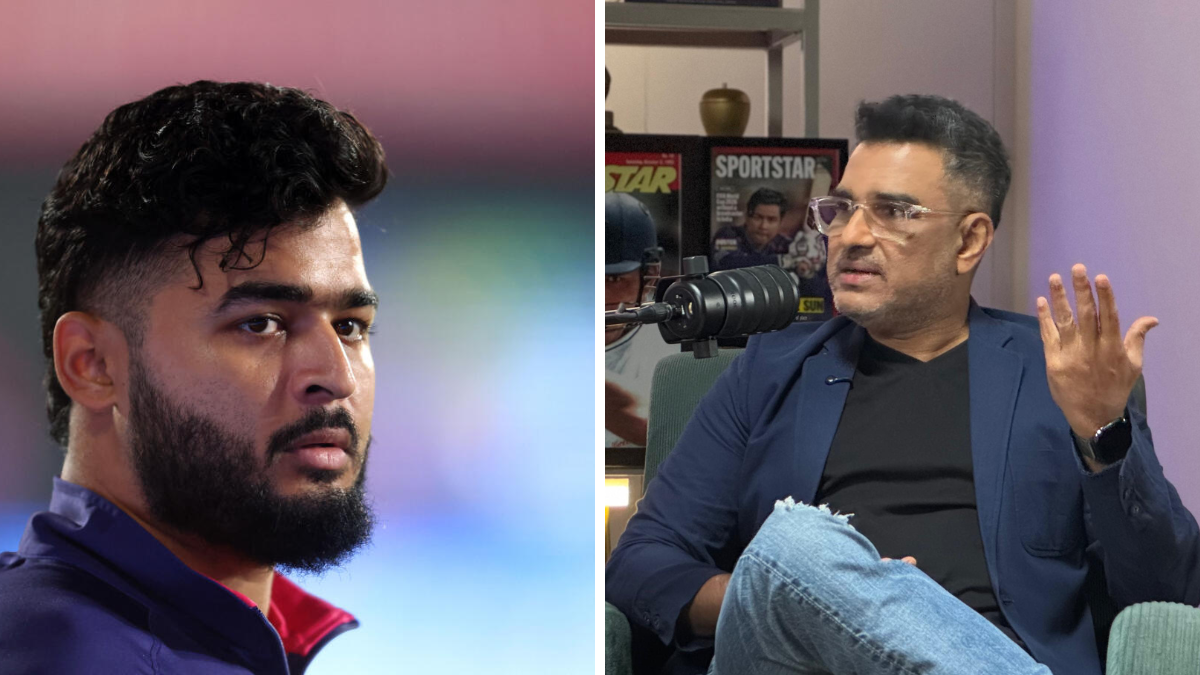
A possible explanation for his struggles could be age, suggests former India international Sanjay Manjrekar. “There were two things I was looking at. Firstly, he is not a 25-year-old. A 25-year-old after one year of bad form can come back into form. Secondly, I don’t think he’s as fit as he was five or six years back,” Manjrekar told Sportstar’s Insight Edge podcast.
“T20 cricket, I believe, is a game of hand-eye coordination, and his game was based on that,” Manjrekar said. “If you get on the wrong side of 30, and if you don’t take care of your fitness too much, this game is so ruthless, it will start exposing you because those things you take for granted, seeing the ball and hitting all these shots, you just find it more difficult.”
The need to train differently with age is well known. Ramji Srinivasan, former strength and conditioning coach with India and Mumbai Indians, suggested that as players age, the need to train finer muscles increases to ensure precision.
“After 30 and beyond, the body starts to slow down physiologically. It is natural. So, what they need to do is train smart rather than train hard,” Srinivasan says. “What you are adhering to when you are in your 20s and early 30s may not be as pertinent now. Your body is changing every year, and you need to adapt to a particular stimulus.”
Srinivasan suggests a focus on cognitive and neuromuscular training, which centres on sharpening the cognitive skills of the player.
“It’s all about the neural training pathway because cognition is what your eye perceives, and how your body reacts. For example, you see a ball trajectory coming in, how your body reacts to that particular impulse. It can be reactive or it can be proactive.
“You focus on how you train those muscle groups, the smaller and the finer muscle rather than the gross muscles. That is how you get precision, and they are the thing which loses the neural response in the long run if you don’t train them.”
Manjrekar also suggested that part of Suryakumar’s malaise may be mental.
“I think his confidence is shaken. You can see that in the way he walks in and plays one shot, there is a little bit of time to maintain that. But I think there are self-doubts creeping in, and once that happens in T20 batting, you see a lot of guys not able to make that same impact.”
While Mumbai Indians has not been mathematically eliminated from the IPL, its hopes of qualification are slim, and attention will shift to how it can bounce back from this year’s abject showing.
Central to those plans will be how it manages its cohort of star players, and whether it can continue to bank on its long-time lynchpin will be of utmost importance moving forward.
(All stats updated till MI vs LSG game on Monday)
Published on May 06, 2026
Discover more from News Link360
Subscribe to get the latest posts sent to your email.