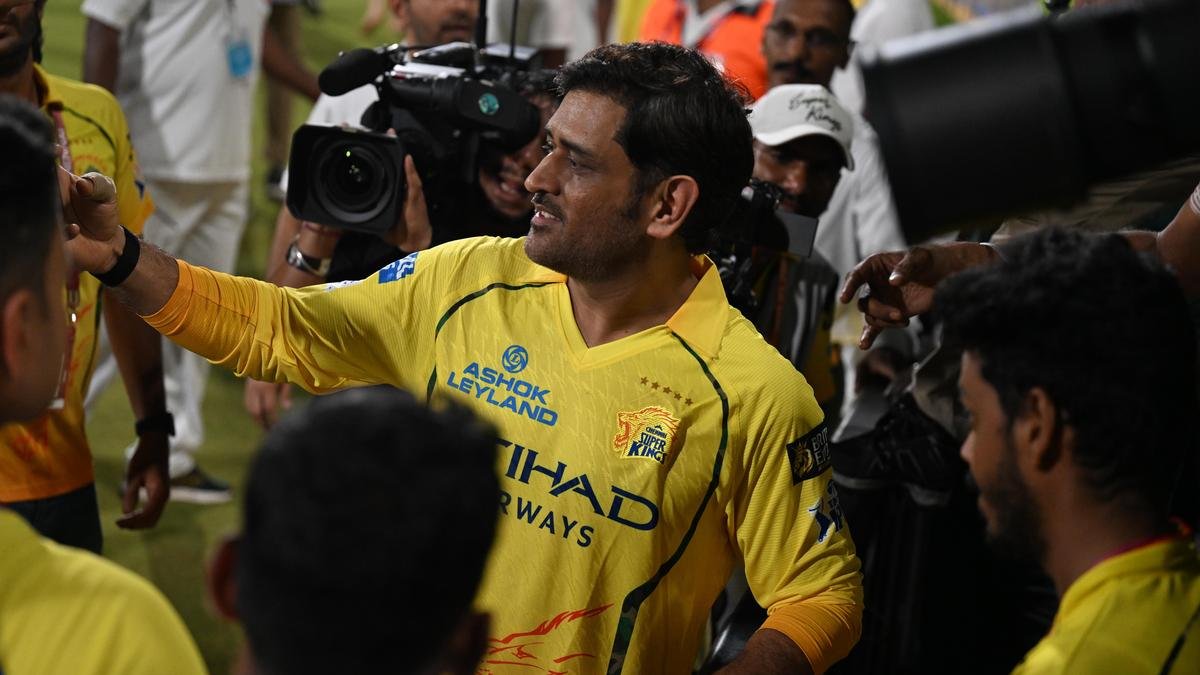
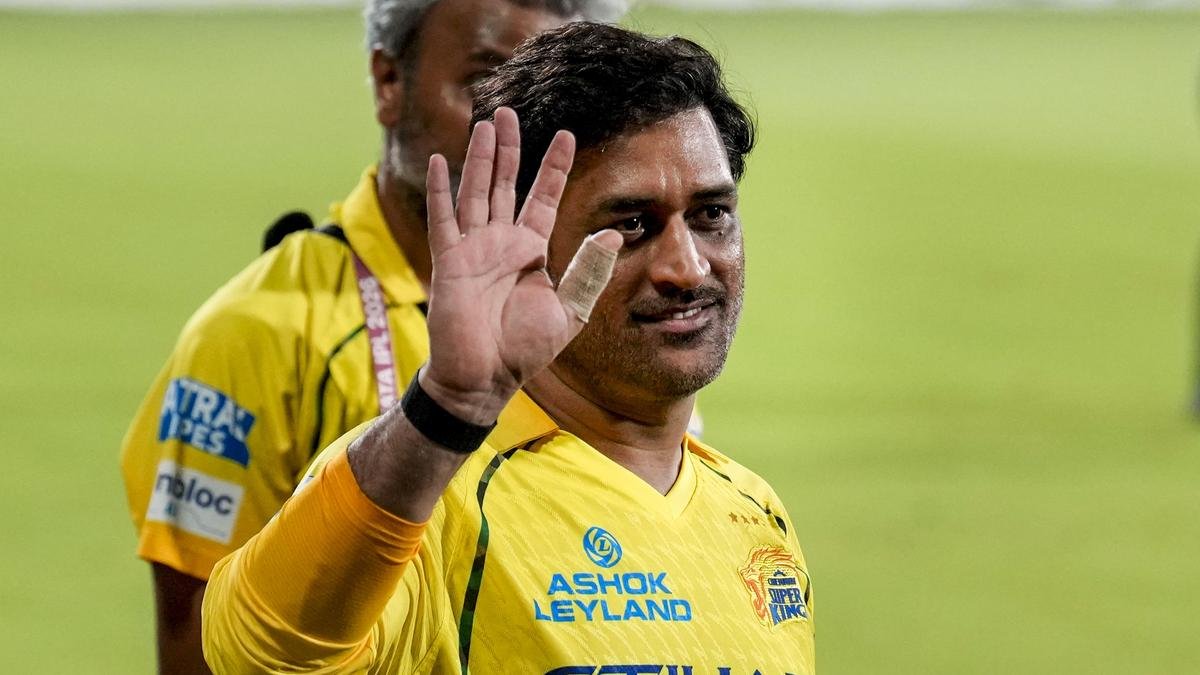
Chennai Super Kings (CSK) has completed its 2026 Indian Premier League (IPL) campaign and, for the first time, the team’s season has drifted to its conclusion without Dhoni taking the field even once. The calf and hamstring troubles that shadowed the latter part of his career kept him away throughout.
There were suggestions, early on, that he might return later in the tournament. That window has now closed quietly, almost imperceptibly. CSK is out. The league moves on. Dhoni has already gone back to Ranchi. Neither development feels entirely natural.
Then again, Dhoni’s relationship with departure has always been unconventional. He retired from Test cricket midway through a series in Australia in 2014, without advance orchestration or sentimental staging. His international career effectively ended in the semifinal of the 2019 World Cup, a run-out in fading light at Manchester, before the formal announcement arrived months later in the form of a brief social media post.
Perhaps that is why the current uncertainty feels believable. There may be no farewell game. No carefully choreographed final appearance at Chepauk. No extended lap before cameras searching for tears. If this is the end, it may arrive in the form of absence rather than declaration.
| Photo Credit:
R. Ragu

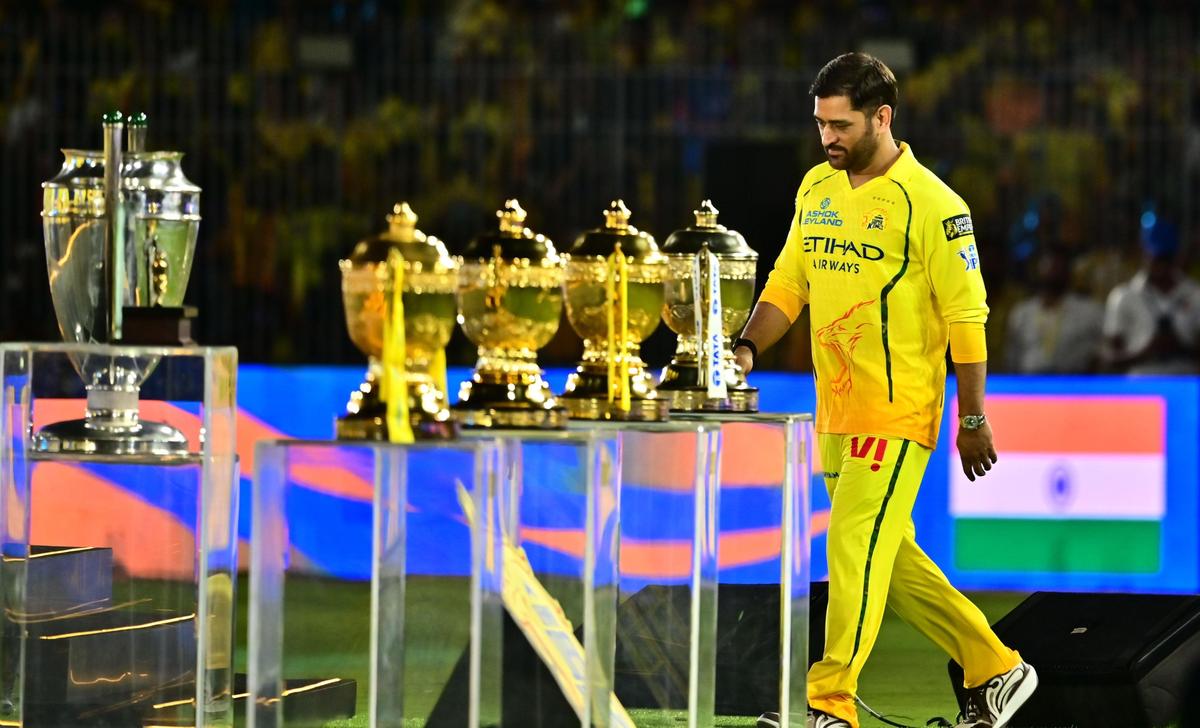
MS Dhoni won seven trophies with Chennai Super Kings — five IPL titles and two Champions League T20 trophies.
| Photo Credit:
R. Ragu
It would also be strangely appropriate because Dhoni was never entirely comfortable with cricket’s appetite for spectacle, despite becoming one of its biggest attractions. He occupied the centre of Indian cricket for nearly two decades while revealing remarkably little of himself. In an era shaped increasingly by branding and overexposure, Dhoni cultivated distance rather than intimacy. He spoke sparingly and rarely attempted to shape the emotional narrative around his career.
The temptation, inevitably, is to reduce him to familiar images: the helicopter shot, the gloves whipped off for a stumping, the stillness in a chase. But those fragments only partially explain his significance.
Dhoni altered the emotional architecture of Indian cricket.
Before him, Indian sides often carried pressure visibly. Tension travelled quickly through the dressing room and into the field. Under Dhoni, anxiety rarely appeared to spread. There was instead a refusal to allow matches to become emotionally hurried. It became his defining cricketing instinct. He slowed games down. He denied panic oxygen.
As a batter, he evolved more intelligently than he is often credited for. The young Dhoni appeared almost elemental, overwhelming attacks through force and audacity. The older Dhoni became subtler. He learned the geometry of chases, the manipulation of angles and the management of risk. In white-ball cricket especially, he understood something many aggressive players did not: endings are often decided not by force alone but by the preservation of options.
In that sense, he may prove difficult to replicate in the current age. Modern T20 cricket increasingly rewards immediacy and perpetual attack. Dhoni belonged to an earlier limited-overs imagination, one in which pressure could be accumulated patiently and time itself became a tactical resource.
His rise also changed Indian cricket in quieter ways. Before pathways widened fully, before scouting systems spread deeply across smaller centres, Dhoni emerged from Ranchi to captain India across formats. That mattered. He did not arrive carrying the institutional weight of Mumbai or Delhi cricket. He altered assumptions about where authority in Indian cricket could come from.
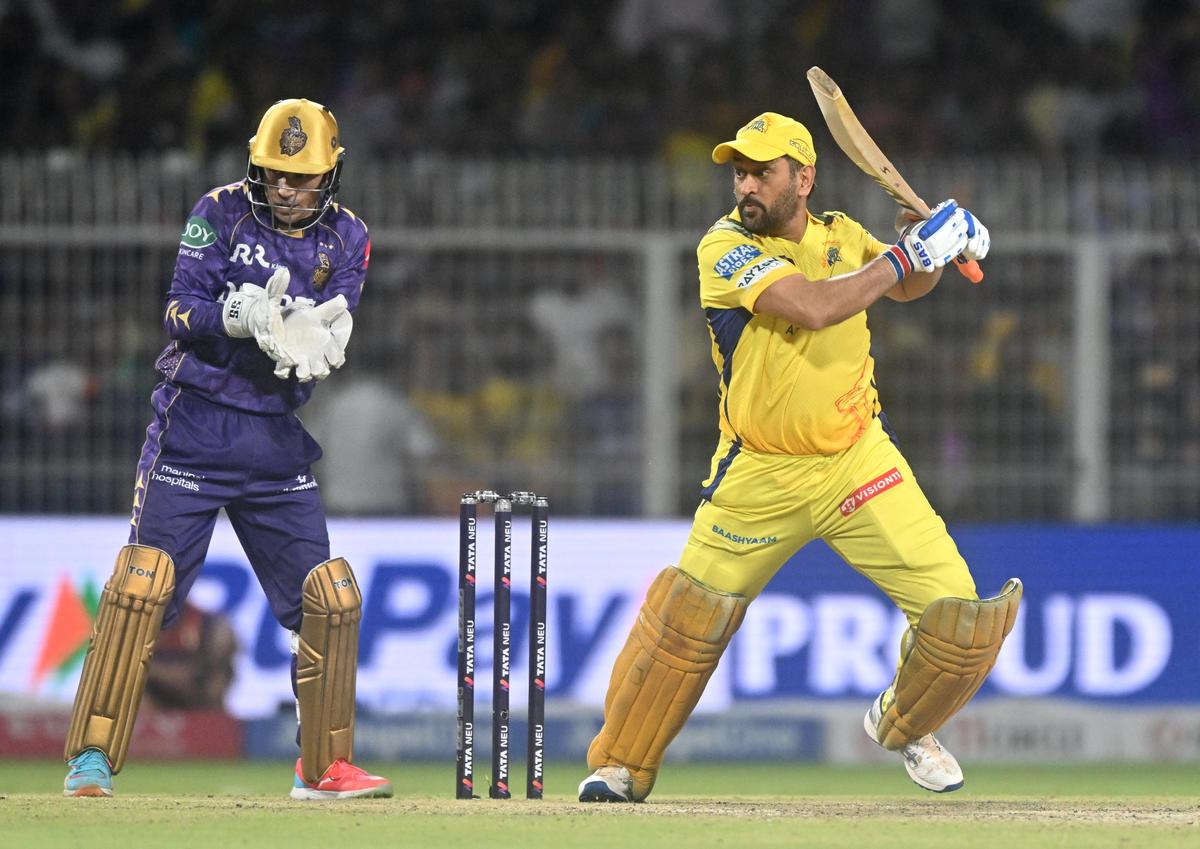
Modern T20 cricket increasingly rewards immediacy and perpetual attack. Dhoni belonged to an earlier limited-overs imagination, one in which pressure could be accumulated patiently and time itself became a tactical resource.
| Photo Credit:
K. R. Deepak
Modern T20 cricket increasingly rewards immediacy and perpetual attack. Dhoni belonged to an earlier limited-overs imagination, one in which pressure could be accumulated patiently and time itself became a tactical resource.
| Photo Credit:
K. R. Deepak
At Chennai Super Kings, his influence became even more pronounced because the franchise eventually resembled his personality. CSK resisted the restless churn that defines much of franchise sport. Older players were trusted. Roles remained stable. Experience was valued without embarrassment. Other teams often appeared trapped in perpetual reinvention; CSK preferred continuity. That culture outlived individual seasons because it reflected the temperament of the captain who shaped it.
The final phase, inevitably, carried a certain melancholy. Dhoni increasingly appeared in glimpses rather than innings. Crowds waited hours for a brief walk to the crease. A single six could become the emotional centre of a match. The cricketer gradually became memory while still playing.
Perhaps another season will follow. Perhaps this absence will prove temporary. But if the last competitive act has already passed unnoticed, it would fit the peculiar consistency of his career.
Published on May 22, 2026
Discover more from News Link360
Subscribe to get the latest posts sent to your email.