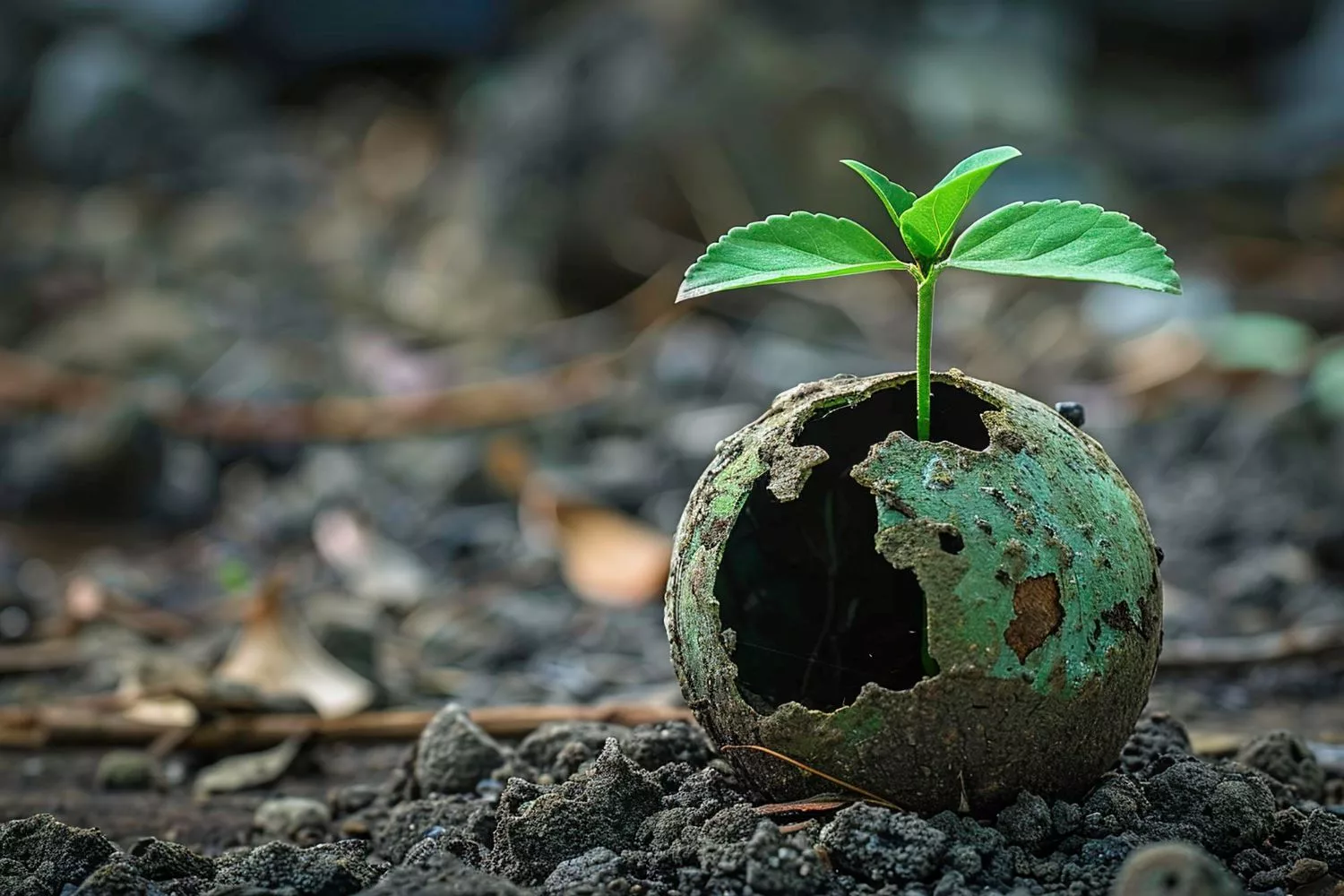
With the increased energy output, we would all wonder how long Earth can remain habitable now that the Sun is slowly getting more energetic. In the new study, conducted by using three-dimensional climate models, researchers obtained fresh insights into this problem as the fate of the biosphere now is shown to depend not only on increasing solar radiation but also on how carbon dioxide levels change in time.
Researchers estimated future steady-state climates at key locations using a solar constant that either increases while CO₂ mixing ratios are lowered. The three-dimensional model revealed much richer results (and also less warming, as it was earlier overestimated).
Two limiting cases were considered:
Strong weathering: Surface temperature remains constant while CO₂ is gradually drawn down.
Weak weathering: CO₂ remains constant while surface temperature rises.
Under strong weathering, the conventional limit for plant survival comes into play. C4 photosynthesis, used by many plants, fails when atmospheric CO₂ drops below about 10 ppm, a threshold expected around 1.35 billion years from now.
The study raises the intriguing possibility that life may survive longer than anyone previously thought. Crassulacean acid metabolism (CAM) photosynthesis allowed for survival below this threshold, while aquatic plants could use dissolved bicarbonate to supplement low atmospheric CO₂ concentrations. If the starvation limit is set at 1 ppm, the vegetative biosphere could continue for another 1.84 billion years.
Under weak weathering, heat becomes the limiting factor. Earth would be too hot for most land plants at 1.68 billion years (surface temperatures above 323 K), and too hot for all land plants by 1.87 billion years (above 338 K). These thresholds approach the moist and runaway greenhouse limits, where Earth’s climate would spiral into conditions similar to Venus.
The research highlights that the only thing determining the future of Earth’s biosphere is not one factor, but how CO₂ availability and a warming climate interact. This, in turn, opens the potential to extend biosphere life by intervention, be it through new technology or local evolution. That may lead advanced civilization to figure out a way to control the level of CO₂ in the atmosphere, take away extra solar radiation hitting Earth, or even create plants with tolerance for extreme conditions.
Ultimately, the study recasts Earth’s future in terms of an eventual tightening of options. Whether through CO₂ starvation or thermal stress, the limits of the biosphere will be reached. The study also underlines resilience: that life can last longer than expected, and a little human ingenuity might keep Earth inhabitable for even longer.
The Sun’s brightness may be relentless, but the story of Earth’s biosphere is one of adaptation, persistence, and the search for ways to endure.
Journal Reference:
- Jacob Haqq-Misra, Eric Wolf. Maximum Lifetime of the Vegetative Biosphere. JGR Atmospheres. DOI: 10.1029/2025JD045586
About the Author

Discover more from News Link360
Subscribe to get the latest posts sent to your email.