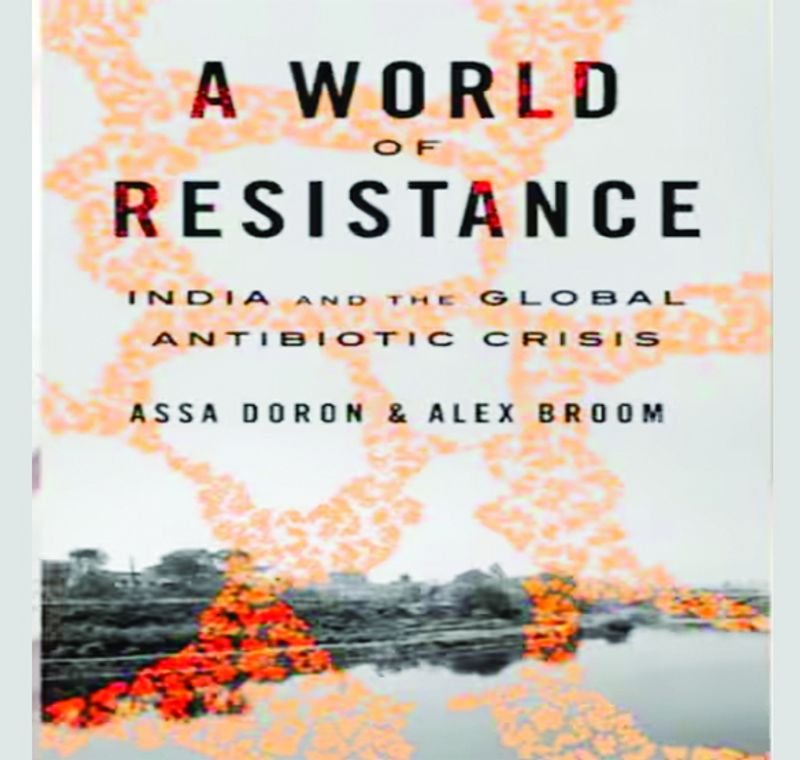
“A World of Resistance”,”Book by Assa Doron and Alex Broom”by Australian National University anthropologist & Sydney sociologist respectively, is an important interdisciplinary study that examines the growing crisis of antibiotic resistance in India and its global consequences. Published by Harvard University Press in 2026, the book combines anthropology, sociology, public health, environmental studies, and political economy to explain how antibiotics, once considered miracle drugs, have become central to one of the greatest health threats of the twenty-first century. Through detailed fieldwork in hospitals, pharmacies, villages, industrial farms, and pharmaceutical zones across India, the authors demonstrate that antibiotic resistance is not simply a scientific or medical issue but a deeply social and political problem connected to poverty, inequality, environmental degradation, and global capitalism.
The book begins by tracing the history of antibiotics and their revolutionary impact on modern medicine. Antibiotics transformed healthcare in the twentieth century by making bacterial infections treatable, reducing mortality rates, and making surgeries and complex medical procedures safer. Diseases that once killed millions could suddenly be cured with a simple course of medicine. This medical success created enormous faith in pharmaceutical science and led to the widespread use of antibiotics in healthcare systems around the world. However, bacteria gradually adapted to these drugs through biological evolution. Over time, excessive and improper use of antibiotics allowed microbes to develop resistance, producing dangerous strains of “superbugs” that no longer respond to treatment. The authors warn that antimicrobial resistance (AMR) now threatens to reverse many achievements of modern medicine and could lead humanity into a “post-antibiotic era” where common infections once again become deadly.
India occupies the central position in the book because it is both one of the largest producers and consumers of antibiotics in the world. Doron and Broom describe India as “ground zero” of the antibiotic resistance crisis. They explain how, after independence, India rapidly expanded its pharmaceutical industry and eventually became known as the “pharmacy of the world.” Indian pharmaceutical companies manufacture enormous quantities of affordable medicines that are exported globally, making life-saving drugs accessible to millions of people in developing countries. At the same time, this expansion also encouraged the mass circulation and easy availability of antibiotics within India itself. Weak regulations, intense market competition, and aggressive pharmaceutical marketing contributed to a culture in which antibiotics became widely accessible and frequently overused.
A major argument presented in the book is that antibiotic resistance cannot be blamed solely on individual irresponsibility or lack of awareness. Instead, the authors show how structural inequalities force people to depend heavily on antibiotics. In many rural and low-income urban areas of India, access to proper healthcare remains limited. Public hospitals are overcrowded, understaffed, and underfunded, while private healthcare is often too expensive for ordinary citizens. Because of these limitations, many people rely on local pharmacies, informal practitioners, and self-medication for treatment. Antibiotics are frequently purchased without prescriptions and used as quick remedies for fever, coughs, infections, and other common illnesses. Doron and Broom argue that this dependence reflects broader social realities such as poverty, lack of sanitation, poor infrastructure, and the urgent need for affordable healthcare rather than mere ignorance or carelessness.
The authors also examine the role of doctors, clinics, and hospitals in promoting antibiotic overuse. In private healthcare settings, doctors often face pressure from patients who expect immediate cures and strong medicines. Prescribing antibiotics becomes a way to maintain patient satisfaction and professional reputation. At the same time, pharmaceutical companies aggressively market newer and more expensive antibiotics to medical professionals. Medical representatives frequently encourage doctors to prescribe branded drugs, creating financial incentives that contribute to overprescription. The book explains that healthcare systems increasingly operate according to market logic, where speed, efficiency, and profit become more important than long-term public health concerns. This commercialization of healthcare contributes significantly to the growth of antibiotic resistance.
One of the most powerful sections of the book focuses on agriculture and industrial food production. Doron and Broom show how antibiotics are extensively used in poultry farming, dairy industries, aquaculture, and livestock production across India. Farmers often use antibiotics not only to treat sick animals but also to promote faster growth, prevent disease outbreaks, and maximize productivity. As India’s demand for meat, milk, eggs, and seafood has increased, the use of antibiotics in industrial farming has expanded dramatically. These practices create ideal conditions for resistant bacteria to evolve and spread through food chains, water systems, and animal waste. The authors particularly discuss poultry farming and shrimp aquaculture as industries heavily dependent on antibiotics.
Environmental pollution forms another major theme of the book. Pharmaceutical manufacturing plants often release untreated waste containing antibiotic residues into rivers, lakes, and local ecosystems. These contaminated environments become breeding grounds for resistant microbes.
Another significant contribution of the book is its focus on the cultural meaning of antibiotics in Indian society. Antibiotics are often viewed as symbols of modernity, scientific progress, and reliable healing. For people living in conditions where infectious diseases remain common and healthcare access is uncertain, antibiotics provide a sense of security and hope. The authors reject simplistic narratives that portray ordinary citizens as irresponsible users of medicine. Instead, they argue that antibiotic dependency emerges from fear, uncertainty, economic pressure, and unequal living conditions. Their ethnographic approach humanizes the crisis by presenting the experiences of patients, pharmacists, doctors, farmers, and workers who all interact with antibiotics in different ways. Through these stories, the book reveals how deeply antibiotics have become integrated into modern social life.
Importantly, the book does not adopt a purely pessimistic tone. Although the authors present alarming evidence about the spread of resistance, they also discuss possible solutions. Doron and Broom argue that simply restricting access to antibiotics would unfairly harm vulnerable populations who genuinely need treatment. Instead, they advocate policies based on social solidarity, public education, preventive healthcare, environmental sustainability, and community-based care. They also suggest that indigenous and traditional healing practices may sometimes reduce unnecessary dependence on pharmaceuticals when used responsibly alongside modern medicine. The authors call for healthcare systems that prioritize long-term public well-being rather than short-term profits and rapid consumption of drugs.
The conclusion of the book presents antibiotic resistance as one of the defining global challenges of the modern age. Resistant bacteria do not respect national boundaries, making this a worldwide problem connected through travel, trade, migration, and pharmaceutical supply chains. What happens in India directly affects global public health because resistant microbes can spread rapidly across countries and continents. Doron and Broom therefore call for international cooperation and long-term political commitment rather than narrow national or profit-driven approaches.
Overall, A World of Resistance Book by Assa Doron and Alex Broom is both a warning and a call to action. The book successfully transforms a complex scientific issue into a compelling social narrative that is accessible to both academic and general readers. By focusing on India, Doron and Broom reveal how modern systems of healthcare, agriculture, industry, and globalization contribute to the rise of antibiotic resistance. Their work challenges readers to rethink humanity’s relationship with medicine, technology, nature, and economic development. The book is especially valuable for students and researchers in sociology, anthropology, medicine, environmental studies, political science, and public health. Ultimately, the authors argue that protecting the effectiveness of antibiotics requires not only scientific breakthroughs but also responsible governance, environmental care, social justice, and collective global responsibility.
Discover more from News Link360
Subscribe to get the latest posts sent to your email.