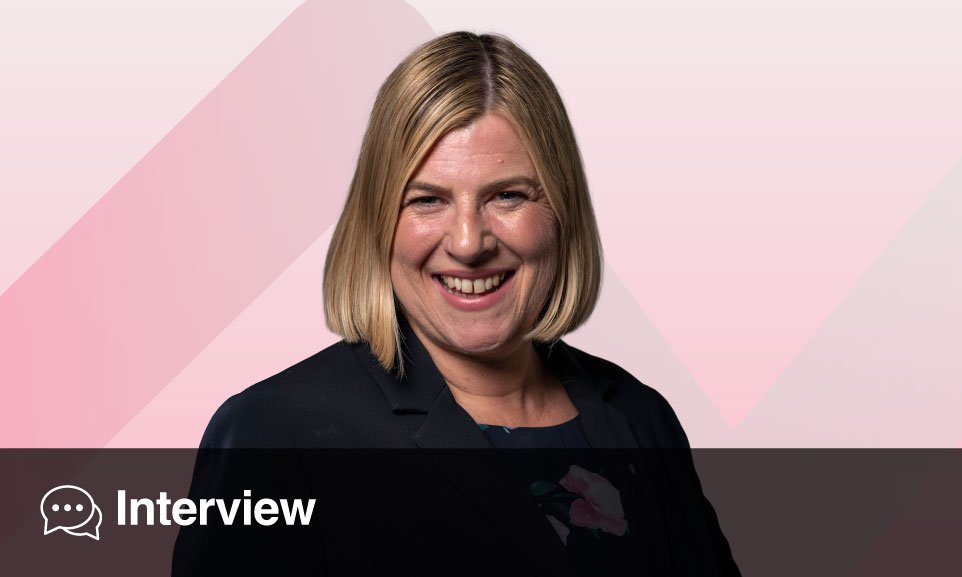
Professor of Hepatology and Chronic Liver Failure, Roger Williams Institute of Liver Studies, King’s College London; Consultant Hepatologist, Liver Unit, King’s College Hospital NHS Foundation Trust, London; Lead of the Liver–Intestinal–Microbiome–Brain Interactions in Cirrhosis (LiMBIC) Research Group, King’s College London, UK; Secretary General, European Association for the Study of the Liver
Citation: EMJ Hepatol. 2026; https://doi.org/10.33590/emjhepatol/M4299163

You are serving as the European Association for the Study of the Liver’s (EASL) first female Secretary General. What does that milestone mean to you personally, and what changes would you still like to see for women entering hepatology and academic medicine?
I think it’s helpful to give some historical context first before answering this question. EASL was first established in 1966, and, when it was first established, the first meeting in Marburg, Germany, consisted of 68 men and two women. I’m unsure if the two women there were hepatologists; I think only one was. For the following 58 years, that pattern largely continued, with White men in their 50s typically taking on the Secretary General role. Now, at EASL 2026, 52% of our registrations are women. Women are becoming increasingly prominent in the field, and the leadership of EASL needs to reflect the people coming into the room. For me, it has been essential that we achieve complete gender parity within both the leadership and the Governing Board, and we have now done that.
However, we want more than that. When we look now at the people coming to the Congress, we’ve got people from all over the world and it’s wonderful. At the last count, 8,520 delegates from 115 countries across five continents were represented at the EASL Congress, including attendees from Africa, Asia, and Latin America. For me, it’s just wonderful, because hepatology isn’t a White European male issue. It’s a global problem, and, therefore, it’s important that our membership and our leadership represent that diversity.
For my first meeting as Secretary General, it’s certainly been a roller coaster, and, at times, quite stressful. However, it’s also been incredibly rewarding. So many women have come up to me to thank me, and I’ve received some amazing feedback.
EASL 2026 is bringing together clinicians, researchers, industry, and policymakers at a time when liver disease is rising globally. What do you think are the biggest themes or priorities healthcare professionals and scientists should pay attention to this year?
I think this year has been the year of public health and advocacy. We have absolutely amazing science here, outstanding educational content, and the abstracts presented in General Sessions 1 and 2, as well as the late-breaking sessions, demonstrate just how far the field is advancing. But for me, it’s that awareness of the growing problem of liver disease globally that has been so important. Just in Europe, 780 people die a day from advanced liver disease, which is about 284,000 people a year. The cost associated with that is enormous, and if we can even have a slight impact on that, imagine how much money we’ll save? We’ve estimated that we could save up to 55 billion EUR in Europe just by addressing that.
The reason I mention this is that two major pieces of work were published shortly before the Congress began, and we’ve been highlighting both of them throughout the meeting.
One of those big pieces of work was the World Health Assembly in Geneva, the 79th World Health Assembly. There was a resolution put forward by the WHO, nominated by Egypt, to recognise chronic liver disease as a non-communicable disease in the same way as heart disease, cancer, and diabetes. The resolution was passed, marking a truly historic moment. This recognition gives us the opportunity to leverage its status as a non-communicable disease to secure the funding needed to implement meaningful policy changes. These include measures to address unhealthy diets, ultra-processed foods, and harmful alcohol consumption, as well as initiatives focused on early detection, education, and prevention.
For me, those things have been really instrumental in launching the meeting this time round, because I feel like we’ve all got a mission now that we need to work towards.
Your research has focused on the gut–liver–brain axis, immune dysfunction, and the role of the microbiome in chronic liver failure. How close are we to seeing microbiome-based therapies become part of routine clinical practice for patients with cirrhosis?
One of the things that we have learned is that your gut microbiome is really important for maintaining not just liver health, but also general and brain health, supporting your immune system, and so many other things. The problem is that when you start to develop liver disease, your gut microbiome also becomes quite unhealthy, which then seems to perpetuate the liver disease.
We also know that people who drink harmful levels of alcohol, people who are overweight, obese, or diabetic also have changes in their gut microbiome that can also drive disease progression. Therefore, the focus of my research has been on trying to repair the gut microbiome in a way that helps support liver health, and potentially even reverse some of the adverse consequences of having liver disease. Diet is so important for the microbiome; the more fruit, vegetables, and fibre we eat, the healthier our microbiome is, and the healthier we are, the healthier our liver is. So fundamentally, we can just institute dietary changes. We don’t need to use cutting-edge technologies. However, one of the things that I’m also looking at in my research programme is ways to manipulate the gut microbiome in a favourable way to improve outcomes in liver disease. Some of the things that I’m doing as part of my research programme is, I’m running a big trial called The PROMISE Trial, which is looking at faecal microbiota transplantation (FMT). This is taking a healthy individual and taking the bacteria from their stool, encapsulating that and then giving it to somebody with liver disease to see if those healthy bacteria will engraft in their guts to try and improve their gut microbiome.
At the moment, we’re also very interested in developing phage therapies. A phage is a virus that lives in your gut, which helps to control populations of bacteria. For every type of bacterium in the gut microbiome, there are also vast numbers of viruses that exist alongside them and work in conjunction with them. What we’re interested in doing is using phages to help keep some of the less healthy bacterial populations under control. This research is still at a very early stage, and what we want to work towards is putting the necessary regulatory framework in place to enable first-in-human trials.
As you can imagine, when you’re considering the use of viruses in this context, it is essential to proceed very carefully.
You’vedescribed liver disease as a growing global public health challenge, particularly with the rise of MASLD. Do you feel European governments and health systems are finally taking liver health seriously enough?
We’re getting there, but we’ve still got a lot of work to do. Over the last couple of years, we’ve raised awareness of liver disease as a problem. As I mentioned to you earlier, having the resolution passed on the 21st May in Geneva means that now, MASLD and alcohol-related liver disease, which both come under that umbrella of steatotic liver disease, are now recognised as non-communicable diseases that have to be addressed by all of the member states, and that’s so important. However, it’s one thing to achieve that recognition, but it’s another thing to implement the policy and the change that you need to address that. But that recognition is the first step.
A lot of the sessions I’veattended have focused on health policy and global policy, and one theme that keeps coming up is that generating scientific evidence alone isn’t enough. We also need effective policy change to translate that evidence into better patient outcomes. From your perspective, how does your organisation bridge the gap between scientific evidence and real-world policy impact?
Exactly. Measures such as minimum unit pricing for alcohol, for example, as has been introduced in Scotland, can make a real difference. Labelling that says how much sugar is in a product and making people aware that ultra-processed foods are harmful to their bodies are important.
These are exactly the kinds of policy changes and public health initiatives that we need to push for.
You are leading major work on FMT, including the PROMISE trial. What excites you most about the potential of FMT, and what are the biggest unanswered questions still facing the field?
With the PROMISE trial, we want to try to understand if repairing the gut microbiome by putting in bacteria from a healthy individual can reverse bad outcomes and liver disease. But at the same time, we still don’t really understand why FMT works. We don’t understand how those bacteria engraft in the gut and are not just excreted. And then how do they communicate with the already existing microbiome in a harmonising way to maintain health in the gut? So there’s a huge piece of work ready to be done on how the microbiome, brain, and liver all work together and how doing the FMT works.
There’s also another big piece of work, which is, if FMT does work, then how do we roll that out? Can it be a national programme? Would we have, for example, stool banks, like we have blood banks? There’s that huge piece of work on how you would orchestrate developing that as a therapy. But what I really like about FMT is that it’s recycling. It’s kind of a sustainable therapy, and that’s what’s really nice about it. Yes, it’s not your own microbiome, but you’re still putting something in that’s perhaps more harmonious with the body. So, for me, now we need to do lots of work to better understand how it works and how, if it were to be shown to be favourable, we can roll that out more broadly.
Given your own work in cirrhosis, the microbiome, and liver failure, are there any sessions at EASL 2026 that you’veparticularly enjoyed?
I think sometimes one of the downsides of being Secretary General is that you don’t always get to go to all the sessions you want to. There was the Baveno symposium. The Baveno Cooperation consortium meets every 5 years to develop concepts, definitions, and management strategies for cirrhosis and portal hypertension. They met recently in March (Baveno VIII), and the symposium really addressed some of the discussions and outcomes from that meeting, and how they might be implemented going forward into clinical practice. There were some great talks within that session.
One particular talk I really enjoyed was by Bogdan Procopet (Universitatea de Medicina si Farmacie “Iuliu Hatieganu”, Cluj-Napoca, Romania) on preventing liver decompensation, which is quite in line with much of the work that I do. A lot of my FMT work is about preventing things from getting worse. So, I very much enjoyed that session.
What excites you the most about the future of hepatology right now?
What excites me is that the community is growing. We’ve had more than 8,520 registrations at this meeting with 600+ people online. The liver is being recognised as being important. It’s no longer the little brother that’s stuck in the corner. The engagement, momentum, discussions, and enthusiasm to take things forward are just incredible. There’s cutting-edge science, for example, there was a fantastic abstract using RNA silencing to treat α-1 antitrypsin deficiencies. That’s a very new way to potentially treat a devastating disease. We’ve got all these cutting-edge therapies, but we’re also addressing the problem head-on with all the policy initiatives that I’ve already talked about. Having a congress full of people who are so engaged and ready to just address the problem is very special to me.
I’ve tried to invite people to the Congress who wouldn’t normally get the opportunity to come somewhere like this. A young investigator came from Ghana to talk about the problem with alcohol-related liver disease in their country. We’ve had people from Uganda to Vietnam. I met a group from Ukraine yesterday who were telling me how much they were learning here that they can take back. Even though they’re facing all those problems, they still have liver disease to face too. It’s really warming to see that.
Discover more from News Link360
Subscribe to get the latest posts sent to your email.