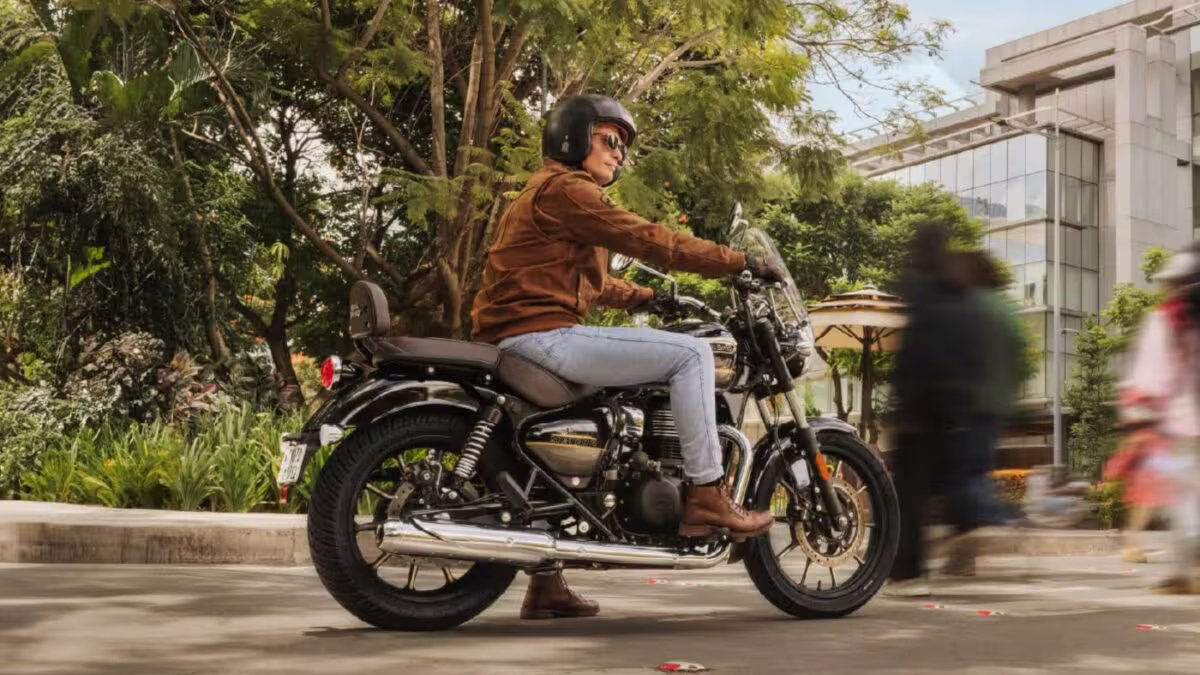
The most perfect example is the Bajaj Freedom 125, the world’s first CNG motorcycle. Bajaj Auto launched the Freedom 125 with much fanfare on 5 July 2024. At the time of launch, it was considered a ‘game-changer’ product for daily commuters. In the initial days, the curiosity of the customers and their desire to try new technology also gave a good start to this bike. The company sent a large number of vehicles to the dealerships, due to which the initial sales figures also looked quite encouraging. But this initial glow could not last long and soon the reality of the market came to the fore.
Did not prove to be a game-changer
The exact sales figures testify to the fact that customers have distanced themselves from Bajaj Freedom 125. While 74,730 units of this CNG bike were sold in the financial year 2025, a huge decline of 76 percent was recorded in its sales in the financial year 2026. This figure has come down to just 17,959 units. This decline did not stop here, rather the situation became worse in the initial months of the new financial year. According to the report, only 644 units could be sold in April 2026 and only 550 units could be sold in May 2026.
Huge decline in sales figures
Industry experts give two reasons behind this. From the point of view of physics, there is a huge difference in the design of cars and motorcycles. There is no shortage of space in cars. Companies like Maruti Suzuki are installing large under-floor CNG tanks in their cars, which once full give an impressive range of more than 300 kilometers. At the same time, companies like Tata Motors and Hyundai have introduced dual-cylinder technology, which protects the boot space in the car and also provides the benefit of CNG. On the contrary, there is a severe shortage of adequate and safe space to install a large CNG tank in a bike.
Cars got the benefit of space and technology
Due to this limitation in installing CNG tank in the bike, a very small tank can be given in bikes like Bajaj Freedom 125. This has a direct impact on the range of the vehicle. Having a small tank means that the rider will have to make frequent trips to the pump to fill CNG. Long queues are usually seen at CNG pumps in India. A car driver can sit in the AC of his car and wait in the queue for 15-20 minutes, but for a bike rider, it is very painful to stand in a long queue in the scorching sun or rain. The main purpose of a two-wheeler is to avoid traffic and reach its destination in less time, but the hassle of filling CNG destroys its entire usefulness and convenience.
Economics are also working against CNG motorcycles. In the case of cars, the mathematics of CNG is very simple and profitable. A CNG car is usually around Rs 1 lakh more expensive than its petrol variant. But, due to the difference in prices and mileage of CNG and petrol, the car driver gets a huge saving of about Rs 3 per kilometer in running cost. If a person drives a car even 50-60 kilometers daily, he very soon recovers the extra Rs 1 lakh spent on a CNG car. This savings is even more significant for taxi drivers and fleet operators, which is why buying a CNG car makes the most economical decision for them.
The hassle of low range and long lines
But when we apply the same formula to a bike, the mathematics changes completely. Generally, petrol bikes in 100cc to 125cc segment already give excellent mileage of 60 to 70 kilometers per liter. In such a situation, the savings per kilometer of running a CNG bike compared to petrol is limited to a few rupees. On the other hand, due to the CNG kit and special technology, the starting price of a CNG bike is much higher than that of a petrol bike. It will take many years for an average bike rider to recover this additional cost, which is not economically viable at all. This is the reason why customers go to showrooms to see CNG bikes, but buy their old and reliable petrol bikes only.
Economics of CNG for cars
Market trends also point towards the same thing. The demand for CNG in the passenger vehicles segment is so high that Maruti Suzuki, Tata Motors and Hyundai are continuously launching CNG variants of their new models. It is this portfolio expansion of these companies that has taken the market share of CNG cars to a record 21.7%. On the contrary, after seeing the plight of sales of Bajaj Freedom 125 in the two-wheeler segment, no other leading two-wheeler manufacturer is taking the risk of entering the CNG motorcycle market. Neither new models are being launched nor any major investment is being made in this direction. Companies have understood very well that petrol or electric (EV) is the right way of future for two-wheelers, not CNG.
Discover more from News Link360
Subscribe to get the latest posts sent to your email.