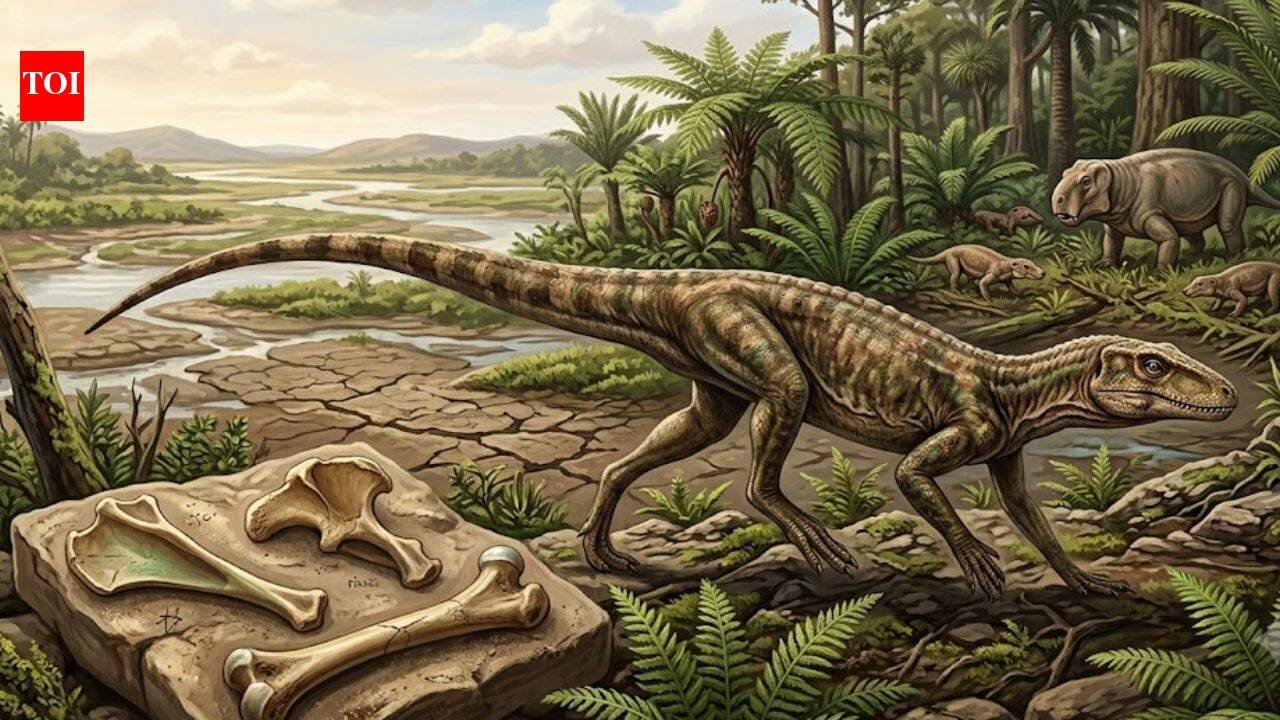
A fossil found in southern Brazil is giving researchers a closer look at the reptiles that lived near the beginning of the archosaur lineage, the group that would eventually include dinosaurs and crocodile-line animals. The animal has been named ‘Silescelida acristata’ and is identified as an early-diverging eucrocopodan archosauriform from the Middle Triassic. A recent study published in the journal Scientific Reportsnotes that the specimen includes a left scapula, a right ilium and a left femur that were found together and are considered to belong to the same individual.



How a lost fossil piece helped identify Silescelida acristata
The species was discovered at the Posto site near Dona Francisca in Rio Grande do Sul, where it was recovered from the Dinodontosaurus Assemblage Zone of the Pinheiros-Chiniquá Sequence. The rocks date to the Ladinian, placing the fossil in the Middle Triassic. The holotype, MCP 4186-PV, consists of a left scapula, a right ilium, and a left femur.The three bones were found attached and are compatible in size, which leads researchers to consider them part of the same individual. The specimen, however, had an unusual history. The proximal part of the femur that carried its collection code had been lost, leaving its provenance difficult to verify for more than two decades.
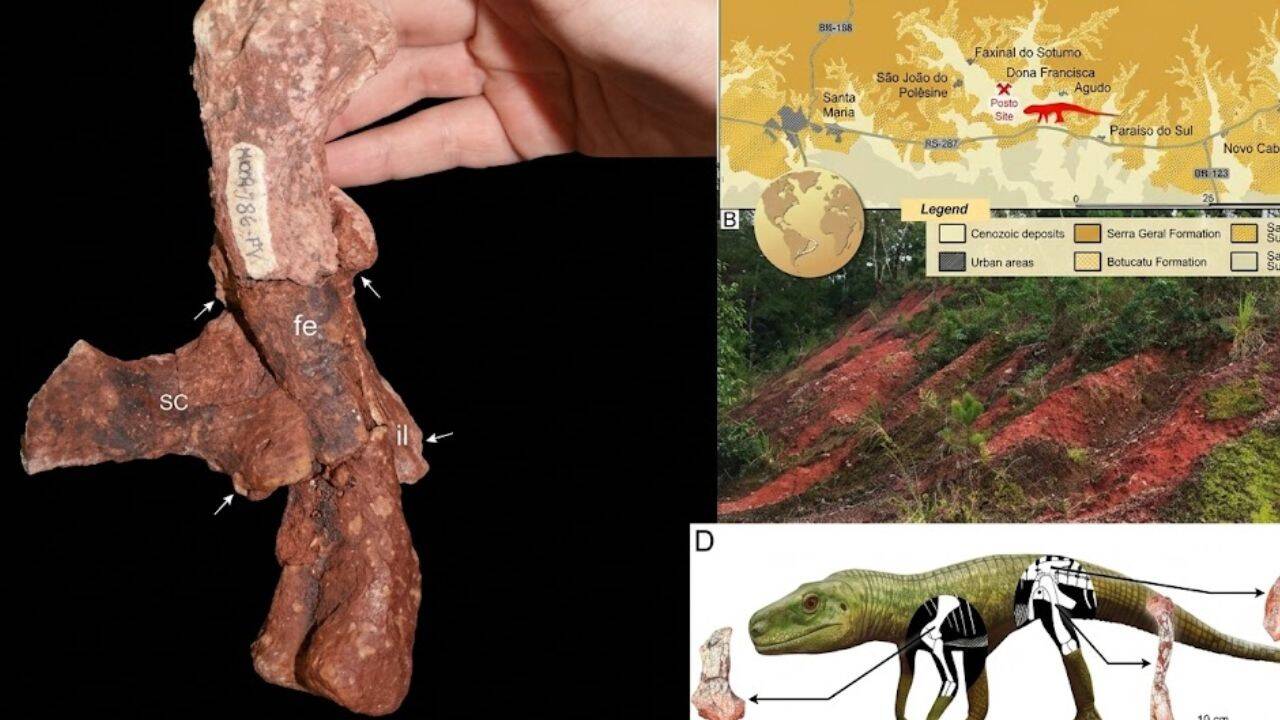
PC: Scientific Reports Journal
What makes Silescelida acristata different from other Triassic reptiles
Silescelida was identified from only a few preserved bones rather than a complete skeleton. Its classification is based on a combination of features found in the shoulder, pelvis, and thigh. The scapula has no constriction at the base of its blade and widens asymmetrically towards the dorsal end. The ilium has a straight dorsal margin and a notch near the acetabulum. The femur also lacks a raised crest or flange associated with the attachment of the caudofemoralis muscle. This distinctive absence is reflected in the species name acristata. Together, these anatomical features set Silescelida apart from other non-archosaurian archosauriforms and support its identification as a distinct taxon.
What the fossil reveals about Silescelida’s evolutionary position
A phylogenetic analysis based on 287 operational taxonomic units and 919 anatomical characters clarified Silescelida’s place in the early evolution of archosauriforms. Across four separate phylogenetic analyses, Silescelida was consistently identified as an early-diverging eucrocopodan, although its precise position within the group varied. Only some trees from one of the four analyses placed it within Euparkeriidae. In most other trees, including those from the remaining analyses, Silescelida appeared outside Euparkeriidae, near the base of Eucrocopoda. The results therefore point to a possible connection with Euparkeriidae rather than establishing the species as a definite member of the group.