

2026’s most anticipated books that redefine storytelling


Every few years, a certain set of books rises above the rest, not just because they are well-written, but because they capture the mood, anxieties, dreams, and questions of an entire era. As we move toward 2026, readers across the world are hungry for stories that challenge the mind, stir the heart, and redefine how we see the world. The literary landscape is shifting, blending genres, cultures, technology, and deeply human experiences. Publishers are betting big on narratives that feel urgent. Authors are breaking conventions. Readers want something that stays with them long after the last page.
2026 will be a year where conversations around identity, future technology, relationships, climate, power, and emotional resilience will dominate cultural spaces: online and offline. And the books listed below are poised to become the centre of these discussions. Some bring groundbreaking ideas. Some bring unforgettable characters. Others bring emotional truths that feel impossible to ignore. Whether you’re a reader, a writer, or someone who simply loves to stay ahead of trends, these five books will shape the way we talk, think, and reflect in the coming year.
These are the books that will spark debates, fill Instagram reels, inspire TikTok trends, dominate book clubs, and define countless conversations.
5 books that will shape conversations in 2026
1. The Memory Architects by Liora Hayes
Liora Hayes’ The Memory Architects is already being talked about as a landmark novel, one that pushes the boundaries of speculative fiction while grounding its story in raw, human emotion. Set in a gleaming but unsettling near-future metropolis, the book imagines a world where memories are no longer private, sacred, or permanent. They can be extracted like data, sold for profit, or rewritten to erase pain, guilt, or entire chapters of one’s life.
The story follows Mara Elen, a young woman who works as a “memory sculptor”, a prestigious profession responsible for reshaping people’s histories with surgical precision. At first, Mara believes she is helping people heal. But everything changes when she stumbles upon a sequence of memories in her own mind that she doesn’t recall editing, authorising, or even living. These fragments hint at a past deliberately buried, and the truth locked inside them threatens to upend not just her identity but the foundation of the memory industry itself.
Hayes masterfully blends psychological tension with philosophical depth. The novel forces readers to confront powerful questions:
- Who are we without our memories?
- Is a flawless life worth living if it’s built on lies?
- What happens when corporations, not individuals, control the stories we tell ourselves?
The worldbuilding is stunning, cold memory vaults humming with stolen recollections, black-market “experience dealers,” and underground communities fighting to preserve unedited truth. Yet despite the futuristic setting, the heart of the novel is deeply personal. It’s about trauma, the way we cope, and the fear of facing the parts of ourselves we’ve tried hardest to forget.
Mara’s journey from compliance to rebellion becomes a gripping exploration of identity, autonomy, and the ethics of technology. Hayes writes with intensity and tenderness, balancing thriller-like suspense with moments of heartbreaking clarity.
As debates around AI, digital privacy, and neurotechnology intensify, The Memory Architects feels eerily timely. It is poised to spark discussions about consent, surveillance, and the commodification of human experience well into 2026. Expect this book to dominate reading lists, book clubs, and ethical tech debates—it’s a novel that lingers in the mind long after the memories fade.
2. Daughters of the Rising Earth by Asha Raman
Asha Raman’s Daughters of the Rising Earth is shaping up to be one of 2026’s most important literary releases, an ambitious novel that feels both ancient and startlingly new. Raman weaves mythology, climate science, and spiritual storytelling into a sweeping multigenerational epic that spans continents and centuries.
At its heart are three women who live in completely different eras:
- An 11th-century healer who learns to read the Earth’s energy as if it were scripture.
- A freedom fighter in the 1940s, whose visions of burning forests and rising seas warn her of a catastrophe she cannot name.
- A young climate scientist in 2090, racing against time as humanity faces its harshest environmental reckoning.
They are separated by time but bound by a mysterious cosmic force, one that pulses through roots, rivers, and the shifting rhythms of the planet. As the women navigate their battles, they begin to realise that their destinies are entangled and that the Earth itself is a living archive of their memories, fears, and courage.
Raman’s prose is lush, lyrical, and deeply atmospheric. She builds worlds that feel immersive, temples hidden beneath banyan trees, war-torn villages echoing with forgotten songs, and futuristic climate labs suspended over dying oceans. Yet the book’s greatest strength is emotional: the way it captures the quiet power of women who carry history in their bones, who fight not just for survival but for the soul of the planet.
With its blend of mythic grandeur and scientific urgency, Daughters of the Rising Earth is poised to become a global phenomenon. Literary fiction readers, book clubs, climate activists, and mythology enthusiasts will all find something to hold onto. This is the kind of novel that stays with you long after the final page, reminding you that our stories—and our futures—are more interconnected than we think.
3. The Last Conversation Club by Andrew Colton
Andrew Colton’s The Last Conversation Club arrives at a moment when silence has become rare and real connection even rarer. Set in a near-future world where people communicate more with algorithms than with one another, the novel introduces five strangers who meet every Thursday in a small, dimly lit café. There are no phones allowed, no notifications, no virtual filters, only raw, unedited conversation.
What begins as an awkward experiment slowly transforms into a lifeline for each member. Colton gives every character a deeply personal arc: a young professional battling digital addiction, a recently divorced father learning how to talk again without texting, an elderly woman grieving a loss that no one ever paused long enough to hear, a content creator burnt out from performing for screens, and a college student who has never known a world without constant online noise. Their conversations unravel layers of vulnerability that modern life often forces us to hide.
The beauty of the book lies in its simplicity: dialogue, human emotion, and the slow rediscovery of presence. Yet beneath that simplicity is a profound commentary on how technology has reshaped our emotional landscape. Colton doesn’t villainise technology but instead highlights what we lose when we forget to look up: nuance, empathy, attention, and the warmth of being truly seen.
As digital burnout becomes one of the biggest mental health conversations heading into 2026, The Last Conversation Club will resonate widely. It feels like both a warning and a gentle reminder, that our deepest need, even in a hyper-connected age, is still human connection. This is the kind of book that will spark its own real-life conversation clubs, encouraging readers to unplug, sit across from one another, and talk again.
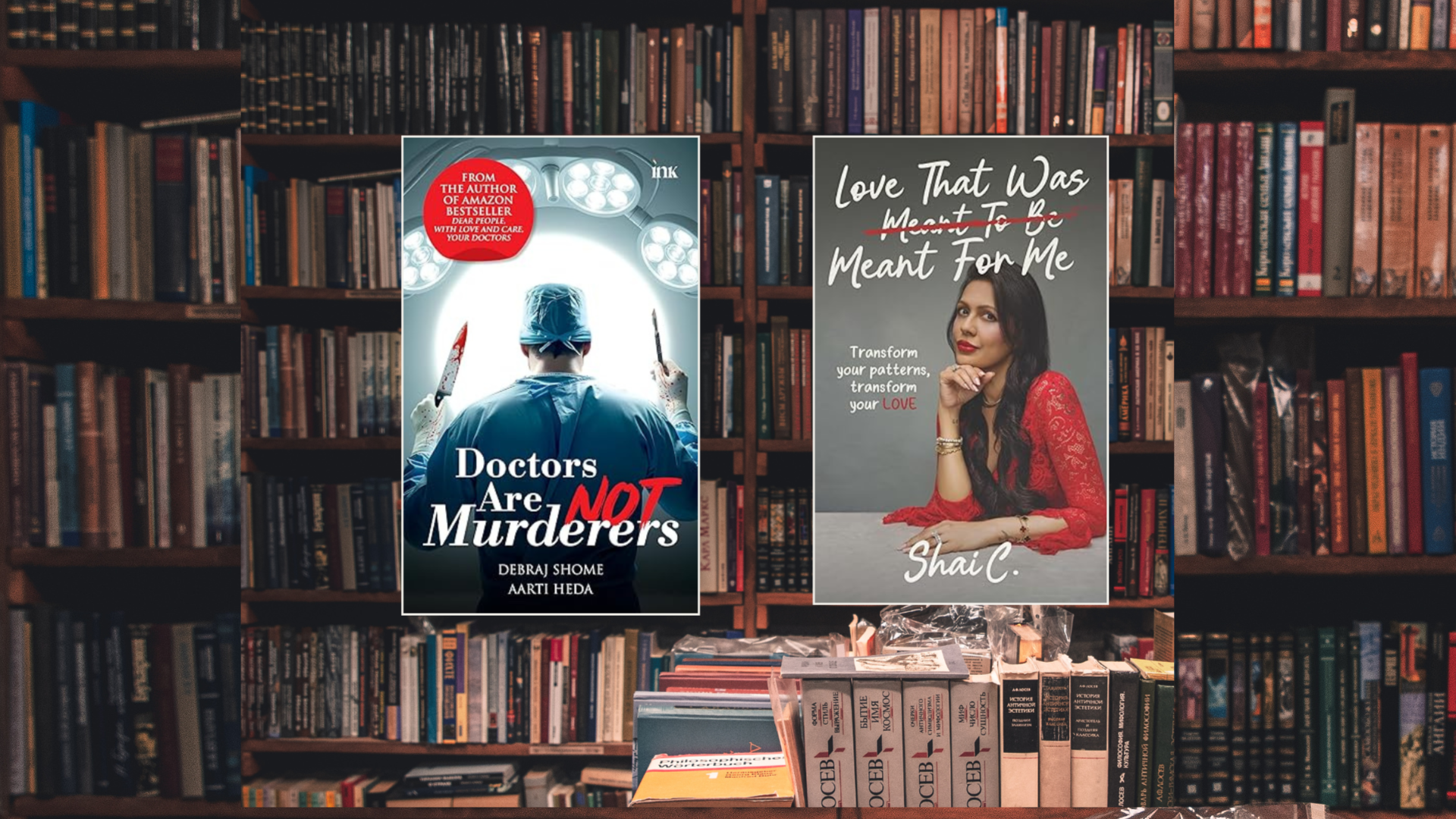
4. Love That Was Meant to Be Meant for Me by Shalini Chuganee
If you’ve ever loved the wrong person too much, stayed when you should’ve walked away, or wondered why you keep repeating the same relationship patterns, this book will feel like someone finally understands you. Shalini Chuganee, an Emotionologist and Certified Intimacy Coach, uses real human stories and her years of therapy experience to show you why you choose the love you do, and how to finally choose better.
What makes this book powerful is how personal it feels. It doesn’t talk at you, it talks to the part of you that’s tired of heartbreak, tired of settling, and tired of thinking love has to hurt. Shain gently walks you through your triggers, your attachment wounds, and the beliefs that keep you stuck in painful cycles. Every page helps you see yourself more clearly.
You should read this book if you want to stop attracting emotionally unavailable partners, stop confusing chaos for love, and start building the confidence to say “no” to almost-love. It teaches you how to recognise the kind of relationship that brings peace, clarity, and emotional safety, something you deserve but may have forgotten to expect.
In short, this book isn’t just about finding the right person. It’s about becoming the version of you who will never settle for less again. Perfect for anyone ready to heal, grow, and finally welcome the love that was always meant for them.
5. Doctors Are Not Murderers by Debraj Shome & Aarti Heda
Doctors Are Not Murderers will stand out in 2026 because it does something rare: it reframes how we see doctors at a time when the world is quick to blame them. In an era defined by mistrust, misinformation, and instant public outrage, this book becomes a powerful reminder of the human beings behind the white coats.
Internationally renowned facial plastic surgeon and bestselling author Dr. Debraj Shome, along with distinguished ophthalmologist Dr. Aarti Heda, offers a deeply human and timely exploration of what it truly means to practice medicine today. Through real-world clinical scenarios and the emotional weight behind life-altering decisions, the book reveals how doctors often work in high-stakes environments where outcomes are complex, risks are unavoidable, and a single complication can be misread as ill-intent. Instead of simplifying, sensationalising, or defending blindly, the authors urge readers to recognise the difference between genuine negligence and the inherent uncertainty of medicine, and to understand the immense pressure under which clinicians operate while trying to do right by their patients.
One of the book’s greatest strengths is its panoramic, multi-speciality perspective. Bringing together 23 essays from noteworthy doctors around the world, including oncologists, neurosurgeons, gynaecologists, sexologists, ophthalmologists, and more, it opens a rare window into the emotional, ethical, and systemic realities of healthcare. Contributors such as Dr. John Adler, Dr. Rajan Bhonsle, Dr. Nikhil Datar, Dr. Kuldeep Raizada, and Dr. Pankaj Singh share narratives that confront the limits of medical science, the weight of patient expectations, the consequences of outdated laws, and the quiet courage required to care for others in a volatile healthcare climate.
People will remember this book in 2026 because it changes the narrative. It challenges assumptions, encourages empathy, and highlights how doctors often become scapegoats for failures they didn’t create. By weaving personal stories into a larger conversation about trust, communication, and the doctor–patient relationship, Doctors Are Not Murderers becomes more than a book; it becomes a voice for the medical community at a time they need it most.
Final thoughts
The year 2026 will be marked by numerous conversations about identity, future technology, human connection, climate, and emotional authenticity. And these five books will be at the centre of it all. They carry meaning, imagination, and ideas that challenge the world as we know it. Whether you’re reading for escape, enlightenment, or inspiration, these titles promise to stay with you long after you close the final chapter.
Discover more from News Link360
Subscribe to get the latest posts sent to your email.