

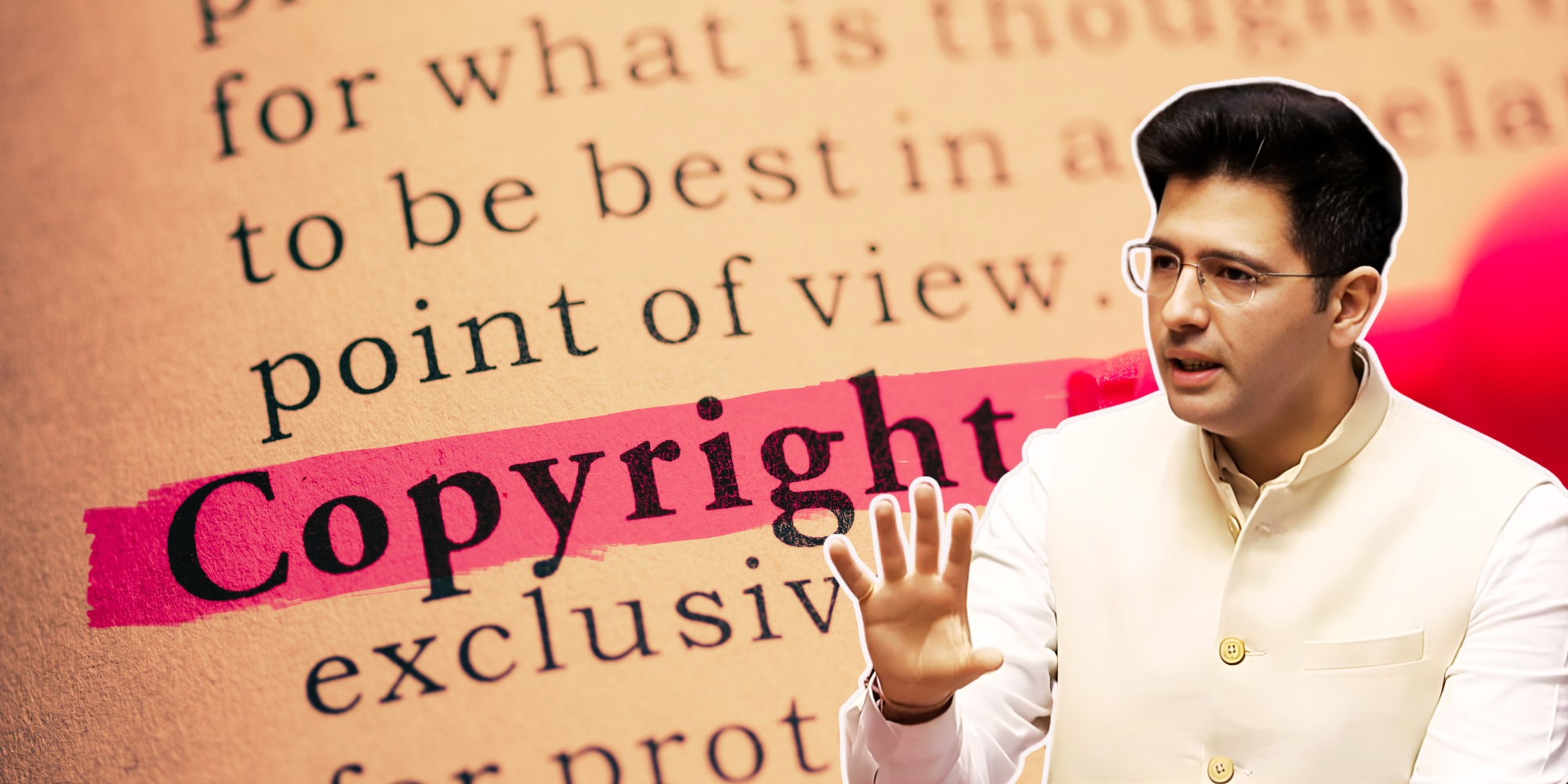
Why Raghav Chadha Wants India’s Copyright Law Fixed for Digital Creators


India today is home to one of the world’s largest creator ecosystems. From educators and reviewers to satirists, musicians, journalists, and influencers, digital creators have emerged as grassroots communicators of the internet age. Their YouTube channels and Instagram pages are not hobbies or sources of casual entertainment. They are livelihoods. They are assets built over years of consistent effort, creativity, and audience trust.
Yet, these assets can disappear overnight.
The Problem with Algorithm-Driven Copyright Strikes
Chadha pointed to the growing misuse of copyright strikes on digital platforms. Often, creators repurpose copyrighted material for a few seconds for legitimate purposes such as commentary, criticism, parody, education, or news reporting. In many cases, the use is incidental: a short audio clip in the background or a brief visual reference.
Despite this, automated systems flag the content, issue copyright strikes, and in extreme cases, wipe out entire channels or pages. Years of work vanish in minutes. There is rarely a meaningful appeal mechanism. Decisions that determine livelihoods are left to opaque algorithms rather than transparent legal processes.
As Chadha argued on the floor of the House, livelihoods must be decided by law, not by arbitrary software.
Why the Copyright Act, 1957 Falls Short
India’s Copyright Act was enacted in 1957, in a world without the internet, computers, or digital creators. The law speaks of “fair dealing,” but largely in the context of books, journals, and magazines, which were the primary sources of information dissemination at the time.
The modern creator economy simply does not fit into this framework. The Act lacks a clear definition of digital fair use and does not recognise creators as a distinct category of stakeholders in the copyright ecosystem.
Three Key Reforms Proposed
Chadha outlined three specific demands to modernise India’s copyright regime.
First, the Copyright Act must be amended to clearly define digital fair use. This includes recognising transformative use such as commentary, satire, critique, and explanation, as well as incidental use where copyrighted material appears briefly and unintentionally. The law must also clarify proportional, educational, public interest, and non-commercial use.
Second, copyright enforcement must adopt the doctrine of proportionality. A few seconds of background audio or video should not justify erasing an entire channel. Punishment must match the scale and intent of the alleged infringement.
Third, there must be mandatory due process before takedowns. Platforms should be required to follow clear procedures, provide explanations, and allow creators a fair opportunity to respond before content or accounts are removed.
Protecting Creativity Without Undermining Original Work
Importantly, Chadha stressed that fair use is not piracy. Respect for original creators and their intellectual property remains essential. But protecting originality does not require stifling innovation. When creators work under constant fear of takedowns, creativity suffers.
Innovation cannot grow in fear. Creativity cannot survive under threat.
As India positions itself as a global digital powerhouse, the laws governing its creative economy must evolve. Defining fair use in the digital age is not just a legal necessity. It is an economic and cultural imperative.
Discover more from News Link360
Subscribe to get the latest posts sent to your email.