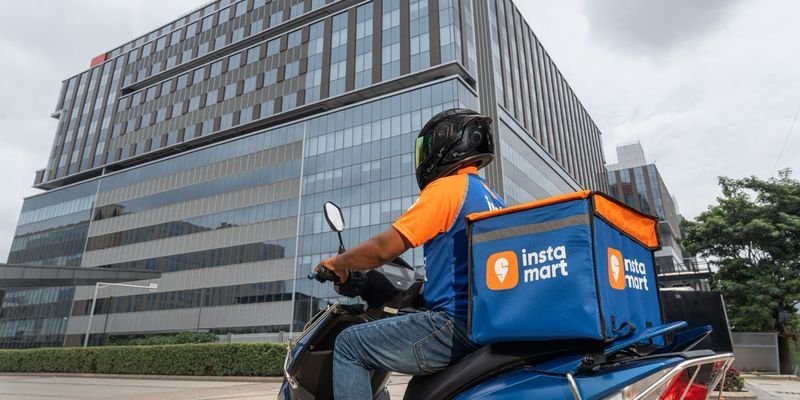
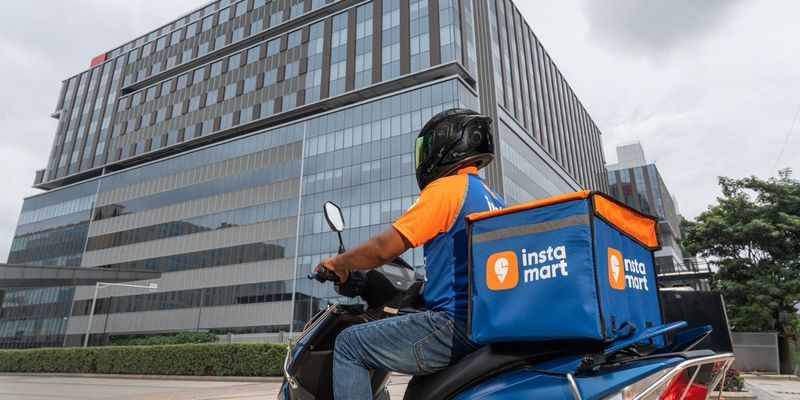

The contrast was stark. The smallest cart of the year was a Rs 10 printout ordered in Bengaluru. The largest was a Rs 4.3 lakh iPhone purchase in Hyderabad. Over twelve months, Instamart’s top customer spent more than Rs 22 lakh, ordering iPhone 17s, gold coins, air fryers, and everyday groceries with equal ease.
The shift suggests that quick commerce is evolving from an emergency service into a default retail channel.
Groceries still rule, but the cart has grown up
Despite the headline-grabbing electronics and precious metals, India’s quick commerce backbone remains stubbornly domestic. Milk moved the fastest. Indians ordered more than four packets per second in 2025—enough volume to fill an estimated 26,000 Olympic-size swimming pools. Paneer outsold cheese by a wide margin, and for every 10 cheese orders, nine were for butter or spreads.
Late-night cravings told their own story. Masala-flavoured potato chips emerged as the most-ordered snack in nine of the country’s ten largest cities, edging out chocolates and biscuits.
One Kochi user ordered curry leaves 368 times, nearly once a day, underscoring how Instamart has slipped into daily kitchen routines rather than remaining an occasional indulgence.
When speed became the selling point
Speed, however, is where the behavioural shift becomes unmistakable. In Lucknow, a packet of instant noodles was delivered in under two minutes—faster than it takes to cook. Smartphones routinely reached buyers in three minutes. During the iPhone 17 launch, customers in Pune and Ahmedabad received their devices faster than many could finish recording unboxing videos.
That velocity appears to have reshaped expectations beyond groceries. Gold purchases on Instamart rose more than 400% year-on-year during Dhanteras, while a Bengaluru shopper added a one-kilogram silver brick worth nearly Rs 2 lakh to a Diwali cart.
In Mumbai, one user bought gold worth Rs 15.16 lakh over the year, treating quick commerce less like a store and more like an always-open vault.
Discretion, gifting, and the rise of Tier II shoppers
Some of the most telling data points had less to do with speed and more to do with discretion.
Roughly one in every 127 Instamart orders in 2025 included condoms, with September emerging as the peak month. A single Chennai account placed 228 condom orders worth more than Rs 1 lakh across the year, a signal that anonymity and doorstep delivery matter as much as price.
Gifting followed similar patterns. Roses peaked at 666 orders per minute on Valentine’s Day, while Mondays—traditionally retail’s quietest day—unexpectedly became the country’s biggest gifting day. Festivals such as Raksha Bandhan and Friendship Day drove heavy use of Instamart’s “giftables” feature, blurring the line between planned celebration and last-minute impulse.
Perhaps the most consequential shift lay outside the metros. Tier II cities powered much of Instamart’s growth in 2025. Rajkot recorded a tenfold annual increase in orders; Ludhiana grew seven times; Bhubaneswar four times.
Health and wellness categories surged particularly sharply in cities such as Bhopal, Varanasi, and Warangal, suggesting that aspirational consumption is spreading faster than physical retail infrastructure.
A glimpse into India’s new retail reflex
The data also revealed quieter signals of social change. Bengaluru emerged as India’s tipping capital, with one user alone paying Rs 68,600 in tips to delivery partners.
Protein bars and ready-to-drink shakes dominated nutrition purchases. Korean condiments such as gochujang saw triple-digit growth, while tea continued to beat coffee by a comfortable margin nationwide.
Taken together, the picture that emerges is less about novelty and more about habit. Quick commerce in India is no longer just about speed; it is about reliability, discretion, and the confidence that almost anything—from a Rs 178 lime soda to a Rs 1.7 lakh iPhone—will arrive without friction.
Edited by Suman Singh
Discover more from News Link360
Subscribe to get the latest posts sent to your email.