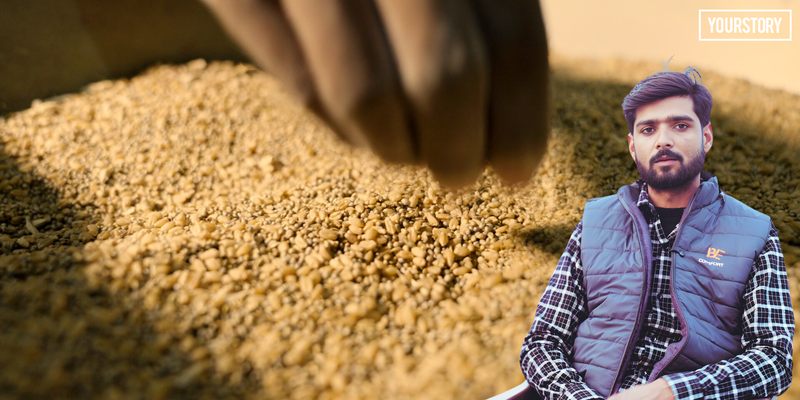
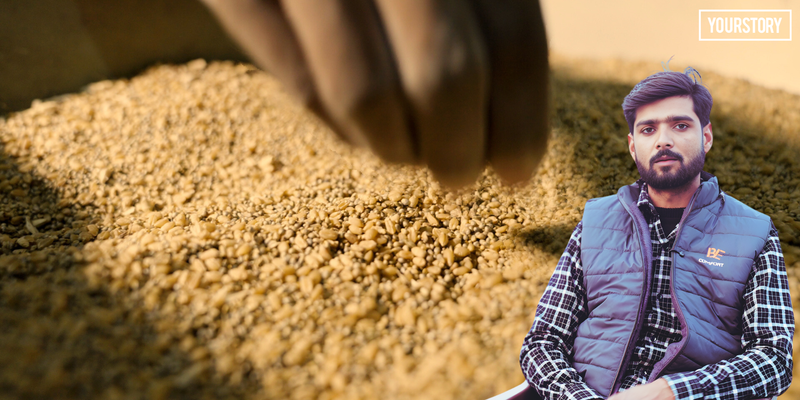

The unit is operated by Munish Yadav, who says he started the work around six months ago, setting up a “solar plate” flour mill so the grinding does not depend entirely on the reliability and cost of regular power.
The work itself is straightforward. People bring grain, the mill grinds it, and the flour is collected and packed for home use.
What has changed for Yadav is that the routine now has a fixed place and a steady flow of small, everyday customers, rather than irregular work that comes and goes.
A mill powered by the sun
Yadav describes the setup as a connected system, beginning with the solar panel that supplies power to the unit. From there, the electricity is routed through a control box, which drives the motor. The motor turns the mill, and the flour is produced once the grain is fed into the machine.
A citizen of Rafipur, Yadav’s familial responsibilities made it necessary to start someone stable for additional financial support. He says the idea came from a friend who suggested a flour mill as a workable local business.
The choice also matched what Rafipur needs daily: a service that does not require large marketing, but depends on consistency, timings, and trust built one customer at a time.
Support that made the setup possible
After learning of the Mukhyamantri Yuva Udyami Vikas Abhiyan (CM YUVA) Yojana from friends, Yadav applied by filling the required form at the local office.
During the process, he received help from officials at the block level, bank staff. He was able to get financial support of Rs 3,75,000 under the scheme, and used it to purchase the solar panel, motor, and flour mill, and to complete the installation.
Yadav describes the purchase as a full “system” rather than separate small upgrades, because the unit needed to be operational end-to-end.
Technicians installed the equipment, and that the setup was completed quickly once approvals were in place.
“We got a livelihood; it helps us run the home easily,” he says.
Looking ahead to the busy season
Yadav expects the workload to rise in the coming months, especially as the season changes and daily demand increases.
For now, he says the work feels lighter than it did during the setup phase, but he wants to keep the mill running and gradually expand the work.
In a place where small enterprises often begin with a single workable idea and limited savings, the early months have been about getting the machine running, learning the paperwork, and building a dependable routine.
For Yadav, the shift is not dramatic, but it is tangible: from waiting for circumstances to improve, to having a fixed unit that brings in regular work and a steadier sense of control over the household’s day-to-day needs.
Discover more from News Link360
Subscribe to get the latest posts sent to your email.