

Vijay Hazare Trophy 2025-26 Preview: Why Rohit, Kohli and the 2027 World Cup make this season different

That, however, began to change last season. The Board of Control for Cricket in India (BCCI) has made it mandatory for all international cricketers to feature in domestic tournaments when not on national duty. This time, as the group stage of the competition gets underway across five cities, two of the biggest names in Indian cricket, Virat Kohli and Rohit Sharma, will represent their respective domestic teams, Delhi and Mumbai.
They are unlikely to feature in all seven league games, but their presence will certainly boost their teams and give the tournament a much-needed lift.
The tournament also holds significance for Kohli and Rohit.
In the build-up to the 2027 ODI World Cup, India is scheduled to play 21 ODIs. Given that both Rohit and Kohli have retired from Tests and T20Is, their opportunities in the 50-over format are already limited. Featuring in the Vijay Hazare Trophy would help them find rhythm ahead of India’s home ODI series against New Zealand in January and keep their World Cup preparations on track.
Both Rohit and Kohli were among the runs in the recent home series against South Africa, and their availability also allows youngsters to learn directly from them. “They are role models for the young cricketers, so it would be wonderful if they played. It will boost the morale and motivate the youngsters, if they get to share the dressing room with such players,” Sanjay Patil, Mumbai’s chief selector, tells Sportstar.

| Photo Credit:
R RAGU

Rohit and Virat are unlikely to feature in all seven league games, but their presence will certainly boost their teams and give the tournament a much-needed lift.
| Photo Credit:
R RAGU
“We could win 42 titles for Mumbai because the younger players always had the backing of the seniors. In the earlier times, legends like Dilip Vengsarkar, Ravi Shastri, Sachin Tendulkar, and Sanjay Manjrekar always made themselves available whenever they were not on national duty,” he says.
Yet, the focus is not limited to Rohit and Kohli.
Following the Board’s mandate, a pool of international cricketers, including Rishabh Pant, K.L. Rahul, Mohammed Siraj and Yashasvi Jaiswal, is also expected to turn up, adding further depth to the competition. While Jaiswal and Siraj have featured in the Syed Mushtaq Ali T20 Trophy, for Rahul, Pant and a few others, it will mark a return to the domestic circuit after a hiatus. Meaningful contributions here could help them settle into rhythm ahead of a busy international calendar.
For the selectors, too, the tournament offers a fresh perspective. With the ODI World Cup still a year-and-a-half away, the Ajit Agarkar-led committee can closely track young performers who have shown consistency, while also assessing the fitness levels of Rohit and Kohli to gain clarity on whether they remain in the plans for the marquee event.
Not quite easy
The scheduling, however, leaves much to be desired. Teams that featured in the Syed Mushtaq Ali Trophy Super League will have little turnaround time, needing to switch formats within a couple of days. That will pose a significant challenge.
RELATED | How Jharkhand rode on Ishan’s heroics and Dhoni’s guidance to end title jinx
“It would have been better if we had got three or four more days before starting the Vijay Hazare Trophy, because we didn’t get rest even after the Ranji Trophy first leg, so a small break here would have helped. But the BCCI has already decided on the dates,” says Jharkhand top-order batter Kumar Kushagra.
The workload challenge is even greater for fast bowlers. For players like Siraj and Arshdeep Singh, who have played almost continuously, managing workload will be key. In the previous edition, Arshdeep finished as the leading wicket-taker with 20 scalps, followed by Varun Chakaravarthy and Vasuki Koushik, who each claimed 18 wickets.
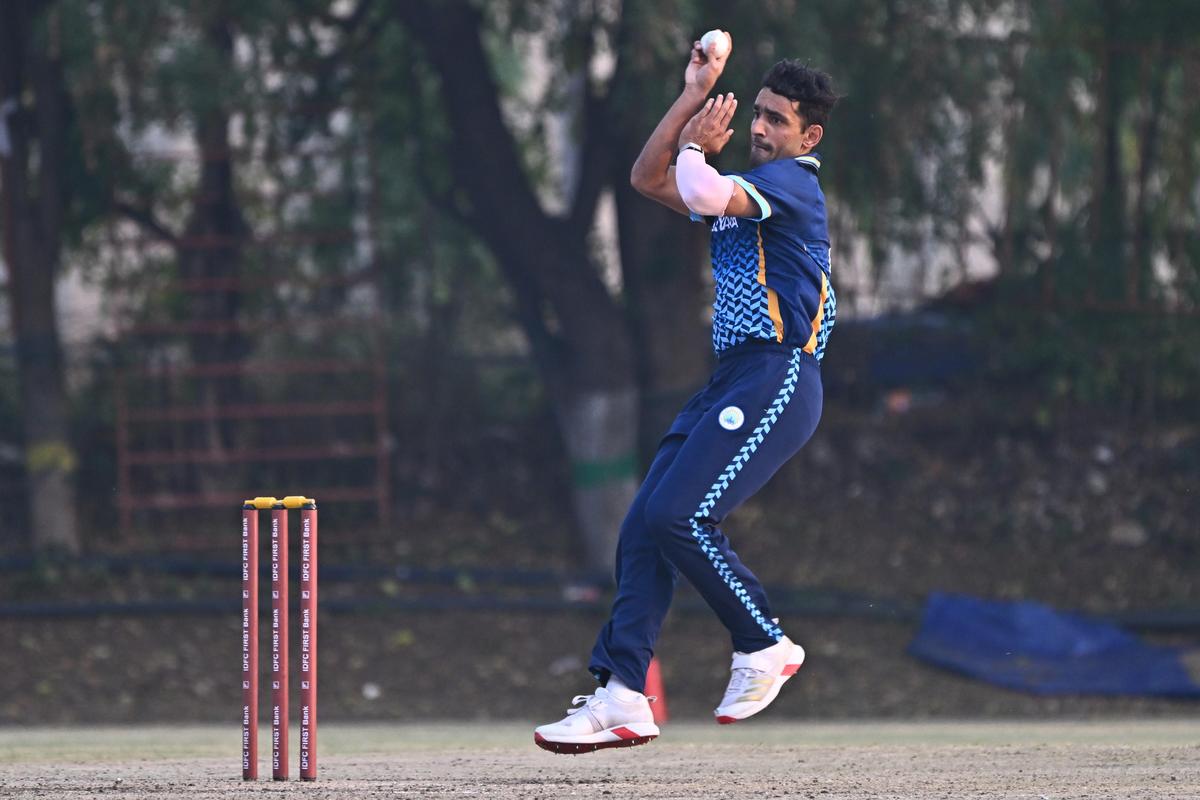
Haryana bowler Anshul Kamboj bowls during the Syed Mushtaq Ali Trophy match between Baroda and Haryana.
| Photo Credit:
KVS GIRI
Haryana bowler Anshul Kamboj bowls during the Syed Mushtaq Ali Trophy match between Baroda and Haryana.
| Photo Credit:
KVS GIRI
India international and Haryana pacer Anshul Kamboj believes that, given the packed calendar, staying in the present is crucial. “It is challenging for sure, but if you think too much about it, it only complicates things and puts pressure,” he says.
Favourite no more?
Defending champion Karnataka, which won six of its seven group league fixtures last season, finds itself in a particularly demanding group alongside Kerala, Madhya Pradesh, Rajasthan, Tamil Nadu, Jharkhand and Pondicherry. Karnataka will pin its hopes on Karun Nair, the highest run-scorer in the previous edition (779), albeit for his former team Vidarbha, and captain Mayank Agarwal. Neither Karun nor Mayank had a memorable outing in the Syed Mushtaq Ali Trophy, and both will be keen to rediscover form when their campaign begins in Ahmedabad.
Group B also promises intrigue, featuring Bengal, Hyderabad, last year’s runner-up Vidarbha and Jammu and Kashmir. While attention will be on Bengal’s seasoned campaigner Mohammed Shami, who has been out of national reckoning since the Champions Trophy, Jammu and Kashmir, buoyed by its recent Ranji Trophy success, will also fancy its chances. With Auqib Nabi spearheading the fast-bowling unit, J&K will hope to make an impact in Rajkot.
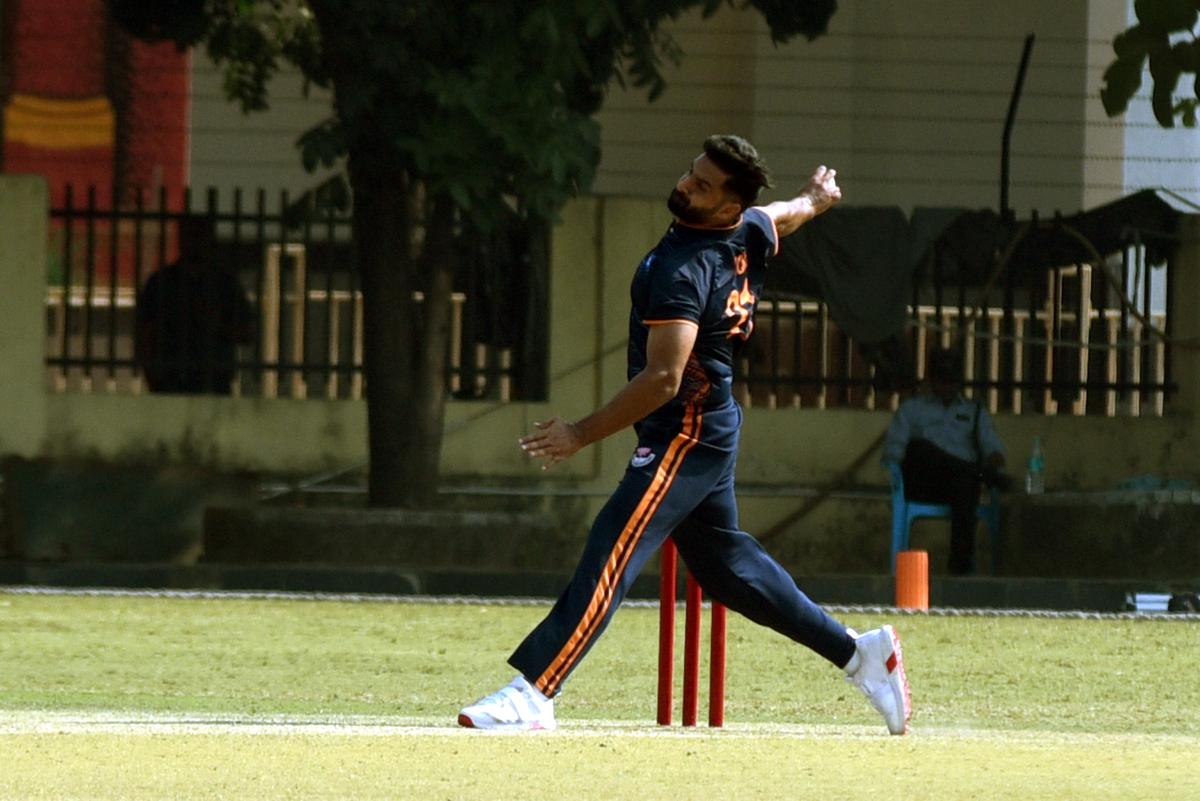
Auqib Nabi will be at the forefront for J&K in its Vijay Hazare Trophy campaign.
| Photo Credit:
DEBASISH BHADURI
Auqib Nabi will be at the forefront for J&K in its Vijay Hazare Trophy campaign.
| Photo Credit:
DEBASISH BHADURI
Group C comprises Mumbai, Maharashtra and Punjab. With Ayush Mhatre, among the top scorers last season, likely to return for Mumbai, the domestic heavyweight appears to be placed in a relatively comfortable group that also includes Sikkim, Uttarakhand and Chandigarh.
In Bengaluru, Kohli headlines Group D, with Delhi grouped alongside Haryana, Saurashtra, Andhra and Services. While some high-octane contests are on the cards, Delhi, which struggled in both the Ranji Trophy and the Syed Mushtaq Ali Trophy, will need to address key shortcomings to progress. As Rajasthan coach Anshu Jain points out, white-ball cricket offers little margin for error. “One good spell or one good innings can change the game, so there’s a level-playing field,” he says.
Pitch woes
Despite the BCCI instructing State units to prepare livelier wickets to move away from spin-heavy surfaces, conditions remain largely unchanged. During the first phase of the Ranji Trophy, most pitches were flat, forcing bowlers to toil. With little time between tournaments, curators have limited room for adjustment. While most centres are likely to witness run-heavy contests, the three venues in Jaipur could assist fast bowlers early, especially as temperatures dip.
Published on Dec 23, 2025
More stories from this issue
Discover more from News Link360
Subscribe to get the latest posts sent to your email.